Weekend Reading

There will be a quiz on Monday.

  1. The chaos of urban school reform.
  2. Life-long learners versus life-long test takers.
  3. Grade anxiety and felony burglary at the University of Kentucky. What do you propose as punishment?
  4. Can science help marathoners break the 2-hour limit? Truly excellent breakdown. Fav sentence, “Basically, in the marathon, there are a lot more pipes that can burst than, say, in a mile or a 5K.” The attempt is in Italy Saturday morning at 5:45a, tonight at 8:45p PDT, 11:45p, EDT. I do not expect to see a sub two hour marathon in my lifetime; however, I do hope to break two hours in my first stand-alone 10k in ages tomorrow morn.
  5. The real reason Clinton lost. Prediction: Alison will disagree. Vehemently.

Sentences Worth Re-reading

A horrendous sentence by an exceptionally good writer. Pulitzer good. I proceed knowing full well that kharma is going to kick my ass sometime soon.

Kathryn Schulz in Polar Expressed:

“The Greenland Ice Sheet, which is more than a hundred and ten thousand years old and covers six hundred and sixty thousand square miles of the Far North, has shed two hundred billion tons of water a year since 2003.”

Three references, each one extremely difficult to picture, taken together, laughably incomprehensible. Can you picture hundreds of thousands of years or square miles? What about 200,000,000,000 tons of water (or 444,000,000,000 lbs)? We need the equivalencies. For example, six hundred and sixty thousand square miles, or the size of “x” number of Western states. Or two hundred billion tons of water or enough water to fill “y”. The best writers sometimes swing and miss, just a lot less often than the rest of us mortals.

An exemplary sentence by Zoe Heller’s in her review of Sally Bedell Smith’s new biography, “Prince Charles: The Passions and Paradoxes of an Improbable Life”.

“Too physically uncoordinated to be any good at team sports, too scared of horses to enjoy riding lessons, and too sensitive not to despair when, at the age of eight, he was sent away to boarding school, he was happiest spending time with his grandmother the Queen Mother, who gave him hugs, took him to the ballet, and, as he later put it, ‘taught me how to look at things.’”

One sentence, seven detailed references about Charles, resulting in genuine insight into his personality. Brilliant.

And another Heller gem from later in the same review:

“Even Charles’s love life was choreographed for him with the sort of elaborate care and tact usually reserved for pandas in captivity.”

A master lesson in how to make your readers smile.

World Naked Gardening Day

Sadly, this month’s most important celebration is crowded out by holiday stalwarts like Cinco De Mayo, Mother’s Day, and Memorial Day; not to mention, lower profile ones like May Day and Teacher Appreciation Week (8th-12th).

Are you ready for World Naked Gardening Day this Sunday? “It’s not about exposing your body to other people,” the founder explains. “It’s about body acceptance and being one with nature on your own.”

With apologies to Elaine, I’m in. Skin cancer be damned.

Liberal Arts Lamentations

I teach at a smallish, private liberal arts university that’s $5m in debt. Our president has “resigned”. A special faculty committee has been formed to determine which programs and tenure-track or tenured faculty should be eliminated. The guess is 20-60 faculty will be let go in one year’s time.

I’m skeptical of our newest religion, data analytics, because I reject data’s omniscience. I’m partial to stories. Numbers can tell stories, but the emotionally rich stories that resonant most deeply with me are told with words, photographs, video, film, dialogue, music, and acting.

My university’s ability to turn things around is complicated by the resistance of Religion, Language, Music, Philosophy, Art, and English faculty to change. My militant liberal artist friends are struggling mightily to accept their declining influence. Here are just a few recent signs of their struggle:

• At Faculty Assembly, a faculty member stands and says, “Many people don’t realize it, but some departments aren’t nearly as productive as they once were.” A religion professor turns to his colleague, makes air quotes, and quietly and derisively mocks the speaker by repeating, “productive”.

• A faculty leader from the Religion department writes a letter to the Board informing them that they should hire an interim-President for two years, not the planned for one, so that the campus can spend two years on the search for the next president. Humanities faculty dominate the growing list of signatories.

• Following an administrator’s decision to cut one liberal arts department’s budget, the chair says, “Are we going to become a trade school?”

We are not going to become a trade school, but we are not immune to the disruption that’s riddling wide swaths of the economy. At the price families are paying, it’s understandable that they want a “return on their investment”. And yet, business phrases like “return on investment”, and “productive”, and “market forces”, really anything related to the business model, set my militant liberal artists friends’ heads spinning.

The MLA’s (pun-intended) are trusting that our University’s mission will save their bacon. And I’m confident the most economically successful departments will continue to subsidize some especially mission-critical academic majors and programs. But not nearly as many as in the past and not nearly as many as the MLA’s are hoping.

 

Batting for Average versus Power

John Gruber on the Apple Watch and iPhone.

“The nut of every “Apple Watch is a dud” story is the fact that its clearly not an iPhone-size business. But that can’t be the only measure of success. The iPhone is the biggest and most successful consumer product in the history of the world. Nothing compares to the smartphone market, and it’s possible nothing else will in our lifetimes. You and I may never again see a product as profitable as the iPhone — not just from Apple, but from any company in any industry. Or maybe we will. It’s a complete unknown.

But if Apple gets it into its head that they should only work on iPhone-sized opportunities, it would paralyze the company. In baseball terms, it’s fine for Apple to hit a bunch of singles while waiting for their next home run. According to Apple, they had more watch sales by revenue in 2015 than any company other than Rolex, and Apple’s “Other” category, which is where Watch sales are accounted for, had a record-breaking holiday quarter three months ago, suggesting strongly that Watch sales were up over the year-ago holiday quarter.

These two facts are both true: Apple Watch sales are a rounding error compared to the iPhone, and Apple Watch is a smash hit compared to traditional watches and other wearable devices.”

25 Years His Senior—Say What?

Emmanuel Macron, hopefully France’s next President in two weeks, is 39 years old. His wife is 64. He fell for her when he was 15 and she was his math teacher. Because your susceptible to soap operas, you will want to read the whole story here.

I confess, the context for their meeting and their pairing strikes me as really odd. And yet, the President of the U.S. is 24 years older than his wife. Which, if I’m honest, doesn’t seem nearly as odd.

When it comes to pairing up, shouldn’t older women have the same rights as older men? Is this the ultimate double standard? Am I an unredeemable sexist? Of course, yes, and probably.

3F8A33D800000578-0-image-m-4_1492984233100.jpg

One Nation Under God, Indivisible, With Liberty and Justice For Those With Economic Means

How can anyone argue the U.S. is the indisputable best country in the world when our tax and health insurance systems are so flawed. On top of that, our legislature is broken. Yet, none of that has done much to quell our arrogance.

Reading David Grann’s story, Trial by Fire, from the New Yorker, reveals an even more fatal flaw. The more money one has, the better our judicial system works. Put differently, people are not equal under the law because not all people can afford competent, let alone expert representation. In the U.S. today, people’s ability to pay determines how much justice they receive.

If you don’t believe that, read Grann’s story about Todd Willingham. If you’re like me, when you finish it, you’ll be completely gutted. Gutted for the masses of working class people wrongly convicted. And gutted for what economic disparity has wrought.

Peak United States

How do we know if we’re in decline? What are signs of slippage? Do mirrors help? What about comparisons to other people and places?

What psychological barriers prevent us from acknowledging our decline?

Why, despite being very well educated and very comfortable with numbers, do I not understand our tax system well enough to prepare my family’s taxes? Why do I have to pay an expert to prepare them?

Why are there 1,000+ deductions? Why is Congress so susceptible to accounting firms’ lobbyists? And realtors’ lobbyists? Why hasn’t there been meaningful tax reform since 1986? Why does our tax accounting system benefit members of Congress more than their constituents? Why do well-to-do, stock owning citizens, pay less in taxes than others? Why do most other developed countries have far more simple, fair, and efficient tax systems? Why aren’t more people agitating for answers to that question? Why have citizens allowed their representatives to defend the status quo for 30+ years?

Why, despite being very well educated and very comfortable with numbers, do I not understand my health insurance? Why am I told what my doctor visit, biopsies, surgical consultation, and minor surgeries all cost a few weeks afterwards? What if restaurants didn’t have menus, but instead, just told you what you owed after you ate? Why are there initial charges and secondary “what insurance allows” charges? Why does Kaiser-Permanente make me go to a “surgery consultation” when the surgeon said it was unnecessary, “but Seattle won’t let us do our own scheduling”? Why was I charged $206 for the unnecessary 20 minute “consultation”?

Why is Congress so beholden to medical insurance lobbyists? Why do many other developed countries have far more simple, comprehensive, and efficient health insurance systems? Why are so many citizens resigned to health insurance pricing and paperwork lunacy? Why do citizens continue to elect representatives who preserve the medical insurance status quo?

How does anyone of sound mind claim that the U.S. is “the greatest country on God’s green earth” when our tax and health insurance systems are fucked up way beyond our compromised legislative body’s ability to fix them?

postscript


My New Thang—Avocados

Early in my dad’s business career he sold appliances for General Electric. Every year we got one new one, including allegedly, the first trash compactor in the country. And for some reason only my mom could probably explain, every last appliance was avocado green. Turns out those early avocado green kitchens did a number on my subconscious because recently I’ve turned into an avocado eating machine, putting them on damn near everything, as if I’m making up for lost time.

So I got a kick out of this, “Your New Avocado: An FAQ“.

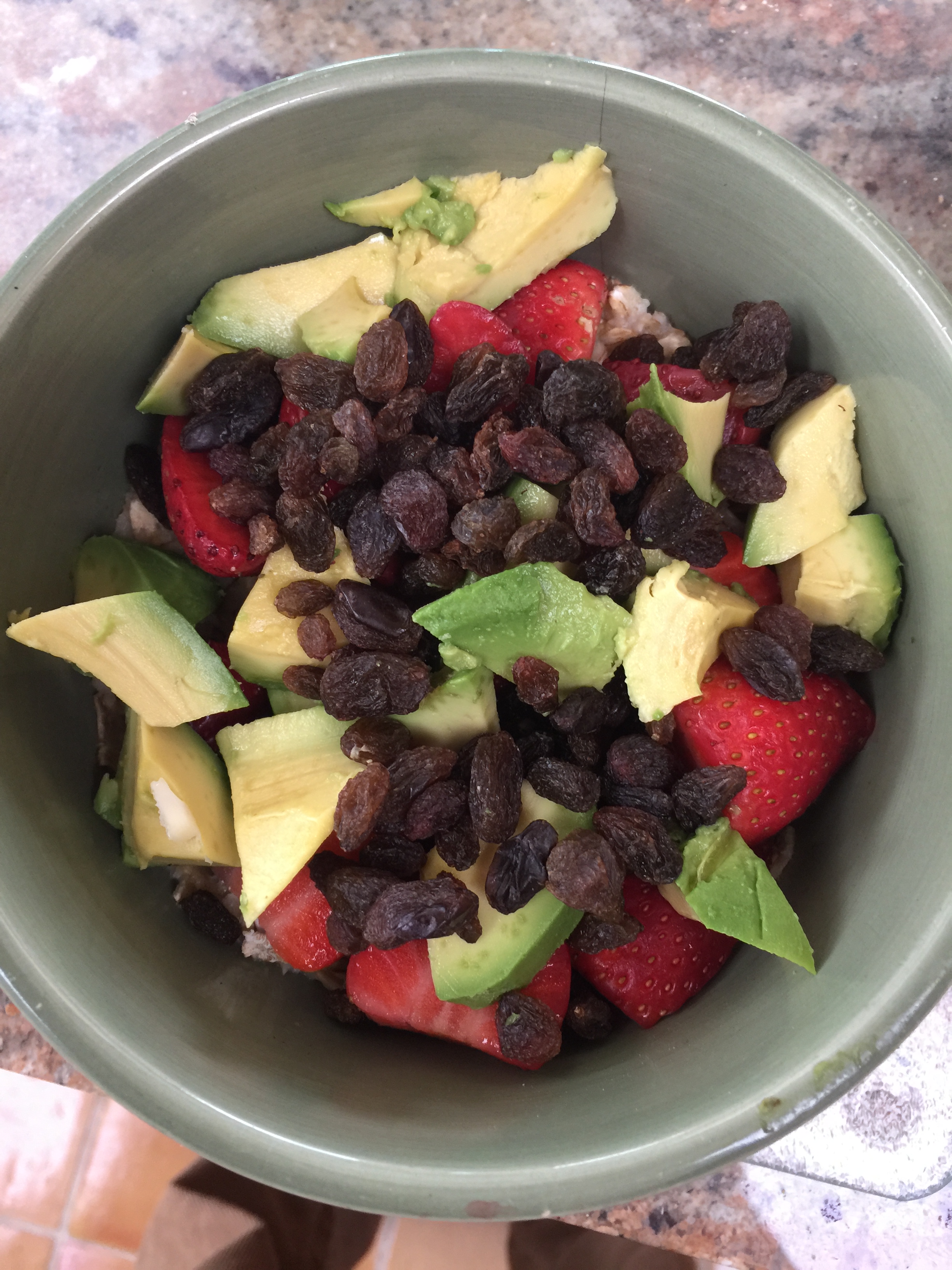
Below is a picture of today’s breakfast bowl of oatmeal which lies buried underneath the red and late 1960’s kitchen appliance green fruit goodness. Some mornings I borrow from professional cycling chefs and sub in two fried eggs. And always, I top everything off with a little butter and a lot of Kirkland Saigon Cinnamon (Costco doesn’t pay me for these egregious product placements, but they should).

Today’s philosophical question. At what point does the balance tip towards the add-ins and I can no longer accurately describe my breakfast as a bowl of oatmeal? That’s what philosophers refer to as a “Seinfeld episode worthy” question.

IMG_0793.JPG

That’s right, even our kitchen bowls are avocado green.