If Only Schools Were More Like Businesses

Every once in awhile, it’s important to inflict pain on yourself. Builds character. Run a marathon. Fast for a day. Do your taxes. Watch a Wayne LaPierre press conference. Or most painful of all, listen to politicians and business people talk about what we need to do to reform education in the United States.

Their message—breakdown the government monopoly on schools by infusing them with business principles. Most importantly, competition. Between teachers, schools, and districts. Highest standardized test scores win. Their unquestioned premise is that the business community has its shit together. The pro-business propaganda is so steady we start to believe it.

Yeah, if only schools were more like businesses.

Lots of schools would close every year. But I guess we could just tell the affected families that “creative destruction” is just a natural, even healthy part of the business cycle. They’ll understand. Yeah, if only schools were more like businesses.

And teachers would start relating to students the way my local bankers and insurance agents routinely do, from behind websites, and sometimes via the telephone. Last week I received birthday cards from my bank and my insurance agent. I recycled both cards without opening them. No one at my bank or insurance agency would know me if I walked into their offices. We have no personal relationship, only an economic one. The best teachers know their students individually, and something about their families, their interests, their hopes for the future. But maybe all that effort to connect with students is misguided. Maybe teachers should be more like my banker and insurance agent. Just design some websites where students can get assignments and submit their work and mail out computer generated birthday cards once a year. Yeah, if only schools were more like businesses.

And every school would ace every state assessment whatever the form. Because that’s the way my car dealership works. When I take my car in, I’m told they have to get perfect scores on the evaluation they mail to me afterwards. Heaven for bid if they get any “9’s”. It seems like gaming the system to me, but I guess it’s just an advanced form of assessment thinking, everyone getting perfect scores all the time. Yeah, if only schools were more like businesses.

Most importantly, the best thing about business people is they’re always accountable for their performance. Regular performance reviews ensure it. That’s what teachers need most of all, more business-like accountability! Or maybe not. Here’s Nassim Taleb blowing that fallacy apart:

Those who have the upside are not necessarily those who incur the downside. For example, bankers and corporate managers get bonuses for “performance,” but not reverse bonuses for negative performance, and they have an incentive to bury risks in the tails of the distribution – in other words, to delay blowups.

Read the history of Wall Street from 2007-2008 for sordid example after example. Five years later, in the U.S., there’s a sure-fire way for business people to avoid accountability. Climb the corporate ladder as high as possible. Yeah, if only schools were more like businesses.

imgres

A Minimalist Life

I’m easily distracted. In church on Sunday, I couldn’t help but think about minimalism. As one part of “Scout Sunday” the pastor asked past and present scouts to recite the scouts’ values. They did okay until about the ninth value. Twelve?! That’s about nine too many. And when I should have been concentrating on the sermon, I was thinking about this quote from a minimalist Londoner who just built a home.

People do comment on our tidiness, but I find it fascinating that they find it fascinating. If you have a thing of beauty, like a piece of architecture, and then you fill it up with things, then you somehow diminish it and you cannot really appreciate the space you live in. We have exposed the things we really love, like the photography and the books.

One group unnecessarily complicating things, one homeowner purposely and thoughtfully stripping things down to their bare minimum.

People associate minimalism with life simplifying projects, whether recycling old clothes, shredding unnecessary office papers, or decluttering a garage, but it can be a helpful organizing principle for all of one’s life.

Minimalism is about embracing limits that others mostly ignore. The starting point is the ultimate limit, one’s mortality. Minimalists are more mindful than most that their time is limited; as a result, they tend to be more interested in the quality of their life experiences than accumulating lots of money and possessions.

Minimalists believe stripping things down is liberating—whether electronic data, personal commitments, and friendships. Consider each.

Electronic minimalism. This one’s tough because digital clutter can be neatly contained within a smartphone, tablet, laptop, or desktop computer. If you’re like one of my offspring, your desktop may be proof of that. To practice electronic minimalism, create folders for loose documents, and use folders within folders. But first, delete as many unnecessary, out-of-date documents, bookmarks, and email messages as possible. I DIG that electronic wadding up and shredding of paper sound my MacBook Pro makes whenever I empty the trash. Like a Pavlov dog, I’m motivated to trash things just to hear the sound.

“Zero email inbox” is a futile, overly perfectionist goal, but if you typically have more than 20-40 messages in your inbox, delete more often and create and use more folders. Same with website bookmarks. Delete those you haven’t used in a long time and put the the remaining ones into folders. This makes it easier to avoid mindless web surfing. Same with applications. Some people have over a hundred apps. I find that odd because the fewer you use, the easier it is to quickly and easily access them. Maybe some mega app users would say they use folders and don’t have a problem, but most people probably use 10% of their apps 90% of the time. Why not just remove most of the 90%?

Electronic minimalism is based on the premise that fewer docs, email messages, website bookmarks, and applications makes it easier to find things, get one’s work done, and then enjoy life off-line.

Scheduling minimalism. As an introvert, and often to the GalPal’s regret, this one comes relatively easily for me. This is the countercultural practice of not committing to many activities—whether one’s own, or a partner’s, or one’s children’s. It’s saying to oneself, “I’d like to attend that event, participate in that weekly activity, or go on that trip, but I’m okay missing out on that fun because the busyness trade-off isn’t worth it.” Obviously, “too busy” is a subjective concept. The key is to know your particular physical and social limits and to intentionally err on the side of underscheduling.

Interpersonal minimalism. This is the related, countercultural practice of purposely focusing on a limited number of close friendships. I’ve written about the quality versus quantity of friendships conundrum before here. Young people’s embrace of social media has made this type of minimalism especially rare. Many high school and college aged young adults have a thousand plus Facebook “friends”. Interpersonal minimalism means focusing most of your friendship activity on people who you interact with face-to-face on a weekly basis.

Stripping down activities creates momentum which leads to additional ideas for simplifying not just one’s garage, but one’s life. In what other aspects of your life has less proven more?

[My favorite book on minimalism—Francine Jay’s The Joy of Less, A Minimalist Living Guide]

January 2013 Awards

Tweet of the month. “Of course I’d be willing to let the Postal Service continue to dope if it would speed up mail delivery.” Nikolas Kristof

Sports stat of the month. Bench Points—Clips 41.7, Lakes 26.5. Bench Rebounds— Clips 20.4, Lakes 13.4. Bench Assists—Clips 8.7, Lakes 5.4. Bench Steals—Clips 3.8, Lakes, 2.0. Bench Blocks—Clips 3.6, Lakes 1.1.

Unanswered question of the month. Did Beyonce lip sync her National Anthem performance?

Sports loose-end of the month. The likelihood that the Sacramento Kings will move 619 miles north before the start of next season.

Bush league sports move of the month. Azarenka’s “injury” timeout against Sloane Stephens in their Australian Open semifinal match.

Worst losses of the month. Gold—Seahawks 28-Falcons 30. Silver—Butler 64-GonZAGa 63.

Gracious loser of the month. Sloane Stephens.

Best basketball quote of the month. “If you have to bounce the ball three times and flip it and twist your arm before a free-throw, it probably means you can’t shoot ’em. Wynton Marsalis’ youth basketball coach.

Anti-swoosh event of the month. The European Tour’s Abu Dhabi golf tournament where Swoosh Senior (Tiger Woods) and Swoosh Junior (Rory Mcllroy) missed the cut.

Multibillionaire quote of the month. “I like today what I liked fifty years ago. . . I was happy when I was in my twenties, and I don’t see a reason to change things.” Warren Buffet

Parenting essay of the month. Coming Home: Returning to parenting after 16 months on the campaign trail. John Dickerson, Slate Magazine.

Book release of the month. Going Clear: Scientology, Hollywood, and the Prison of Belief by Lawrence Wright

Television shows of the month. Gold, Portlandia Season 3. Silver, Downton Abbey Season 3. Bronze, 30 Rock.

Movie of the month. Tie. Silver Lining Playbook and Zero Dark Thirty.

Word of the month. Tradecraft.

EXPLICIT cold ass honkey music vid of the year month. Thriftshop by Maclemore & Ryan Lewis.

Insight of the month. Michael Apted, documentary filmmaker on 56 Up. “That was a very important lesson I learned throughout the decades on the film, that I can’t project my version of happiness or success or ambition onto other people.”

Unappreciated health danger of the month.

Tired

I used to be more like Bill Gates, my sister, Jon Kitna, and my wife. I wanted to help people improve their lives. Volunteer time in my community. Change the world for the better.

Now, Stoic sensibilities make it unlikely you’ll see me in a street protest near you. When I read essays like Gates’ recent one titled “My Plan to Fix the World’s Biggest Problems,” I marvel at his ambition. Twenty years ago I could have written a decent essay with that same title, but not now.

Saving any subset of the world requires endless teaming with others. Which makes me wonder. Or makes me worry. Being an introvert, and having taught for three decades, am I bumping up against my optimal number of lifetime interpersonal interactions?

Just because my gray-bearded self is less activist than my younger self, it doesn’t necessarily mean I’m more selfish. I still care about teaching well. And I’ve enjoyed helping other teachers refine their craft this academic year. And I hope this blog occasionally entertains, informs, or enlightens. And I vote (in most elections), try to encourage my family and friends, help old ladies across the street, and never litter.

I don’t begrudge the World Changers anything, I just don’t feel as much camaraderie with them as in the past. This isn’t flattering to write at all, but compared to the past, I’m more accepting of many of my community’s, country’s, or world’s long-standing problems. More content to study and try to understand the root causes of problems. When I try to tap some sense of righteous indignation, all I get is Buddhist detachment. More honest and authentic. Less a role model.

No, I was not the male lead in Silver Lining Playbook, but I can understand your confusion.

No, I was not the male lead in Silver Lining Playbook, but I can understand your confusion.

Why I’m Not Selling Apple

A friend, who has made it a point to resist Apple’s takeover of the personal tech world, emailed yesterday. The subject heading was “Time to Sell”. There was a link to an “Apple’s in decline” article and a follow up with an ominous excerpt. Full disclosure: this post doesn’t relate closely enough to the blog’s stated purpose, but I have to do something to stem the tide of anti-Apple email gloating.

Apple investors have to expect blowback when the stock slides. It just comes with the territory. Anti-Apples get more and more annoyed with every $100 rise in its share price. There’s probably just a touch of envy involved.

Late summer Apple hit $705, today it closed at $450. So the haters are slapping themselves on their backs in glee.

My email “friend” got his Masters in Business Administration at the University of Washington, not the Anderson School, so some remediation is in order.

Principle 1) Buy low and sell high. Apple’s on sale. Compared to the recent high, $255 off per share. In the next year or two, is it more likely to fall another $250 to $200 or rise $250 to $700? I’m betting on the later.

Principle 2) Never invest more than 5% of your total portfolio in a single stock. Apple’s sell-off hasn’t bothered me as much as UCLA’s inability to rebound the basketball because it’s 1/20th of the pie. Imagine having 20 children, one who goes off the rails. By the time you notice, she’d be halfway back to the straight and narrow (especially if she produced a less expensive iPhone for China).

Principle 3) When it comes to equities, be sure to take a medium or long-term perspective. If, for any reason, you might need to cash in your stock investments in a few months or years, avoid stocks, especially those of individual companies. I’m not selling because I don’t need to. I can wait on that 5% of my portfolio. Indefinitely really. That’s why I rolled a portion of my AAPL investment into a family charitable fund mid-summer. When it comes to our equity investments, VTI is the apple pie, VEU is the scoop of vanilla ice cream, and AAPL is the whip cream.

Principle 4) Have realistic expectations. In other words, don’t be ahistorical. Understand the “law of large numbers” and don’t get overly excited on run-ups. What did a lot of investors do in Las Vegas, California, and Florida when real estate prices exploded in the early 2000’s? They extrapolated. “Oh, I can easily earn 20% next year too.” After yesterday’s sell-off of $63, Apple is up 8.13% over twelve months. That’s only disappointing if you assumed it would return 30% annually. Maybe it’s turning into a single’s hitter. Which is fine for me because I’m a Mariners fan.


The Limits of Obama’s Liberalism

Post Inaugural Address, Slate Magazine trumpeted, “A Liberal Love Letter”. The tease read, “Obama’s partisan speech was a pledge to gays, women, immigrants, and the working class.

So forget all that January 2009 naivete about bipartisanship. The plan is to put the activist government pedal to the metal for the next 16-18 months.

Except when it comes to teachers and education. Obama’s education policy is nearly indistinguishable from George W. Bush’s whose reform proposals were nearly indistinguishable from Bill Clinton’s, whose policies were nearly indistinguishable from George Bush Sr’s. Pre-Senior, the education policy pendulum swang about every ten years between traditional schooling practices and progressive reforms. About twenty years ago the pendulum got seriously stuck. Wedged in wet cement that then dried when Bill Clinton adopted Senior’s narrow, uninspiring, national education goals.

Granted, President Obama jammed a lot into his inaugural address and inaugural addresses are more about vision and guiding principles than specific policies. Given that, here’s what President Obama should do before (#1) and during (#s 2-5) his State of the Union Address on Tuesday, February 12th, to extend his “liberal love letter” to education.

1). Thank Secretary of Education Arne Duncan for his service and appoint someone with real life K-12 teaching experience. A woman with credibility. Someone less inclined to use international test scores to criticize teachers. Someone less likely to mindlessly preach the math/science “economic engine” gospel.

2) Repeat this weekly. “We must learn to think about students as future citizens first, not consumers or employees.” And also, “We’ve erred in thinking about schools like businesses and only emphasizing math and science education. For the sake of our democracy, we must pay much more attention to the arts, the humanities, and social studies education.”

3) Empower teacher leaders—not Governors or other politicians, business people, or education bureaucrats—to design rigorous teacher evaluation systems. Acknowledge that the curriculum grew frighteningly narrow over the last twenty years in part because education bureaucrats have insisted on tying together students’ standardized test scores, teachers’ evaluations, and teachers’ compensation.

4) Acknowledge that appeals to economic competitiveness and national greatness don’t inspire teacher or students. Stop asking teachers and students to work harder for the sake of the country. Remind everyone that academic achievement results when students have inspiring teachers; positive peer pressure; and most importantly, caring adults in their lives who combine high expectations with tireless support and encouragement.

And since I’m in “pie in the sky” territory. . .

5.) Start a “MaD” program or “Mothball a Drone” and use the Defense Department savings to A) fund scholarships for especially capable, culturally diverse, college students pursuing teaching certificates and B) to boost teacher compensation more generally.

imgres

I hereby swear to continue the education policies of George W. Bush (whereever he might be).

Aaron Schwartz—What Made Me Different From the Other Kids

Via Ronaldo Lemos in Brazil.

When I was a kid, I thought a lot about what made me different from the other kids. I don’t think I was smarter than them and I certainly wasn’t more talented. And I definitely can’t claim I was a harder worker — I’ve never worked particularly hard, I’ve always just tried doing things I find fun. Instead, what I concluded was that I was more curious — but not because I had been born that way. If you watch little kids, they are intensely curious, always exploring and trying to figure out how things work. The problem is that school drives all that curiosity out. Instead of letting you explore things for yourself, it tells you that you have to read these particular books and answer these particular questions. And if you try to do something else instead, you’ll get in trouble. Very few people’s curiosity can survive that. But, due to some accident, mine did. . . . Curiosity builds on itself — each new thing you learn about has all sorts of different parts and connections, which you then want to learn more about. Pretty soon you’re interested in more and more and more, until almost everything seems interesting. . . . I feel like the only thing I’ve really done is followed my curiosity wherever it led. This isn’t easy. . . but it’s always worked for me.

Richardson, Schmidt, and North Korean Naivete—Making Matters Worse

It’s Bradley K. Martin’s fault. A decade ago, his outstanding history of contemporary North Korea, “Under the Loving Care of the Fatherly Leader: North Korea and the Kim Dynasty” sparked my deep-seated curiosity about life in North Korea.

Next I read Barbara Demick’s harrowing “Nothing to Envy: Ordinary Lives in North Korea.” Then Adam Johnson’s brilliant “The Orphan Master’s Son: A Novel.” Last week, Blaine Harden’s riveting “Escape from Camp 14: One Man’s Remarkable Odyssey from North Korea to Freedom in the West.” Next in the queue, “Escape from North Korea: The Untold Story of Asia’s Underground Railroad,” by Melanie Kirkpatrick.

If you’re more a viewer than a reader, watch “Inside North Korea” and “Camp 14: Total Control Zone.”

One can’t read those books and watch those films and not be alternately repulsed, saddened, horrified, angered, and ultimately, changed.

I believe most people are rational, well intentioned, and deserving of respect. From the time my daughters first started talking, I took time to explain to them my expectations, decisions, and actions. In turn, I tried to defuse conflicts by listening to them. I believe in non-violent social change. Like Gandhi, I believe that “an eye for an eye makes the whole world blind.” I believe diplomacy always holds more promise for international conflict resolution than military action.

And so why did former New Mexico governor Bill Richardson’s and Google Executive Chairman Eric Schmidt’s trip to North Korea anger me so much last week? Because my North Korea self-study has challenged much of what I believe to be true about global politics. I’m not sure anything I wrote in the previous paragraph applies to North Korea. The leadership is not rational and the regime isn’t just evil in the context of contemporary world politics, but in the course of human history. I have absolutely no faith that diplomacy will bring about any meaningful change. I’m not sure of the best course of action, but I know Richardson and “Rock Star” Schmidt are making matters worse by helping delude the outside world that North Korea is changing for the better.

It’s reprehensible for Richardson to say, “the naming of a new U.S. secretary of state could also help reset dialogue”. Yeah right, North Korea is the way it is because of Hilary Clinton. That’s an embarrassingly stupid statement for someone with Richardson’s credentials to make. And when a CNN television anchor interviewed Richardson, all she was concerned about was 44 year-old Kenneth Bae, an American being held in North Korea. No concern for the 23 million ordinary North Koreans whose lives are the most hellish on the planet.

Blaine Harden and Suzanne Scholte explain the problem this way.

“In a media culture that feeds on celebrity, no movie star, no pop idol, no Nobel Prize winner stepped forward to demand that outsiders invest emotionally in a distant issue that lacks good video. Tibetans have the Dalai Lama and Richard Gere, Burmese have Aung San Suu Kyi, Darfurians have Mia Farrow and George Clooney. North Koreans have no one like that.”

In part, that’s why I resolve to use this humble blog from time to time to inform others about North Korea, to agitate on behalf of impoverished and imprisoned North Koreans, and to criticize naive, misguided public figures.

cn_image.size.northkorea

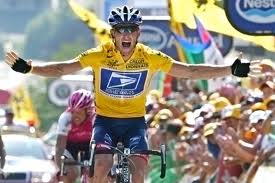
What Lance Armstrong Can Say to Oprah to Make Things Right

Nothing.

Apart from a simple “sorry for the long-standing deception,” Lance doesn’t owe me, or any professional cycling fan, anything.

Why do we continually delude ourselves to think we know the entertainers, athletes, and politicians we follow? That we’re in some sort of relationship with them? That when their moral failings become painfully evident, that they let us down?

Remember Tiger Woods awkward, post-rehab, public confessional in some Florida hotel conference room? The one with his mom in the front row. The one where he said he “kinda got away from his Buddhism (one of my favorite understatements of all-time)?” What was that all about? Tiger didn’t pledge to be faithful to me or you or even his corporate sponsors.

The bright light public confessional is all about limiting the damage to one’s personal brand, and by extension, earning potential. To reset as a human being, Tiger would have been far better off listing all the people he had hurt and then seeking each person’s forgiveness outside the media spotlight.

At 41, Lance is in trouble if he needs advice on how to reset as a human being. I’m offering it anyways. He won’t follow it because he doesn’t read this blog regularly enough, and like all of us, he’s highly skilled at rationalizing his behavior. He tells himself, “If it wasn’t for my success, Hamilton, Landis, Andreu’s wife, and even my masseuse and others involved with the sport wouldn’t have made nearly as much money.” In his mind, his accusers are indebted to him.

Forget Oprah Lance. And forget your athletic career (triathlon has a long ways to go before it reaches “fringe sport” consideration). Resolve to be a more kind, empathetic, and truthful person. Take time to make a detailed list of everyone that you’ve directly hurt as a result of your words, actions, and privilege. People who you repeatedly lied to. People you bullied on and off the bike. People whose reputations you trashed. People whose businesses you ruined. Then come clean in a written mea culpa, a no holds barred confession. In it, take complete responsibility for hurting those people as a result of their truthfulness.

Send it to the New York Times. Then buy however many plane tickets necessary and travel to see everyone on the list. No matter how much it cuts into your triathlon training. Seek their forgiveness as personally and privately as possible.

Do that and the tide of public opinion will begin to turn. But don’t do it for that reason. Don’t even do it for your children or your legacy. Do it to reset as a human being, for the sake of human decency, to live the second half of your life in a more kind, empathetic, and truthful manner.

imgres

Rooting for the Millennials

Car makers are worried.

Today’s teens and twenty-somethings don’t seem all that interested in car ownership. Or driving more generally. Less than half of potential drivers age 19 or younger had a license in 2008, down from nearly two-thirds in 1998. The fraction of 20-to-24-year-olds with a license has also dropped. And adults between the ages of 21 and 34 buy just 27 percent of all new vehicles sold in America, a far cry from the peak of 38 percent in 1985.

Jordan Weissmann in the Atlantic writes, “The billion-dollar question for automakers is whether this shift is truly permanent, the result of a baked-in attitude shift among Millennials that will last well into adulthood, or the product of an economy that’s been particularly brutal on the young.”

I’m guessing both and.

Wiessmann asks why purchase a new car given the five figure cost, insurance, repairs, and $4/gallon gas, especially if there are reasonable, nearby alternatives like a Zip Car membership, bicycle sharing program, or subway?

Also Millennials are more likely than past generations to live in cities, about 32 percent, somewhat higher than the proportion of Generation X’ers or Baby Boomers who did when they were the same age. But as the Wall Street Journal reports, surveys have found that 88 percent want to live in cities. When they’re forced to settle down in a suburb, they prefer communities which feature plenty of walking distance restaurants, retail, and public transportation.

“If the Millennials truly become the peripatetic generation,” Weissmann warns (emphasis added), “walking to the office, the bus stop, or the corner store, it could mean a longterm dent in car sales. It’s doubly problematic (emphasis added) if they choose to raise children in the city. Growing up in the ‘burbs was part of the reason driving was so central to Baby Boomers’ lives. Car keys meant freedom. To city dwellers, they mean struggling to find an empty parking spot.”

Josh Allan Dykstra in Fast Company asks, “What if it’s not an ‘age thing’ at all? What’s really causing this strange new behavior (or rather, lack of behavior)? He likes the thinking of a USA Today writer who blames (emphasis added) the change on the cloud, the heavenly home our entertainment goes to when current media models die. Dykstra writes, “As all forms of media make their journey into a digital, de-corporeal space, research shows that people are beginning to actually prefer this disconnected reality to owning a physical product.”

“Humanity,” he contends, “is experiencing an evolution in consciousness. We are starting to think differently about what it means to ‘own’ something. This is why a similar ambivalence towards ownership is emerging in all sorts of areas, from car-buying to music listening to entertainment consumption. Though technology facilitates this evolution and new generations champion it, the big push behind it all is that our thinking is changing.”

I like Wiessmann’s and Dykstra’s analyses and insights, but not their conclusions. They’re singleminded focus is on twentysomethings’ impact on economic growth as if everything valuable in life hinges on sales receipts. Ultimately, they’re coaching car makers on how to entice Millennials back into the market.

I’m more interested in cheering them on. For resolving to live differently than their parents, meaning within their means. For caring about the quality of the environment for future generations. For contributing to our country’s energy independence and making it less likely we’ll fight foreign wars. And for challenging the status quo of conspicuous consumption.

At the risk of overgeneralizing, an inspiring generation.

young-people-325x294