Thursday Assorted Links

1. Toni Morrison’s global impact.

“History can be manipulated, whitewashed and rewritten, but people who have lived in history all have their stories, which no single dictator or censor can rob. Memories, kept in stories, keep history alive. And who, among American writers, is a fiercer and braver keeper of the memories that have made America the country it is today, in the most beautiful and powerful language?”

2. Scenes From the 2019 Pan American Games. Quants increasingly slice and dice sports in ever greater detail, but athletes’ passion and emotions will always resonate most.

3. The Dream of Open Borders is Real—in the High Arctic.

“In a place with open borders, crafting incentives is complex: If you make life on Svalbard appealing—with good schools, for instance, or better housing—there’s no way to guarantee that it will be Norwegians who come. At the same time, Svalbard cannot turn away anyone on account of nationality. The result, which can be easily justified with the treaty’s mandate of low taxes, is that the Norwegian government provides as little as possible: Unlike the mainland, the islands have minimal health care, child care, and housing benefits.”

4. What happens as opioid abusers hit middle age?  Where the most people die of drug overdoses—Scotland, USA, Estonia.

5. Inside the ten days, two hours it took Fiona Kolbinger to ride across Europe. Only 400k a day. Twenty four year-old cancer researcher who plays the piano and cycles a bit on the side.

6. Consumer Report Indicates Slushies Lose 35% of Their Value Within First Year of Purchase. Eldest daughters second appearance in The Onion, a satirical newspaper. Making me semi-famous.

Assorted Links—Winter Olympics Edition

1. Do ice dancers get better scores if they’re sex partners? A very odd mix of science and tabloid journalism with references to “knocking boots”, “boning”, and “the dirty deed”.

2. The 10 most memorable figure skating routines at the 2018 Olympics, ranked by song.

The Good Wife and I have picked this song for our 2022 ice dancing debut. Thanks to our sub-freezing temps, practice has already begun. Look for us in Beijing.

3. No One Gets Redeemed at the Olympics.

“Even starry athletes have bad days or, in the case of high-pressure Olympic competition, bad milliseconds. When they get it together — the next day, or the next minute — it’s a reset, and it happens because the athlete is serious, committed,  has talent, and knows how to push through. In other words, they have resilience.

It’s not about sin or shame or failure, though implying that that’s the case makes for eye-catching headlines, especially when there’s a bright ending to the tale.”

4. As Medals Pile Up, Norway Worries: Are We Winning Too Much?

“To thrive, cross-country needs national heroes in places like Germany, which has a population of more than 82 million. And while the United States, Sweden and other countries have lately won some major titles, the Norwegians took gold at all five of the women’s events at the world championships in Finland last year, and won a total of 18 medals, more than any other country. Norway won 15 in cross-country. The next-closest country won four.

All of this presents a conundrum for Norwegians. They want their athletes to destroy everyone in their favorite sport, but the sport could be destroyed unless other countries win.”

I’m sure my Swedish friend, Anna Rappe, who has a special fondness for her neighbors, feels for the Norwegians.

“The love for nature and skiing has given rise to some 1,000 ski clubs. Informal and low budget, many of them are driven by volunteers and overseen by parents. But they give the sport a vast and fertile grass-roots base.”

I’ve been privileged to travel the world and swim, ride, and run in many awe-inspiring places, but one day I spent cross country skiing in Norway was the most memorable, insanely beautiful, and spiritual outdoor experience of my life.

Really Bad Writing

Or more accurately, thinking.

I do not know Shivani Vora, but I seriously question her sanity. In “How to Have a Luxury Vacation in Norway for Less”, she writes perhaps the most outlandish phrase I’ve ever read in the Paper of Record.

“Norway is a great choice for travelers on a limited budget. . . “

Trust me on this, there are about 194 better choices if you’re trying to stretch your travel dollar.

[Postscript: I’m receiving unrelenting pressure from one of the caption contest contestants. She really wants to know whether she won; however, upon meeting with my attorneys, I’ve been advised to limit the competition to non-family members. Consequently, congratulations to Lance for the victory.]

A Life Built on Service and Saving

If my ticket gets punched sometime soon, I’ll have lived a life filled to the brim. Almost disorientingly so. I’ve crouched in the final passageway of a West African slave fort, been drenched by Victoria Fall’s mist, walked on the Great Wall of China, ran around the Imperial Palace in Tokyo, hiked in Chiapas, and cross country skied in Norway. I’ve lived in the Midwest, the West, the Southeast, and as one six year old here says, “the Specific Northwest”. I’ve interacted with thousands of young people, the vast majority who appreciated my efforts on their behalf. I’ve cycled up and down mountains in the Western United States. I’ve taught guest lessons in my daughters’ elementary classrooms. I’ve been blessed to know lots of people more selfless than me, some who will read this today. I’ve been loved by caring, generous parents, and been privileged to know my wife and daughters and their friends.

My life has been so full that I tend to think about whatever my future holds as extra credit. Everything from here on out is a bonus.

Maybe I don’t look forward to too much anymore because my cup has been overflowing for some time. Apart from a story well told and nature, not a lot moves me these days.

So getting choked up in church yesterday, during the announcements of all things, was totally unexpected. A guest was invited to the front to make a surprise announcement. A tall, dapper man in his late 30’s began describing his relationship with ChuckB, a member who had passed away a few months ago. He had been Chuck’s financial planner for eight years.

I didn’t know Chuck until I attended a celebration of his life that was planned nine months ago after the church community learned of his terminal illness. He worked as a forester for the Department of Ecology for a few decades and kept a low profile at church, driving the van, tutoring after school, doing whatever was needed behind the scenes. At his celebration I was struck by how everyone described him as one of the most humble, caring, and giving people they had ever known. He lived a simple life in a modest neighborhood that revolved around participating in church activities.

The financial planner announced that Chuck and his wife, who had passed away previously, were leaving the church $925,000, divided four ways, the largest portion for international aide, another for local charities, another for Lutheran World Relief specifically, and about $220,000 in the church’s unrestricted fund to use as the Council sees fit. A Council that has been seeking about $35,000 to fund a half-time position dedicated to strengthening our ties to local people in need.

There was an audible gasp. Two people stood and began applauding and soon everyone followed. My favorite part, and probably what moved me so much, was that Chuck wasn’t there for his standing ovation. Shortly before he died, he confided to one member that he was leaving “the bulk of his estate to the church,” but that person said she had “no idea it was anywhere near that much money.” No one did.

The most beautiful and moving part to me is that Chuck intentionally passed on his standing ovation. He didn’t need it. A life filled with service and saving was more than enough. Blessed be his memory.


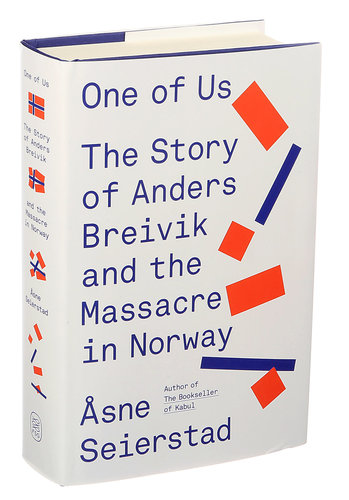
One of Us: The Story of Anders Beivik and the Massacre in Norway

One of the things I most enjoy in life is traveling to different countries and eras through the filmmaker’s lens.

In 1990, at the Denver International Film Festival, I saw Rojo Amanecer, or Red Dawn, which told the story of the 1968 Tlatelolco Massacre in Mexico City from the point of view of a family that lived in one of the apartments facing Tlatelolco Square during the shooting. “The film, Amaya Rachelle Elizindok writes, “became one of the biggest hits in what’s since been dubbed The New Mexican Cinema Movement.”

The entire film takes place inside one apartment. It does not end well. Afterwards, I was overwhelmed by sadness, unable to speak or move while the credits rolled and rolled and rolled. Same with everyone in the theatre. Lifeless, we sat perfectly still for several minutes.

Twenty-six years later, I felt the same after finishing One of Us. Completely drained. Heart-broken for the families of the seventy-seven people who were killed. The word “sad” doesn’t do justice to Asne Seierstad’s story of the 2011 massacre in Norway. An entirely new word is needed. Seierstad’s account is comprehensive, thorough, disciplined, and intimate. A remarkable work of journalism. It’s a disciplined telling of the story in the sense that she describes the events and the psychiatrists’ differing analyses, only offering her perspective on Breivik after 522 pages.

03best-seierstad-slide

Wrapped within the tragedy are innumerable social scientific questions concerning child development, family dysfunction, interpersonal relationships, video gaming, mental illness, the media, violence, policing, and criminal justice. An Abnormal Psychology professor would only need this text.

Seierstad’s first and last words were most memorable. The first are from an epilogue where she quotes Hjalmar Soderberg, the author of a 1905 novel, Doktor Glas:

We want to be loved; failing that, admired; failing that, feared; failing that, hated and despised. At all costs we want to stir up some sort of feelings in others. Our soul abhors a vacuum. At all costs it longs for contact.

And from page 523:

One of Us is a book about belonging, a book about community. . . . This is also a book about looking for a way to belong and not finding it. The perpetrator ultimately decided to opt out of the community and strike at it in the most brutal of ways.

That view is echoed by Karl Ove Knausgaard in his essay “Inside the warped mind of Anders Breivik“. Knausgaard writes:

What can prompt a relatively well-functioning man to do something so horrific in the midst of a stable, prosperous and orderly country? Is it possible to ever comprehend it?

Based on Breivik’s political rhetoric and his self-understanding, and also on his chosen targets – Regjeringskvartalet and the ruling party’s youth organisation – it is natural to compare his act with the 1995 bombing in Oklahoma City, where Timothy McVeigh, in an anti-government protest, parked a truck bomb outside a federal building and murdered 168 people. Indeed, Breivik took the Oklahoma City bombing as a model for the first part of his attack. However, almost everything else regarding Breivik and his crime points away from the political and the ideological and towards the personal. He made himself a sort of military commander’s uniform, in which he photographed himself before the crime; he consistently referred to a large organisation, of which he claimed to be a prominent member but which does not exist; in his manifesto he interviews himself as if he were a hero; and the impression this gives is of a person who has erected a make-believe reality, in which his significance is undisputed. The way in which he carried out his crime, and the way his thoughts contextualised it, resembles role-playing, rather than political terrorism. The solitude this implies is enormous, not to mention the need for self-assertion. The most logical approach is to view his actions as a variation on the numerous school massacres that have occurred in the past decades in the United States, Finland and Germany: a young man, a misfit, who is either partly or completely excluded from the group, takes as many people with him into death as he can, in order to ‘show’ us.

A few months before Breivik carried out the assault, he visited his former stepmother and told her that soon he was going to do something that would make his father proud. His mother had left his father when he was one, and it had been years since Breivik had spoken to him.

He wanted to be seen; that is what drove him, nothing else.

Look at me. Look at me. Look at me.

In the United States we need to incentivize the giving up of guns and implement much tougher gun control laws. At the same time, Seierstad and Knausgaard remind us that seeing the invisible in our midst is at least equally as important. Seeing means making eye contact with and talking to those who’ve given up and begun withdrawing. Some of the most alienated are children. To reduce domestic terrorism, we need to see them most of all.


Let’s Make a Deal

Pay for me to travel to Norway next year to compete in this completely irrational swim-bike-run adventure and I’ll detail my experience for PressingPausers worldwide. My wife will play the role of sherpa. Norway’s kinda expensive (the exact words on a pin my family presented to me mid-way through our extended Norway visit) so I’m going to estimate about $10k.

First I’ll have to “win” a lottery which only ten percent of applicants manage to do.

I’ll also have to gain about 50lbs for the swim otherwise I’ll wash up on the shore of the fjord like a completely frozen, farmed salmon. Your $10k should cover the uptick in groceries in the months leading up to the race.

Can I finish it? Earn a coveted black t-shirt? Let’s find out.

All Things Considered–Long Weekend Edition

• How to teach personal finance.

• The power of the pen. The bin Laden papers were going to be released independent of Hersh’s London Review story of ObL’s death. And Hilary Clinton really wants all her emails made public. And Tom Brady’s never done anything wrong. The Obama administration says Hersh’s story is “filled with inaccuracies”. Which is a lot different than saying it’s untrue.

• Best sports presser of the week.

• Warren Buffet, minimalist. “Money has no utility to me anymore as I am very happy with what I have but it has enormous utility to others in the world. More possessions to me would actually be a liability more than an asset.”

The data was faked.

Seven uncomfortable truths about living in Norway.

• Minimum wages compliments of fivethirtyeight.com. Look out Columbus, Seattle is closing fast.

CFe6fsMUEAAViTY-1

In Da’ Club

The title of a thumpin’ Fiddy Cent track.

It’s well known that adolescents place great importance on fitting into groups. It’s less well known that we never outgrow our need for affiliation. Our happiness isn’t contingent on being in da’ club, but in clubs, as the following experiences have recently reminded me.

Cycling up and down Washington State’s mountains. The roads we cycle routinely attract motorcycle and car clubs. No motorized vehicles for ten minutes then whoosh, whoosh, whoosh—twenty five Miatas, Nissan Cubes, or Christian Harley riders. Interesting how special interest groups form around a common interest—like climbing mountains on bicycles—or by driving a common car or motorcycle.

Working out at the Y. The Y is teeming with clubs including traditional aerobics, yoga, water aerobics, Masters swimming, 5:30a.m. basketball, spinning, and the retiree coffee klatsch.

Reading a Sojourners Magazine interview with Rebecca Barrett-Fox who wrote her doctoral dissertation on Westboro “Baptist Church” which just protested at our state capitol and local high school. Here’s the relevant excerpt: SojournersDid the actual church service resemble mainstream Christian worship? Barret-Fox—I saw a lot of circling the wagons, with sermons about things like Noah and the flood and how only eight people got on the ark. This church is the ark, so if you’re a part of this church you’re getting on. The sermons are actually very typical of themes addressed in Calvinist teaching: questions of how you know that you are in or how you know that they are out. Sojourners—So the attraction is the appeal of being part of the “in group.” Barret-Fox—Exactly. And I could see the attractiveness of that in a world that is fragmented and scary, especially if you are not okay with doubt or gray areas.

Westboro isn’t a spiritual community, it’s a sociological one. Members have distinct identities—chosen hate mongers. The hate-filled rhetoric, signage, and protests are shared experiences that reinforce a distinct group mindset. Barret-Fox adds: . . . church members create a culture that makes it uncomfortable to leave, and that becomes a high hurdle. They’ll take you off the church rolls, so you are excommunicated, but it amounts to more than simply excommunication from church services; it is de facto shunning because, as one member has said, “We don’t have time to talk to people who aren’t part of the church.”

I’m not the clubber that more extraverted peeps like the GalPal are—church council club, Spanish book club, and a coffee klatsch among others. I have a small group of friends I run with a few mornings each week (known affectionately as the Baboons, after a homeless woman yelled angrily at us “You look like a bunch of baboons!” while we were running shirtless on a hot summer morning on 4th Street) and another that I cycle with a few evenings each week for half of the year. Add that to my list of oddities, the bulk of my clubbing takes place at between 7 and 24 miles per hour.

Suburban neighborhoods—where I’ve spent too much of my life—conspire against community. There’s the occasional neighborhood garage sale or July 4th potluck, but suburbanites are usually stuck driving to fitness centers, grocery stores, post offices, and the bulk of their small groups activities. We need more urban planning that promotes community—with walking and bike trails, parks, and small accessible stores and service providers.

Once safely ensconced in a group most teens forget about what it feels like to be on the outside. Too often, we don’t outgrow that either. One thing I’ve always admired about Betrothed is she’s always conscious of people who are new to church or a social gathering and she goes out of her way to introduce herself and talk to them. The world is a tad more humane and friendly as a result of her presence.

Once securely in a group, we tend to adopt specific behaviors to signal that we’re “in da’ club”. At my Iron-distance triathlon in late August, there will be a ginormous merchandise village at which nearly everyone of the 3,000 participants will load up on t-shirts, sweatshirts, jackets, visors, and all things fitness to “signal” they are “in da’ club”. Dig the sweatshirt—I am an Ironperson, you’re not. (To which the ambivalent clubber in me says, “Big whoop. So you’re well-to-do, over-exercise, and probably suffer from early onset narcissism.)

At Lutheran churches we sometimes signal we’re “in da’ club” by referencing all things Garrison Keiler and Norwegian. Numb to the fact that “inside references or jokes” make newcomers who aren’t Scandinavian feel less than full members of the community.

Self-important academics (sorry for the redundancy) are especially skilled at drawing circles around their clubs which are usually tied to specific disciplines. Among other methods, they create and use elaborate terms and acronyms that leave outsiders wondering exactly what the hell they’re talking about.

We should acknowledge our need for group affiliation and build neighborhoods that promote the formation and success of small groups. We need more people like my Better Half who are especially conscious of those not “in da club”. And we would be well served by reflecting more regularly on the ways our clubs sometimes exclude others.

Television Review—Netflix’s Lilyhammer

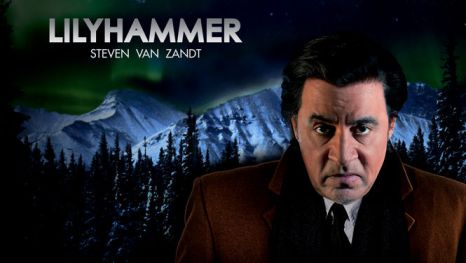
I’m halfway through Netflix’s first original television series, an eight episode series titled “Lilyhammer” that takes place in Lillehammer, Norway. Episodes are 45 minutes long or about 20k on the bike trainer. It’s solid and hopefully a positive sign of things to come from Netflix. Here’s their brief description.

After he testifies against a Mafia boss, ex-gangster Frank Tagliano enters the witness protection program and asks to be sent to Norway. Despite the peaceful surroundings, it’s not long before Frank strays from the straight and narrow.

I dig it and I’m awarding it an “A-“. Full-disclosure, I lived near Lillehammer for a few months five years ago and have fond memories of a ski weekend there, a memorable dinner party, and a school visit where I was the guest teacher. I’m smitten by the setting so adjust your grade at home accordingly. The scenes of the train station, the white farm houses against the snow, the shops in town, the countryside, the ski jump, the Birkebeiner cross country ski race all take me back to that time.

Besides the distinctive and extraordinarily beautiful setting which makes it worthwhile alone, the show works because of the wonderfully authentic and quirky Norwegian cast. Incompetent cops are played out in American television comedies, but their Norwegian counterparts are good for a new and steady stream of cross-cultural laughs. It’s well written, moves at a nice pace, thoughtfully explores cross-cultural differences, and is decently acted.

I deducted half a grade because Steven Van Zandt, of Soprano fame, is too much of a caricature of an American mobster. He could and should be much more nuanced and subtle. Related to this, it will be interesting to see whether Netflix has learned the lesson of the Sopranos. Somehow, despite Tony Soprano’s incredibly flawed nature, he was likable. He could have a guy whacked, or whack him himself, and cheat on his wife. Then when he walked into the kitchen you’d cheer the fact that his favorite pasta was ready and waiting. An unsolvable television mystery.

Four espisodes in, Frank Tagliano or Johnny Henrikssen, isn’t as likable as Tony. I’m not sure whether he has the necessary charisma and charm to compensate for his buffoonery. Also, his romantic relationship with a much younger woman fails the believability test.

Despite those flaws, I’m looking forward to the next four episodes.

Soprano-related postscript—Is there a more powerful portrait of an addict on television than Edie Falco’s Nurse Jackie?