If the earth stops rotating in a few, this may very well be the reason.
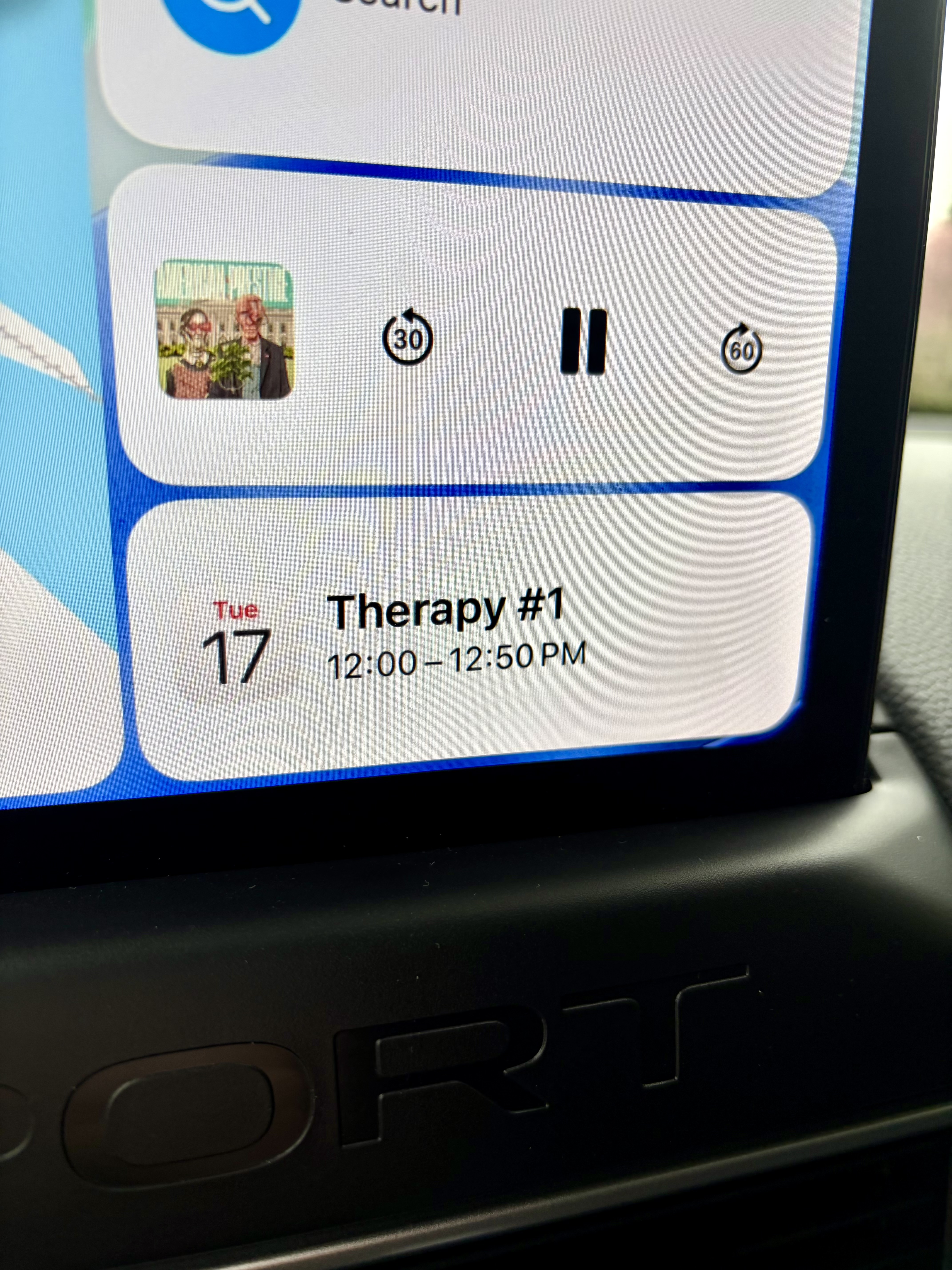

If the earth stops rotating in a few, this may very well be the reason.
A large part of the rationale for the move to the Adult Family Home three months ago was that I could recover, and therefore Lynn and I could heal and get in sync, and spend whatever time is left as positively and peacefully as possible.
I am not in a good place, but a much better one. Way, way less stress. FuFu, Alison, and Jeanette, among many others, have saved me.
As a result, for the last two months, Lynn and I have enjoyed my visits. We look at photo albums. We listen to music. I tell her about my day. We loop the hood.
Most of all, we touch. I hold her hands and massage her calves. She hugs me tightly as if she’s not going to let go. We press our foreheads against each other. I caress her head as she falls asleep. We kiss.
It’s how we communicate.
I’ve never partnered with someone who is dying, so I’m improvising. All the time. What to say?
Last week I kneeled on the floor next to her hospice bed as she cried before napping. I told her I loved her and that she was okay, which of course, was untrue. Then I told her how sorry I was for what she’s experiencing. And that she’s been fighting it every minute she’s been awake for a few years and that was why she was completely exhausted. And that I wanted her to Rest even if that meant being alone. I told her how much I am going to miss her. More tears.
Then I told her she wasn’t alone and wouldn’t be alone. That she is bearing the fruit of having built such a caring and loving family.
We have had a much more intense relationship than you would probably guess. Intensely good most of the time, intensely bad some of the time.
I told her I was skimming an old Apple Note I wrote from when we were in marriage counseling five or six years ago. And how my one regret is all the time we wasted being mad at each other. I asked her to forgive me for being so stubborn and selfish. More tears.
I suspect she wanted to say something similar, but I was okay with her not being able to because I wanted to take most of the responsibility for our epic, sporadic struggles.
Even though we wanted to at times, I told her we never quit, and that was something.
In hindsight, we probably wasted 10% of our time together being too mad at each other to thoughtfully interact. Even though we learned to repair things, 10% of 38 years is almost four years! What we would do to have four years back.
More than Lynn, I accepted that we were never going to coast conflict free like some couples seemingly do. That the heartache was part and parcel of the intense intimacy. Again, in hindsight though, I wish we had far fewer, less intense conflicts. Fewer days where we couldn’t even talk to one another.
My unsolicited advice. Don’t take whatever committed relationships you’re in for granted. Be as proactive as you can. Trust one another enough to talk about what lies below the surface so that resentments don’t build up. Learn to listen and get more comfortable probing your partners’ feelings. If possible, by yourself, or together, enlist the help of a professional to learn to have fewer, less intense conflicts.*
Most of all, don’t assume you have many years and decades left, because you may not.
*LOL, I’m gonna get slammed for that wee bit of hypocrisy. :)
A very good friend of mine has been “unlucky” in marriage. Three divorces. Although the first was so short, and he was so young, he doesn’t count it. A mulligan if you will. So, for all intents and purposes, twice divorced.
Of course, you and I both know luck has nothing to do with whether committed relationships endure.
After his last divorce, about five years ago, he looked in the failed relationship mirror, and really didn’t like what he saw, negative patterns of his own doing.
In no time at all, he fell hard for partner four. So hard, he turned to a therapist to avoid sabotaging it.
No dude in the history of dudes has ever told another dude everything they talk about with their therapist. But my friend has confided in me a bit about his therapeutic journey including his initial question of “Am I an asshole?” I could have saved him a lot of time and money by simply saying “No, you aren’t an asshole. Not even close.” But his initial question was his way of asking, “What’s wrong with me?” Which lead to, “What work do I need to do to avoid fucking up this relationship?”
Relationship Four really warms my heart. I asked him what explains his positivity and joy in this new relationship and without hesitating, he said, “We have fun together.” I herby submit that as a litmus test for any committed relationship.
I don’t know anyone over fifty who has pivoted as much as my friend. The key ingredients as I understand them—introspection, humility, vulnerability, and self-compassion. Inspiring stuff.
Fast forward to a text he sent this morning. And I quote, “And then to top the evening off, I showed M how I had spent the last five weeks secretly learning to swing dance to surprise her for her 50th birthday. Yes, that’s as much as I can manage after five weeks. I can’t dance! And I’m a slow learner.”
The low res video nearly brought me to tears. Just the two of them, swing dancing in front of a big ass swing band in a New York City club. It’s so beautiful. Because it represents so much damn growth. He’s prioritizing her happiness. And so the happiness comes back to him.
On my run this afternoon, I kept returning to the vid in my mind. And all the innumerable podcasts I’ve listened to and “think pieces” I’ve read that lament the problem of boys, and how to raise men, and how to teach masculinity.
My friend’s surprise swing dance is the most manly, most masculine thing imaginable. Because it’s the result of all the intrapersonal work he’s done.
I firmly believe the “boy-man-masculinity” discussion is completely pointless. Instead of asking, “What does it mean to be a man?”, we should ask, “What does it mean to be a decent human being?” Instead of obsessing about getting masculinity just right, we should shift our focus to the personal attributes we want all young people to embody, irrespective of their gender identities.
Especially how to be caring, kind, and selfless. I am incredibly proud of my friend for piecing together an equation that fosters those exact attributes.
Introspection + humility + vulnerability + self-compassion.
Suffice to say, my personal life has gotten significantly more difficult of late. Obviously, this isn’t the time or place for any details. Just know, as your humble blogger, I am “compartmentalizing” these days.
The GalPal wants me to find a therapist to help make things less difficult. I know lots of people who are benefitting from therapy, and intellectually I am definitely pro-therapy, but when push comes to shove, I am Resistant to seek the help of a mental health counselor myself.
Not only am I pro-therapy, I believe our well-being depends largely on the quality of our closest interpersonal relationships, and those relationships depend largely on our willingness to be vulnerable about our inner lives.
The gender stereotype that males think and talk almost exclusively about tangible objects—whether news, weather, or sports, okay maybe cars too—doesn’t apply to me. I’m always thinking about deeper things than just how bad UCLA men’s basketball is this year.* What to do with the nearly constant deeper inner dialogue, that is the question.
Two imperfect answers spring to mind. The first was modeled by a friend a week ago when he asked if we could talk. He suggested a bike ride, and despite the frigid temps, of course I was in. Looping FishTrap Loop shoulder to shoulder, I initiated, “So, what’s up?” “It’s a long story,” he started, but really it wasn’t. It was a very good talk/ride and I’d like to think he felt better afterwards.
What’s imperfect about that? With occasional exceptions like the one just described, my closest friends, being of the male persuasion, aren’t as adept as women at talking about their feelings. As a result, it’s rare for a male friend to genuinely ask, “So, what’s up?” Could I take more initiative with my friends in digging deeper into “real” life? Fo sho.
In theory, writing could be a helpful outlet too. That is, if I could figure out the endlessly convoluted privacy concerns of those nearest and dearest to me. Which I can’t. And before you suggest it, journaling ain’t the answer, because that’s just a more visible form of the inner dialogue.
So, given those limitations, why not just “do” therapy? Asked differently, what the hell is wrong with me, that I’m so resistant to “professional” help?
I’ve been mulling that around and around.
What I’ve concluded is that the Good Wife doesn’t fully appreciate just how much I am a product of my parents’ “too extreme for their own good” intense independence. Both my mom and my dad grew up without much, during the Depression, in eastern Montana. When my dad died, his obituary was in the New York Times. Individually and together, they developed resilient, “grin and bare it” approaches to life that worked for them.
Mostly. Better for my dad than my mom who would have benefitted greatly from therapy after my dad’s death, from which she never really recovered.
Again though, that knowledge of how helpful therapy can be is overridden by my parents’ modeling which was rooted in the brutal conditions of eastern Montana in the 1930’s. Suffering was synonymous with living. You just endure it, in whatever form it takes.
Asking me to just dial up a therapist feels like asking me to break from my past and my people, to defy my DNA. Despite all the decades, I am still of eastern Montana, still of Don Byrnes, still of Carol Byrnes, still of believing that I must grin and bare it mostly alone.
For better, or more likely, for worse.
*thank goodness for the women
By Darbe Saxbe. Filled with important insights.
Do you see a therapist, take meds, or work out? New research boosts the case for working out.
A clear, thoughtful, and substantive summary of recent research on treating depression and other mental health issues like OCD and anxiety.
I trained a ChatGPT AI chatbot on my childhood journal entries to talk to my inner child.
“Young Michelle told me: ‘I’m honestly proud of you for everything you’ve accomplished. It hasn’t been easy, and I know you’ve made a lot of sacrifices to get where you are. I think you’re doing an amazing job, and I hope you continue to pursue your dreams and make a difference in the world.’
I sensed the kindness, understanding and empathy that she was so willing to give other people, but she was so hard on herself. I was tearing up during that exchange.”
Name an emerging field of therapy.
“Her goal is not to be released from her fears about the warming planet, or paralyzed by them, but something in between: She compares it to someone with a fear of flying, who learns to manage their fear well enough to fly.
‘On a very personal level,’ she said, ‘the small victory is not thinking about this all the time.’”
A fall semester postscript.
When evaluating their progress at the end of the semester, my first year writing students say the same thing over and over. “In high school, all we ever did was literary analysis. Intro. Three body paragraphs with supporting details. A conclusion. I learned the formula, but it was mind numbing.”
Why are secondary teachers stuck in literary analysis mode? Is it as simple as teaching to Advanced Placement tests? If so, maybe we should risk the ire of parents determined to pass their privilege on and ditch Advanced Placement altogether.
Why not ask students to occasionally write about themselves in the context of big questions? To be introspective. To dare to be personal. To be philosophical. It takes some of my students longer than others to pivot to first person “I”, but eventually everyone sees value in it. Some experience an immediate awakening. For example, in one final paper a student wrote, “I don’t think I truly understood myself until this class because I never contemplated my biggest motivators. Why doesn’t my mom love me? Why do I feel so insignificant? Am I enough?”
K-12 teachers might reply that they’re not therapists so why venture into personal rabbit holes. I’m advocating for public, group-based community; not private, individual therapy.
Another student explained the difference especially well:
“Even on the days with the best attendance, our classroom does not exceed twenty people. This has allowed us to know each other on a deeper level than that of just classmates. I feel as though each person in class is now someone I can call my friend. Through group discussions, the sharing of intimate parts of our lives, and just laughing together in general, we have discovered all the similarities each of us share. As a group, we have formed our own sort of community, filled with people of all different majors and parts of the country. I can confidently say that I have learned just as much from talking to my classmates as I have from the assigned class readings.
Despite the different reasons for each student being placed into Writing 101, we are each leaving the class with one commonality. We formed a special little community built on finding our footing in a new place, trust, and compassion. . . . We made connections that could last a lifetime and learned lessons from one another that changed our perspectives.”
Since classmates don’t assign grades, students are socialized to pay attention exclusively to their teachers. Watch for yourself, in the vast majority of classrooms, students completely tune out one another.
Dig this paradox. My teaching is most consequential when I fade into the background and get my students to listen to, and learn from, one another.
Rick Reilly’s advice for Tiger Woods is a joke. Here’s the gist of it:
New Normal #3: Try a little tenderness.
Take some time with people. Phil Mickelson signs for 20 minutes after every round, Tuesday or Sunday, first place or 100th. On a good month, you do 20 minutes. Try it once. You might like it. Your every moment on a golf course doesn’t have to be Elvis being rushed out of the Hilton. Take some time with people. Say hello. Stand on 18 once and watch a guy finish, then shake his hand. It’s not going to kill you.
New Normal #4: Enough with the emperor act.
Climb down from this ivory tower you live in. Introduce a little transparency into your life. Give an interview once in a while that isn’t being timed by your agent standing in the corner. Tweet more than once a month.
New Normal #5: Spread it around a little.
Look, everybody knows you’re the cheapest guy on tour. Some people are sure your wallet is sewn shut. I know a car valet in L.A. that you’ve stiffed so many times, he feels like he’s full of embalming fluid. The last time he saw you, he stood in front of the car door, making small talk until you made with a fiver. Don’t be like that. Drop some coin. You’ll be surprised how it improves your disposition. Karma does exist, you know.
Middle agers know they’re aging due to a growing list of aches, pains, and miscellaneous physical maladies. I take better than normal care of myself, exercise regularly, eat well, help old ladies across the street, and go to church when it’s not sunny outside. But I’m just as aware of the aging process because of changes in my thinking.
For example, I used to think people could, with concerted effort, change aspects of their personalities. Mean guy could become nicer, superficial woman more substantive, impatient person more relaxed, angry person more caring, self-centered guy more selfless.
Not anymore. Sure someone can drop weight or stop drinking, but some people are just mean, superficial, impatient, angry, and self-centered. Have been for a long time and will continue to be.
Earth to Double R. Just like my personality and yours, Tiger’s is never going to change.
“I got away from my Buddhism.” Yeah, you think?
Did you see Darren Clarke signing autographs on the WAY to the FIRST tee on Sunday afternoon at Royal St. George’s?! Did you hear Rory McElroy after the US Open say he “couldn’t wait” to join his friends at home in Northern Ireland to celebrate. Genuine, personable dudes. Tiger is not likable, just phenomenally talented at golf.
Since all is fair in advice giving, here’s some for R squared:
New Normal #1: Learn how to accept people’s flawed personalities. Save your breath about how you want them to change.
New Normal #2: When an athlete acts reprehensibly, do what most elementary students learn to do during recess in first grade, ignore them. So the guy fired his caddy. He hasn’t won in a long time, isn’t playing currently, and isn’t really deserving of your media spotlight.
Then again, maybe I’m wrong. Maybe there’s hope for Tiger because you’ve fundamentally changed your personality. Religious conversion, counseling breakthrough, whatever. Total personal makeover. The comment section is open. Do tell. I would love to be proved wrong, but I’m not holding my breath.
 Pressing Pause