Exercise and Cancer

More reminders. Life is fragile. A three year old child at our church has a brain tumor. Same with the English Teacher/coach at our local high school.  Same with Iram Leon.

Unless you’re already perfectly appreciative of your health, see a picture of Iram and read his entire story here.

Short version. Iram is 32. Kiana, his daughter, is 6. Iram Leon has an untreatable and inoperable cancerous tumor lodged in his brain. Statistics suggest the tumor will kill him before he is 40. He recently lost his job as a juvenile probation officer because his thinking is clouded and he says, “I was making too many mistakes on the stand.”

Instead of retreating into sedentary hopelessness, he runs. To the surprise of the medical community, a few weeks ago he ran a 3:07:35 marathon. While pushing Kiana in a baby jogger. “She had a blast,” Leon said, “listening to Disney songs and getting food from volunteers.”

From the story. “Recent research clearly shows that exercise improves outcomes for cancer patients.” And “Few other leads have shown as much promise as physical activity in extending the lives of cancer survivors, ” said an editorial last year in the Journal of the National Cancer Institute.

The problem is oncologists often urge their patients to take it easy. But the American Cancer Society and other medical groups now encourage exercise among cancer survivors including encouraging breast cancer survivors to lift weights.

A doctor in the story says, “Mr. Leon gives us someone to point to when a person fighting cancer says, “I can’t do it.”

I say Mr. Leon gives us someone to point to whenever anyone is trying to be a good father and human being. He’s only racing in events that will allow him to bring along Kiana. “I want her to have as many memories of me as possible,” he says. “I want her to remember us having fun together, not me being sick.”

Thanks Iram for the inspiration.

True Confession

If you were standing here beside me right now you’d probs (adolescent form of “probably”) counsel me to immediately abort the mission. You might even slam the laptop on my fingers. You’d argue, and I’d be hard pressed to prove otherwise, that this is not the right time or place to confess that I’ve been unfaithful to my wife. But being of slow and stubborn stock, I feel I must come clean.

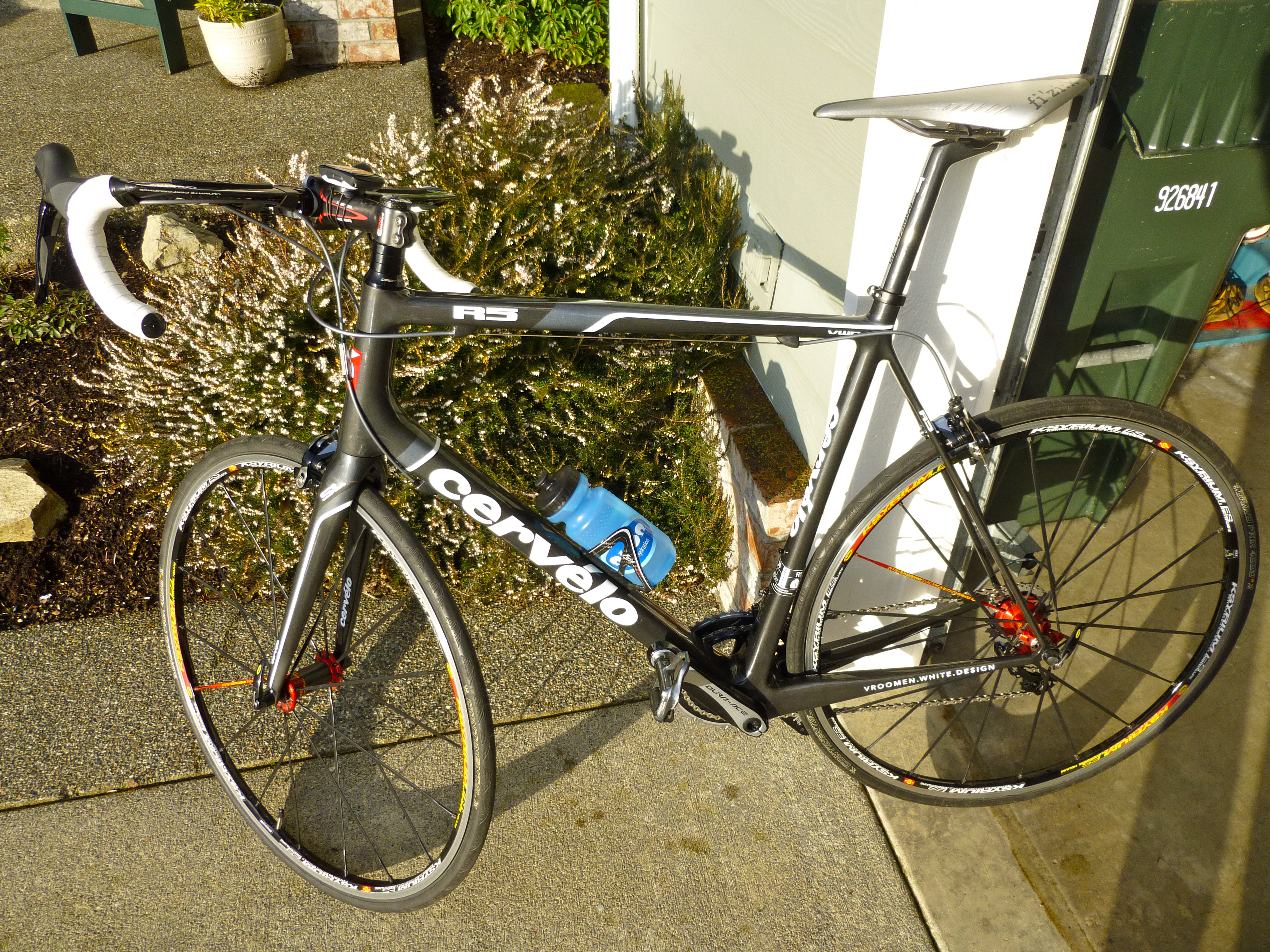
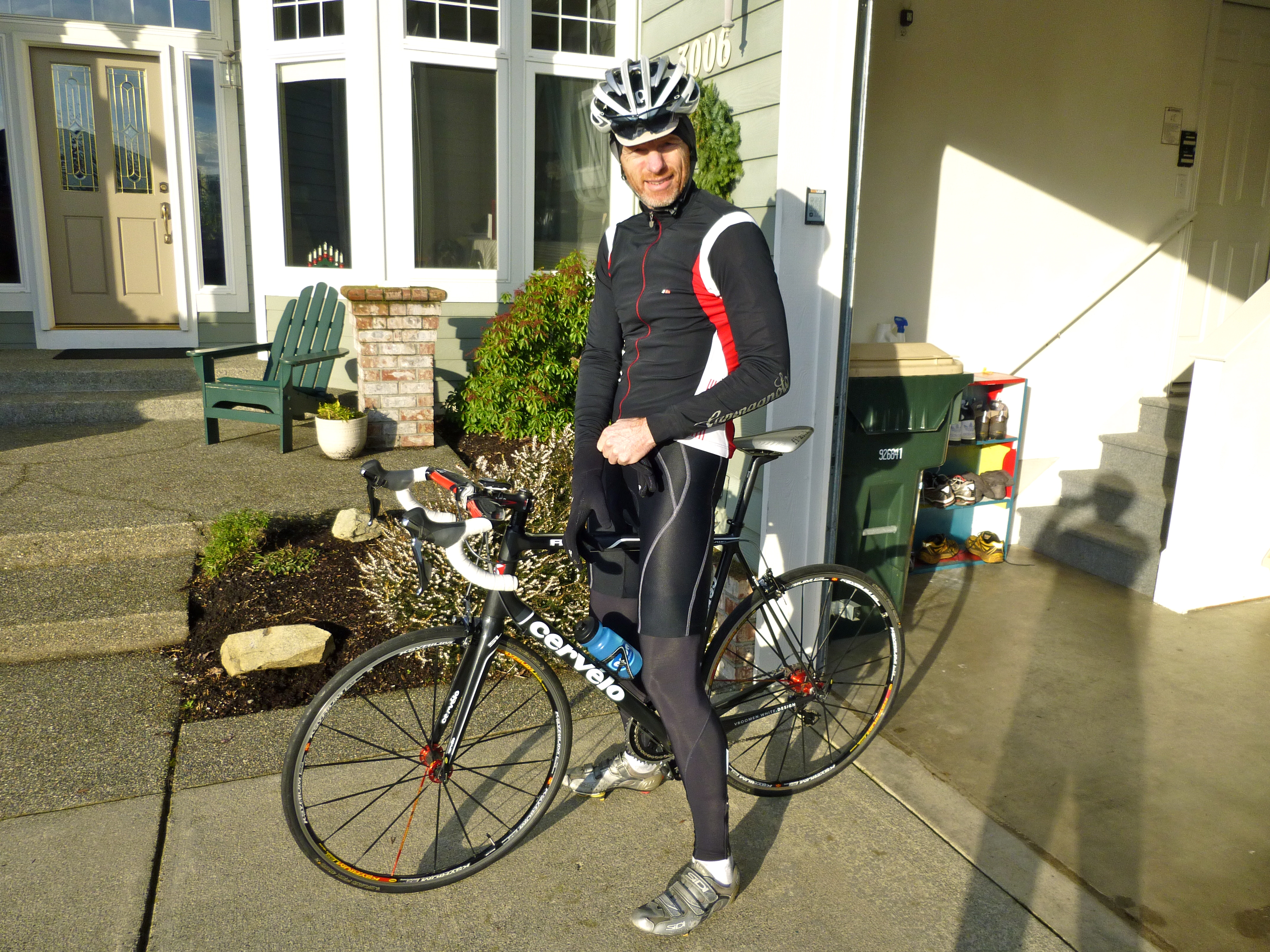
Straying from the marital straight and narrow started innocently enough, wishing the love of my life was a few pounds lighter, then fantasizing about weekend get-aways. I wish I could say this was a one-off and that I immediately realized the damage done, but in fact, since taking the plunge, I can’t stop thinking about her. She’s promised to spend hours with me. Take me places near and far. Climb steep mountain passes. Crush anyone that gets in our way. To always be there for me.

If you’re a female reader, you’re probably so disgusted with me that you can’t see straight. If you’re of the male persuasion, you’re wondering what she looks like. Without further ado. . .

Be still my beating heart.

Be still my beating heart.

The start of a beautiful relationship.

The start of a beautiful relationship.

The Link Between Walking or Biking to School and Concentration

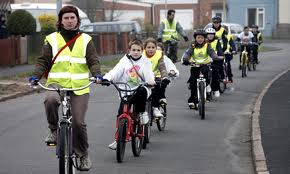
My seventeen year-old supper nanny of a daughter babysits for a Mormon family up the street. They have six children, the oldest in fifth grade. When she got home from their house Saturday night, she excitedly announced that number seven is on the way. The coolest thing about this constantly expanding brood is that they walk, or scoot, or cycle to school during the week and walk to church on Sundays. Whatever the Pacific Northwest weather. They’re quite a spectacle, all dressed up, scattered up and down the sidewalk. School is two miles round-trip, church almost four. Early elementary children walking four miles to and from church, someone call Social Services.

Probably without knowing it, our Mormon neighbors are onto something. Sarah Goodyear recently reported on the results of a 2012 Danish study that found that kids who cycled or walked to school, rather than traveling by car or public transportation, performed measurably better on tasks demanding concentration, such as solving puzzles, and that the effects lasted for up to four hours after they got to school.

The study was part of a Danish project that looked at the links between concentration, diet, and exercise. Researchers were surprised that the effect of exercise was greater than that of diet. According to one:

“The results showed that having breakfast and lunch has an impact, but not very much compared to having exercised. As a third-grade pupil, if you exercise and bike to school, your ability to concentrate increases to the equivalent of someone half a year further in their studies.”

Goodyear writes the process of getting yourself from point A to point B has cognitive effects that researchers do not yet fully understand.

Another research conclusion jives with my experience:

“We learn through our head and by moving. Something happens within the body when we move, and this allows us to be better equipped afterwards to work on the cognitive side.”

Here’s the problem though. Goodyear:

“Nationally, as of 2009, only 13 percent of kids in the United States walked or biked to school, down from 50 percent in 1969.”

Her related questions:

“But if more parents realized that packing the kids into the back seat actually affects their ability to learn, would they change their ways? Advocate for building schools in more walkable locations? Demand improved bicycle and pedestrian infrastructure? Or simply make the time and effort required to get to the kids to school under their own steam, accompanying them if need be?”

And the excellent concluding paragraph:

“Many parents pay for test prep and after-school enrichment programs to make their kids more academically competitive, and go to great lengths to schedule time for those activities. Imagine if they invested those resources instead in something as simple as helping their children to travel safely from home to school on foot or by bike, arriving ready to learn.”

Public policy questions always involve challenging trade-offs. This particular one seems like a rare exception. School transportation costs make it difficult for districts to commit adequate resources to teachers’ professional development, students with special needs, better curriculum materials, and building improvements. If schools districts started requiring students that live within a mile or two of their school to walk or cycle, the savings could be used for those other priorities, teachers would accomplish even more as a result of increased student concentration, students would be healthier (and their adult chaperones), roads would be less congested, and the environmental impact of school travel would be greatly reduced.

Win. Win. Win. Win. Win.

imgres

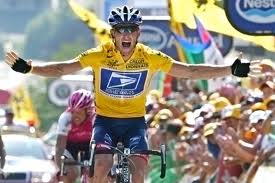
What Lance Armstrong Can Say to Oprah to Make Things Right

Nothing.

Apart from a simple “sorry for the long-standing deception,” Lance doesn’t owe me, or any professional cycling fan, anything.

Why do we continually delude ourselves to think we know the entertainers, athletes, and politicians we follow? That we’re in some sort of relationship with them? That when their moral failings become painfully evident, that they let us down?

Remember Tiger Woods awkward, post-rehab, public confessional in some Florida hotel conference room? The one with his mom in the front row. The one where he said he “kinda got away from his Buddhism (one of my favorite understatements of all-time)?” What was that all about? Tiger didn’t pledge to be faithful to me or you or even his corporate sponsors.

The bright light public confessional is all about limiting the damage to one’s personal brand, and by extension, earning potential. To reset as a human being, Tiger would have been far better off listing all the people he had hurt and then seeking each person’s forgiveness outside the media spotlight.

At 41, Lance is in trouble if he needs advice on how to reset as a human being. I’m offering it anyways. He won’t follow it because he doesn’t read this blog regularly enough, and like all of us, he’s highly skilled at rationalizing his behavior. He tells himself, “If it wasn’t for my success, Hamilton, Landis, Andreu’s wife, and even my masseuse and others involved with the sport wouldn’t have made nearly as much money.” In his mind, his accusers are indebted to him.

Forget Oprah Lance. And forget your athletic career (triathlon has a long ways to go before it reaches “fringe sport” consideration). Resolve to be a more kind, empathetic, and truthful person. Take time to make a detailed list of everyone that you’ve directly hurt as a result of your words, actions, and privilege. People who you repeatedly lied to. People you bullied on and off the bike. People whose reputations you trashed. People whose businesses you ruined. Then come clean in a written mea culpa, a no holds barred confession. In it, take complete responsibility for hurting those people as a result of their truthfulness.

Send it to the New York Times. Then buy however many plane tickets necessary and travel to see everyone on the list. No matter how much it cuts into your triathlon training. Seek their forgiveness as personally and privately as possible.

Do that and the tide of public opinion will begin to turn. But don’t do it for that reason. Don’t even do it for your children or your legacy. Do it to reset as a human being, for the sake of human decency, to live the second half of your life in a more kind, empathetic, and truthful manner.

imgres

Self Sabotage

It’s 9:30a.m. Here are some of the decisions I’ve made today, January 2, 2013:

  • I decided to wake up at 5:22 a.m.
  • I decided to put on running pants and two thin, long-sleeve running shirts since Weatherbug was reporting -1 degrees C at the nearby elementary school (0 C and higher=shorts). Plus medium gloves, hat, reflective vest, headlamp.
  • At 5:44 a.m. I decided to walk outside into the pitch black fog.
  • At 5:45 a.m. I decided to run 6+ miles with the Right Wing Nutter and Dan, Dan, the Transportation Man (inexplicably, the PrinciPAL is still in Hawaii). I decided to take the posse around Safeway via North and Eskridge.
  • After some curbside chitchat, at 6:42 a.m., I decided to remove my sweaty running clothes and walked almost naked (still had my socks on) the length of the house to my bedroom where I put on dry running shorts and a dry t-shirt.
  • Upon returning to the kitchen, I decided to eat a banana with peanut butter after which I filled up a water bottle—half orange juice, half water.
  • At 6:58 a.m. I decided to spin 26k (213 watts, 1:01:25) while watching a combination of the Dan Patrick Show, CNN, MSNBC, and ESPN.
  • At 8:05 a.m. I decided to do 60 push ups broken up with some foam roller goodness, planking, and stretching.
  • At 8:30 a.m. I decided to have a large bowl of oatmeal with raisons, brown sugar, butter, and molasses.
  • I decided to skim the Wall Street Journal while eating.
  • For desert, I decided to have one of those new-fangled smallish oranges that darn near unpeel themselves.
  • Shortly before 9 a.m., I decided to shower.
  • Shortly after 9 a.m., I decided to put on long underwear, thus outsmarting Old Man Winter; plus wool socks (important to do that before the long underwear), pants; a t-shirt; and my ace, moth eaten, expedition weight thermal top.
  • Around 9:10 a.m., I decided to go upstairs to my desk where I checked on the stock market rally and chuckled at the Lakers’ boxscore.
  • After aimlessly surfing the internet for fifteen minutes, I decided to reply to a few emails and start Thursday’s blog post, tentatively titled “Self Sabotage”.

A friend of mine has high blood pressure, but that doesn’t stop him from obsessing about things over which he has very little control. A conservative Republican who is sympathetic to the Tea Party, he went darn near silent after the election, depressed by what he sees as a “serious loss of freedom”.

Determining the most appropriate size of the government is an important and legitimate debate, and I understand that 48% or so of U.S. citizens wants to reduce it, but my friend, who has no international frame of reference, lets things like Obamacare, gun control proposals, Bloomberg’s proposed soda regulation, helmet laws, and the unemployment benefits extension get him seriously down. Oddly, he takes each of those proposals and policies personally.

As a result, he completely slights the freedom he does have to make hundreds of decisions every day—ones that directly influence his health and well being—like how much sleep to get, when and how to exercise, and what to eat and drink. That all important trifecta—sleep, exercise, and diet—probably account for at least half of a person’s health and happiness.

But I’m losing the argument. He seems determined to let distant politicians get him down. Ironically, in losing, I’m illustrating another daily freedom he routinely overlooks—the freedom to tune others out.

Living Healthily By Feel

As I wrote recently, modern life requires some dependence upon expert recommendations, but when it comes to our health, we’re too dependent upon scientists; when it comes to our money, we’re too dependent upon financial planners; and when it comes to our spirituality, we’re too dependent upon religious professionals.

A recent Wall Street Journal story described a study of older recreational athletes. The conclusion, past age 50, running more than 15-20 miles a week at faster than 7:30 per mile is associated with higher mortality rates. That makes sense since fast long distance running is a form of stress. So far, I’ve ran about 1,470 miles this year or almost exactly 30 a week. Most of those miles were in the 7:30 neighborhood (well, not the last 8 in Canada). In addition, I’ve swam about 185 miles and rode 5,272—all personal highs thanks to my Ironperson Canada prep.

According to some scientific experts, I’m killing myself in the predawn perpetual light rain, in the sense that I’m shortening my life. If you listen carefully, you can hear couch potatoes everywhere cheering lustily.

So do I dial things back? I accept the studies’ peer-reviewed conclusions, but I’m too skeptical to change my overly active lifestyle as a result of the study. When determining how far and fast to run, swim, and cycle; instead of living purely by science; I choose to live mostly by intuition or feel.

I know myself better than the scientists who conducted the study. Consequently, I’m just arrogant enough to think their study doesn’t apply to me. I’ve slowly built my endurance base over the last twenty years, I eat well, I prioritize sleep, and I’m pretty good about minimizing everyday stress. Regularly going semi-long contributes to the excellent quality of my life. I’m convinced I’m physically, mentally, and even spiritually healthier than I otherwise would be if I cut back based on this study’s recommendations.

I would like to live a long life, but I’m even more interested in maintaining a good quality of life. Late in life I want to remember my past; read The New Yorker; write regularly; and walk without falling down.

I could be wrong. About one of the most important decisions imaginable. The horrors, I may not be special. If some of you are at my funeral in two or twenty years, I give you permission to laugh one last time at me.

Saturday morning, I extended myself for only the second time since Ironperson Canada (the other was the Seattle Half Marathon two weeks ago). I ran 10 miles with my favorite right wing burners, inhaled a large bowl of oatmeal, and then celebrated Hob’s 52nd birthday by swimming 52 100’s. Dear longevity researchers, stick that in your pipe and smoke it.

IMG_1628

IronCanada 2012—Blood, Sweat, and Cheers

The Truthiness of Things

Swim 1:03:03 (6th out of 217 in 50-54 age group). T1 6:34. Bike 5:40:46 (33rd out of 217). T2 6:20. Run 3:50:30 (7th out of 217). Total, 10:47:12 (14th out of 217).

The Training

Twenty years ago I adopted an active lifestyle where I either swim, cycle, or run five or six days a week nearly every week of the year. I’ve done several Olympic distance triathlons and two half irons. I’ve long watched and puzzled over the 140.6 mile long distance scene. Eleven months ago, when intrigue trumped ambivalence and I registered for IronCanada, I had no interest in “just finishing”. Instead, I established one overarching goal, to complete the run in less than 3:59:59. I knew if I saw a “3” at the start of my run time, in all likelihood there would be a “10” at the start of my total time.

Once I started to train in earnest, I got more specific and thought if everything came together just right the following was possible—1:03, :06, 5:36, :05, 3:50, 10:40. To avoid unnecessary pressure, I kept that equation to myself. I also skimmed the results from the last few years to see how fast the burners in my 50-54 year age group were likely to go. Then, a month ago, when a serious heat wave settled over central British Columbia I decided it made more sense to shoot for a tenth place finish, whatever the conditions, whatever the time.

A healthy fear of racing the distances really helped narrow my training focus. There was little “I should probably work out today” dithering. Even if I was consistent I knew I was going to suffer mightily on race day. If I started cutting corners, I’d not only suffer terribly, but have the added disappointment of underachieving. Once in awhile I chose rest over a planned workout, but that was to avoid injury.

A typical training week was three swims for a total of 7-12 kilometers. No stroke work, no kicking, no drills, half with paddles and pull buoys. Two hundred miles of cycling. Typically two 60ish club rides (meaning intervals) and a solo 80 miler on my time trial bike on Saturdays. Four runs for a total of 30-48 miles. I almost always ran 8-10 miles off the Saturday long ride in increasingly warm afternoon temps. Two key workouts. I ran 15 rolling miles off a hot 70 miler and 4 miles off a 125 mile solo effort (ride time 6:32).

Early on I was dismayed by my average cycling speed, low to mid 18’s. In the last six weeks, without seeming to lean on the pedals any harder, I started to see improvements, regularly averaging low to mid 19’s and 20. And to my surprise, from the beginning of my five-month build, I always ran solidly off the bike. Maybe it was getting professionally fitted and my improved bike position, maybe it was the salt tablets that finally kept the cramping at bay, maybe it was my above average weekly run mileage, or a combination of each. I always ran between 7:45s and 8:15s off the bike, even on the hot and hilly 15-miler, even after 125 miles. I told the running posse that it was starting to feel easier to run 8 minute miles off the bike than fresh out of bed at 5:45a.

Running solidly off the bike built confidence. Confidence to post a “3” and a “10” given decent conditions. I also devised some unique mental strategies. One came to me at the top of a climb in the Eastern Sierras in May. As I sat by a beautiful mountain stream, I meditated on the water’s natural, effortless flow. What if I ran like that? Lightly, naturally, steadily. And then my most bizarre race prep idea of all time. The Canada run course borders Lake Skaha between miles 4 and 22. I started visualizing the lakeshore lined with Canadian Navy Seals (camouflaged and mostly submerged under water) who had “shoot to kill anyone walking” orders. The only way to survive would be to keep running, no matter how slowly. That of course introduced a real dilemma. How could I manage to adequately warn all of my fellow competitors who were slowing to a walk that their lives were in imminent danger?

Pre-race

I planned on traveling to the race solo, but I’m glad we turned it into a family vacay. We dig Penticton. Broke the bank on a house rental two blocks from the beach and start/finish. Sunday morn I left the house shortly before dawn with my wetsuit draped over my shoulders. Blue skies, next to no wind, a wonderfully flat lake. Athletes started appearing out of the glooming. It’s strange to train almost completely alone and then be surrounded by 2,700 other athletes. And to have lots of people watching what I’ve been doing in complete anonymity. I got somewhat veklempt walking down a semi-dark Main Street. Five months of anticipation finally giving way to racing.

Then, standing in the lake minutes before the start, the singing of the Canadian national anthem. A soul stirring rendition. From far and wide. O Canada.

Thankful to be healthy, to be in such a beautiful spot, for my family’s presence, and for all the friends and extended family monitoring and pulling for me from afar.

Act 1—The Swim

In the Torah it says, “We see things not as they are, but as we are.” This is how I remember the race. Which doesn’t necessarily mean it’s the way it went down.

Lined up just right of center in the second row. Anxious as hell. Anticipating an alley fight. Then, somehow, I cruised to the first buoy nearly unscathed. Piece of cake. Why does everyone exaggerate how physical the start is? Just when I started to relax and get a little cocky, I got seriously squeezed by 20 people on my left and 10 on my right. The 130 meters between buoy one and two were the longest two minutes of my life. I panicked, breaststroked a few times, and thought to myself, “Straight lines and the race clock be damned, I just want open water.”

I wanted to get ten people to my right, completely on the inside, but it was like trying to walk across a 30 lane freeway moving at 60mph. I slowed my already slow breaststroking to regroup and turned backwards to see if I could slip back and to the right, but it was a constant stream of rubberized humanity. I now understand how even strong swimmers who are comfortable in the water can get in trouble.

I don’t know how, but I pressed forward. Gradually, it loosened up just enough for me to calm down and get back into a rhythm of sorts. I spent a quarter of the rest of the swim on other people’s feet and three quarters swimming into small open pockets of water. I knew drafting off other people would be faster, but I didn’t care. I just wanted to pretend I was at home in tranquil Ward Lake. By the end, I took three shots to the head, but nothing debilitating.

I always loose my balance and end up semi-dizzy after open water swimming. After throwing in a few dolphin dives for the crowd and staggering for thirty seconds well right of the ramp, I made my way into transition one.

As per tradition, my transitions were disasters. When you exclude them, I raced faster than the 10th through 13th place guys in my age group. Wish I hadn’t crunched those numbers. I have a bevy of excuses, but there’s lots of human error mixed in too. Excuse. I had to hit the sunscreen hard given my fair skin and history of skin cancer. Human error. I wore my swimsuit instead of cycling shorts for the first time ever in a race. It was also hard getting my arm coolers all the way on with wet skin. And I ran to the wrong side of my bike rack and had to crawl under to get it unracked. Comedy of errors. But I hadn’t drowned and I was ready to ride.

Act 2—The Bike

Realized early on I didn’t have my gel flask in my jersey pocket. Another transition fail. I did take salt supplements every 30 minutes, 13 in total. And two powerbars. Felt good and settled in through downtown and up McClean and into Okanagan Falls. High cadence, low effort. Riding like a mountain stream. Reminding myself that the ride begins at the Husky Station at mile 40, at the base of the 11 kilometer long Richter Climb. Between OK Falls and Osoyoos three different groups of riders passed me in blatant violation of the no drafting rules. Hardest part was spending five minutes watching them slowly pull away. I’m guessing there were some 50-54 year olds mixed in there.

I was gradually improving my position on Richter which wasn’t as tough a climb as I had remembered from five years ago when I did it on a training ride. Just past the top I pulled over at an aid station for a bottle. Another cyclist rode into me, I braked too hard, and went over my handle bars at about 4-5mph. Probably my fault for not signaling clearly enough. He was fine, but I had a short, very deep cut on my right shin and was bleeding badly. I’m guessing it took five total minutes to find three bandaids that would stick. I probably could have used a stitch or two, but to borrow from Frost, there were still miles to go. The blood ran all the way down my lower leg onto my white sock which turned light red. Total badass. Look out now mothers!!!

The most amazing aspect of the second half of the ride was the utter absence of wind. I thought there was always a serious headwind throughout most of the second half, but the anticipated press against the chest never came. Which was wonderful. Like the IRS saying, “We’ve decided not to audit you after all.” Loved the smooth pavement on the out and back, up to Yellow Lake, and back into town. Stood a lot on the short climbs and broke up the long ones by standing at times too, but was careful to keep it under control. I rode like I trained, at about 80% effort. Max speed descending from Yellow Lake, 48.3.

Act 3—The First 18 Miles of the Run

Ran like I trained. Went through the half in 1:48:25 and continued to run low 8’s through mile 18. Passed a fair number of peeps. Took salt supplements every three miles and sports drink and flat cola every mile. Drank approximately 120 ounces. Blood was flowing from underneath the bandaids, but there were still miles to go.

Act 4—The Last 8.2 Miles of the “Run”

The ex-7x TDF winner likes to say, “Sometimes you’re the hammer, sometimes you’re the nail.” The last 8.2 miles was ALL nail. The internal dialogue. “F$*# the mountain stream metaphor. And I don’t give a sh&t if the Canadian Navy Seals have me directly in their sights. Go ahead and fire. Put me out of my misery. That’s it, I can’t take it anymore. I’m walkin’.”

I walk 16 minutes a mile so if I’m running almost 8 minutes a mile, it’s an 8 minute penalty per mile spent walking. I think I lost a good 12-15 minutes over the last 8.2 miles which means I almost walked two of the last 8.2 miles. Put differently, I ran 24 miles, which I’ll take. Especially given the second half headwind and temps in the high 70’s, low 80’s.

The finish. Pardon the sexism, but when a female athlete passes you in the last 100 meters of a triathlon, it’s referred to as “getting chicked”.  With 100 meters to go I was “geezered”. A ripped guy with the number “60” on his calf passed me at the 140.5 mile mark. I was relieved to hear the announcer say he won his age group (by 45 minutes it turns out), but still, to spot the guy ten years?!

My personal fan club was at the finish cheering wildly in their iRONman gear. Just like before and after the swim, just like before and after the bike. And best of all, somewhere on the Southern California coast, WonderYears Wayne slammed his laptop shut, ruing the fact that his run as the fastest Iron athlete in the fam was finally over, forever and ever, amen.

Act 5—Post Race

I told the race volunteers who “caught” me that I needed to have a cut cleaned, looked at, and taped up. They immediately labeled me “Walking Wounded” and ushered me into the medical tent. The World Triathlon Corporation is a much maligned organization these days, and in many cases for good reason, but the Penticton volunteers were unbelievable. Maybe the WTC deserves some credit for that. One doc said I had a piece of gravel in my cut. How badass is that?! All that extra weight I carried over the last 90 miles!

After getting my cut cleaned and taped up I felt nauseous, tingly, and altogether terrible. Probably borderline heatstroke. They moved me to the second level of the medical tent where I sat for a half an hour drinking soup with ice on my head while being attended to by a nice nurse. Gradually I felt good enough to make the three block walk home. The GalPal and 17 picked up the bike and gear bags and 20 warmed up an assortment of leftovers. I woke up at 3:45a.m. and made myself a peanut butter and jelly sandwich.

I had wanted to wade into the lake right after finishing to speed recovery, but didn’t because I was in such miserable shape. Nor did I eat nearly quickly enough. As a result, I’m still quite sore four days later.

Thanks to everyone who helped me train, offered advice, and/or cheered me on from afar. And thanks to my family for putting up with the extra training and fatigue.

And thanks dear reader for making it through the world’s longest race report. Congratulations, you’re an IronReader!

Ironperson Canada 2012—Almost “Go Time”

As ready as I guess I’ll ever be to swim 2.4 miles, cycle 112, and run 26.2 on Sunday, August 26th in Penticton, British Columbia.

I’m assigning myself an “A-” for my prep. I’m most proud of the fact that without being accountable to a coach, or anyone, I put the work in. I’m fit. There have been times in the last five to ten years that I’ve been faster in the water, faster on my bike, and I’ve ran faster, but I’ve never been as strong in all three disciplines. I am trained for a steady and solid all day effort. I’ve gone from doubting whether it’s possible to run a marathon off a long swim and bike, to dialing in the salt supplements, and thinking I can. When I get in trouble during the day, I’m confident I can pullback, regroup, and continue on. The half grade deduction is due to the record amounts of sugar I’ve consumed over the last few months. I’ve blown through pack after pack of Costco cookies and thoroughly tested a wide range of Dreyer’s ice-cream flavors. Someone asked Charles Barkley what he thought of my nutrition and his answer is below.

The four consecutive recent Tampa, FL runs were more important than meets the eye. It took me 15 of the 30 miles to learn to slow down and sustain anything through the heat and humidity. Mid-day Friday in Olympia I ran for an hour steadily and fairly hard in a long sleeve winter shirt. I couldn’t have done that before FL. I feel fairly acclimated to heat, an achilles heel of mine. Then again, it was 94 in Penticton yesterday. If it’s that warm on race day, all bets are off.

Recently, I met two people who couldn’t understand why anyone would voluntarily subject themselves to such extreme physical activity. I’ve wondered the same thing for years, but have made peace with my motivation which I’d describe as one part peer pressure and two parts the lure of trying to pace such an event correctly.

I am an ordinary age group athlete, but I am above average at pacing events correctly. I love the challenge of spreading out my effort as evenly and efficiently as possible. That’s part of my competitive advantage. I first learned to pace a 10k well, then a half marathon, then marathons, then half irons, then rides around Mount Rainier. This event intrigues me because it will be the ultimate test of that skill. The line between my “all day” pace and “too fast” is razor thin especially on the run. Even 10-15 seconds a mile too fast in the opening miles could very well cause me to blow up in the middle or late stages of the run.

The question is do I have sufficient self-understanding and body awareness? No power meter or heart rate meter for me, just g.p.s. and intense attention to my “perceived rate of exertion”. Put differently, for eleven hours I’ll be closely assessing whether I’m breathing too hard. I have a hard time living in the present for 11 minutes, here’s hoping I can do it for 11 hours.

My physical ordinariness is evident in the fact that true fish make me look silly in the water; I can’t hang with Cat 1, 2, and 3 cyclists; and the fifty year-old down the street would have to spot me at least 30 minutes in a marathon. But 90% of triathletes have a weakness. In contrast, I’m decent across the board. That’s another advantage. Being 50.5 in the 50-54 year old division is yet another.

Given my successful training and those advantages, what are some realistic goals? I’m conflicted. Half of me feels conventional, I want to start the run right around the seven hour mark and finish 10th in my age group (last year there were 245 in my 50-54 age group). The other half wants to have a spiritual experience and learn more about myself and life independent of the race clock. That’s vague because it’s not a goal as much as a tough to articulate feeling.

Recently, a friend and fellow long distance athlete had an epiphany. He realized that racing is about learning to set goals and persevere in attaining them and then applying those skills and discipline to his non-athletic life. For me, that’s too linear, or for lack of a better term, too Western. I want to experience something of the divine. Is that asking too much?

Post race I’ll share my more specific pre-race goals and my unconventional mental prep. Ultimately, finishing 10th in my age group will come down to one thing, being able to run steadily for the whole marathon leg. In training, salt tabs have been a godsend, keeping my chronic cramps at bay. I expect them to work on race day too. So then, only two things will determine my relative success, smart pacing, and mental toughness, or guts.

Do I have sufficient guts? I think so.

p.s. Noticed the dearth of pics lately? I gave my camera to 19 for her 20th b-day. I will buy a new one soon and jazz the place up. In the meantime, I will deputize 17 and 20 as race photogs.

Canada Seven Weeks Out

[Note to newer readers. I’m competing in a long distance triathlon on August 26th in Penticton, Canada—2.4 mile swim, 112 mile bike, and 26.2 mile “run”.]

June was productive. I’m fit although I’m swimming, cycling, and running slower than I’d like. Rightly or wrongly I’m chalking that up to the higher than normal volume. When I shut things down for a day or two, I bounce back well. I’m looking forward to the August taper and to returning to more normal, sane levels of activity post-race.

Too soon for a definitive judgement, but right now, I’m even more convinced that repeat Iron-distance competitors have several screws lose. One problem is never feeling as if you’re doing enough. I’m training more than normal, but still often feel it’s not enough. Right now I feel especially badly since today is my second rest day of the week. Of course I nearly killed myself on my mountain bike yesterday, but still.

My suggestion, if you ever suffer the same kind of mental lapse I did and sign up for a similar “race”, is to design a standard week that is realistically repeatable. For the love of alliteration I repeat, realistically repeatable. I’ve had to adjust my original weekly swimming, cycling, and running goals down. I’ve also had to build in a weekly rest day (or two). Getting ready is more about consistency and positive momentum than uber-long workouts that often result in missed workouts.

Rereading that last pgraph makes me chuckle. I sound like I know what I’m doing, but I don’t. These are unchartered waters. I wish I could hit it hard this week, taper for the next three, and race, but most participants probably wish they could just be done with it as this point.

Last week, thanks to some of the more generous friends a guy could have, I once again trained at altitude, even if only 4,000′ plus, in and around Sunriver, Oregon. The week consisted of a mix of Benham Falls trail runs, Mount Bachelor cycling, North pool swimming, and a memorable Sunriver to Bend and back mountain bike ride. Even had great, built-in training partners for most workouts.

That was especially nice when I went over my mountain bike handlebars on the penultimate day. I rode smack dab into an 18″ vertical rock on the side of an easy trail. Total lapse of concentration that I paid dearly for. Quite possibly the world’s worst mountain biker. I thought I had broken my nose and lost a tooth and needed lots of stitches. Fortunately, I was cut up and badly bruised, but avoided the emergency room. Very sore, but I’ll be fine in short order. That sigh of relief is the worldwide triathlon media which is already downbeat with Lance on the sidelines.

Another training tip from the rookie know-it-all—be sure to throw your back out and face plant on your mountain bike at least eight weeks before the start.

In related news, I’m sorry to report elder brother, a 2002 Iron-distance Canada finisher, also known as Wonder Years Wayne, has already launched his psychological attack. I HAVE to beat his time of 11 hours, 44 minutes, and 58 seconds otherwise I may have to re-up and the idea of that isn’t very pleasant right now. He takes great pride in accurately predicting my finishing times. Last week he emailed ludicrous numbers in what was an obvious attempt to get me to swim fast, cycle faster, and then blow up somewhere along Shaka Lake during the run. In a shameless flourish even by his standards, he threw in a Hawaii World Championship reference. Not taking the bait. Wouldn’t be prudent.

Here’s to one more month of going long. One more update pre-race.

Postscript—If you’re interested in either writing and/or the importance of positive thinking in athletic performance dig this recent story.

How to Reign in Health Costs—Build Sidewalks and Bike Lanes

If I promised to give you two dollars five years from today, for one dollar right now, would you give me the dollar? What if I promised to give you twice as much of a much larger sum right now? Could you scrape together the funds and muster up the self-discipline to wait for your return? What about your family and friends?

Great article by Mike Maciag in “Governing the State’s and Localities”. Thanks to “Dan Dan the Transpo Man” for forwarding the link.

In short, cities with more walkers and cyclists are less obese. Key excerpts:

• An estimated 35 percent of U.S. adults are obese, and another third still maintain weights exceeding those deemed healthy. This doesn’t bode well for governments and individuals paying insurance premiums, especially with the country’s aging population.

• Historically, studies have linked trails, sidewalks and bike lanes with an increase in walking or cycling. As medical costs continue to rise and evidence mounts that such infrastructure also improves well-being, more officials might look to give health consideration greater standing in transportation planning.

• While only a fraction of workers in an area may opt to bike or walk to work, having the necessary infrastructure in place compels others to use it more regularly.

• . . . the correlation between commuting and residents not considered obese nor overweight was strong–16 percent greater than the relationship with median household income.

• When cutting expenses, health costs are an easy target. A recent study by two Lehigh University researchers reported obesity-related costs accounted for $190 billion annually in U.S. health expenditures, nearly 21 percent of the country’s total bill.

• Those looking to move can use the popular walkscore.com website to measure how accessible an apartment or home’s various neighborhood amenities are on foot.

The problem is we’re not financially savvy enough to tax ourselves—say in terms of raising the federal gas tax by a $1/gallon—in the short-term to fund the necessary walking and cycling infrastructure in the medium-term that would lead to health cost savings in the long-term. Collectively, we’re unwilling to pay a little more for a hybrid when the “buy back” is somewhere down the road.

In our Southeast Olympia corner of the world, the Byrnes family’s walkabililty score is a pathetic 18 out of 100. On the other hand, we’re blessed with wonderful sidewalks and bike lanes almost everywhere. Maybe I should start using them. Maybe I should walk more. Or run. Or cycle.

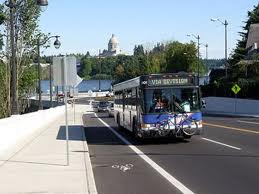
Just one of many nice bike lanes in the State capitol.

Despite the blue, cars still pass cyclists then turn right. Too often, out of sight, out of mind. Ride defensively my friends (said the most interesting man in the world).