Triathlon Training Update—April 2012

[Newer readers—I had a mental lapse last year and registered for a late August Iron-distance triathlon—3.8km swim, 112 mile bike, and 26.2 mile run—in Penticton, Canada. Once a month the sports world anxiously awaits my training updates.]

Solid month of base building, but swim and bike times are slow. Three flats later, I found a very small piece of metal in my back tire which may help explain the pedestrian bike numbers. The swim times are probably off because I’m training solo, and therefore, not working as hard as when pushed by other fishies. Running has been steady, not speedy, but very solid. I have to get used to longer and even slower than normal distance-based training. The key is finding a rhythm—in each activity—that’s sustainable for hours on end.

In April I knocked out a few mid-distance bike-runs that went well. The mental toughness those require is as valuable as the physiological adaptations. Related to that, I have to learn to run slower in the first 30-60 minutes off the bike. My muscles are so warmed up, I routinely get out of an even semi-realistic “sustainable rhythm for hours” zone. I also have to learn to adjust for warm temps—something that’s tougher than it sounds. That will be the focus of my early August Tampa, FL running.

Like most athletes I have a time goal. Older bro and Lance both went 11:44ish so it would be nice to be south of that. But a friend’s experience at Iron-distance St. George, Utah last week makes me wonder if I should take an alternative approach to goal setting. Long story short, at St. George a 40mph wind kicked up shortly after the swim start. Two to three foot swells kept many from finishing the swim. Had the wind started fifteen minutes earlier, they would have shortened or cancelled the swim. The same 40mph winds played havoc with the bike leg. Times were 40-90 minutes slower than normal.

Stoicism encourages people to set goals that are in their control—such as the quality of the effort they expend in contrast to finishing in first place.

Who knows what race day will hold—a few years ago nearby wildfires meant competing through smoke and haze. High winds, rain; even hail; and most likely of all, serious heat; could sabotage my day if I stick to a hard and fast time goal. The alternative? Age-group placing since everyone has to endure the same conditions. So what place in the 50-54 year old geezer division am I shooting for? Not telling.

The first serious setback to my training took place a week ago when my back seized up for the first time in about 18 months. Painful. My hips were completely out of alignment. Chiro said it was the worst he’d ever seen me. So May started off with long awaited idyllic weather and unplanned, forced rest. Everyone is getting in better shape except me. Poor, pitiful me. Meanwhile, I’m laying on the floor with a heating pad watching the NBA playoffs. The good news is I’m slowly improving and right now I’m about 75-80% of normal.

Next week I depart for the first of two bike intensive training trips—this one to the Eastern Sierras in the state where my cycling fame first took route—California. It’s going to be sunny and hella hot which should be good for my back. Starting next Friday, I will be taking you along, so buy some sunscreen, pump your tires, and lube your chain.

And there’s this from a pre-departure email: On the way down Wednesday, we might stop and do a short ride on Mt. Shasta, and then stay in a motel in Burney, CA. On Thursday, the highlight will be lobster tacos at the Mobil Station at Mono Lake.


I’ll Never Be Mistaken for a Foodie, but. . .

. . . my culinary skills are slowly improving. At this rate, in a few years, I won’t completely suck.

This is how I’ve been starting the day—when we happen to have strawbs.

Can something this tasty really be good for you too?

I’ve been doing my own oatmeal thang for awhile, but I kicked it up a knotch thanks to this recipe/story/video. Whenever I begin working my oatmeal magic I’m hungry, meaning impatient, so I microwave it for two minutes instead of following the recommendation to cook it more slowly. Meanwhile, I gather the butter, brown sugar, strawbs, raisins, molasses. Given a blindfold test, I don’t think I could distinguish between microwaved and stove-top oatmeal. Thanks to Chef Bijou, sometimes I add a poached (or fried, improvising again) egg or two for extra protein. And once or twice I tried the recommended bananas, but I usually just go with raisins. I like my banana separate with peanut butter, usually between breakfast and lunch. Which is a nice segue to part two of this culinary tour de force—between meal grazing.

Most of the year I workout about 9-10 hours a week, meaning I’m always burning a lot of calories. As a result, I’m eating something about every two or three hours. Between meals, I throw open the kitchen pantry and start pillaging. If it’s sweets, like Costco chocolate chips, tortilla chips, or leftover cake, I can put on a few pounds pretty easily. If it’s healthy snizzle, like carrots (with a little Ranch, come on I’m not Michael Pollan), baked teriyaki almonds, hardboiled eggs, or a piece of fruit, I can snack to my hearts content and not gain weight. For the next four months I’ll be swimming, cycling, and running for more than 9-10 hours a week, so I can pretty much eat whatever I want without gaining weight.

What, upset I mentioned the most awesome snack in passing without further explanation? Recently, the Good Wife taught me how to bake and season almonds and so that’s now a part of my growing culinary repertoire. It’s really hard so pay attention. Spread almonds out on a cookie sheet or baking pan. I use a toaster oven. Bake them at 350 for 14 minutes. Fill a large bowl with a tablespoon or so of low sodium teriyaki sauce. After they’re done cooking, pour them into the bowl with the sauce. Mix them up well. Leave the bowl out for awhile and let them dry before putting them in a glass jar.

Snack goodness

Also, keep in mind, as Chris in the Morning once said on Northern Exposure, every day you have to do something bad to feel alive. That’s what these are for.

So few calories, go ahead, have a couple

And finally, some bonus pics. Here’s today’s lunch—an open faced leftover salmon sandwich.

Well, this was the START of my lunch. Add bagel, pistachios, tortilla chips, half a banana, you get the picture.

And remember how conflict-ridden my domestic life was a month ago. Smooth sailing this week. I took Sixteen to the Farmer’s Market last weekend and bought her a double scoop ice-cream cone. And then she helped me pick these out for the Good Wife. End result. . . smooth seas for the forseable future!

Note to self—buy flowers more often. No other investment has as good a return.

Points to Ponder

• From Jonathan Haidt in the Happiness Hypothesis-Finding Modern Truth in Ancient WisdomPleasure comes more from making progress toward goals than from achieving them.

• From The Atlantic: Loneliness and being alone are not the same thing, but both are on the rise. We meet fewer people. We gather less. And when we gather, our bonds are less meaningful and less easy. The decrease in confidants—that is, in quality social connections—has been dramatic over the past 25 years. In one survey, the mean size of networks of personal confidants decreased from 2.94 people in 1985 to 2.08 in 2004. Similarly, in 1985, only 10 percent of Americans said they had no one with whom to discuss important matters, and 15 percent said they had only one such good friend. By 2004, 25 percent had nobody to talk to, and 20 percent had only one confidant. [strong counter argument]

• From Sports IllustratedIt’s hard to come up with any measure sufficient to characterize the strength of the Kenyan marathon army, but try this: Sixteen American men in history have run faster than 2:10 (a 4:58 per mile pace); 38 Kenyan men did it in October.

Grit follow up. In Monday’s Boston Marathon, the dude on the far left, Michel Butter, from the Nederlands, was hangin with the Kenyans. Pre-race, the Dutch track federation told him if he finished in the top ten they’d put him on the Olympic team. He finished seventh because of training sessions like this one.

Correction from the exceptional The Science of Sport blog: Michel Butter’s requirement was either to run 2:10, or finish in the top 8 with a 2:12 or faster. He ran 2:16:38 for 7th. So he got the place, but missed the time, and hence the Olympic spot. That’s a bitter pill to swallow, because as I mentioned earlier, the elite men were 7.8% slower than last year’s times, and about 5% slower than their typical race times. Butter missed the target time by 5.1% (the 2:12 standard). Bearing this mind, and that Boston is typically a slower course than the flat races of Rotterdam, London, Berlin etc, I would use discretion and pick him anyway…

Iron-Distance Triathlon Training Update

Is it possible to write about triathlon training in ways that aren’t painfully narcissistic? To write about it as a means to more meaningful ends like greater self understanding, greater appreciation for health and nature, for self improvement more generally?

I’m a triathlete and I find most triathlon writing uninteresting. Too many triathlon writers assume others are as interested as them in the details of their training sessions, their equipment choices, what they had for breakfast at 4:30a.m. pre-race, who they happened to run into right before the swim, their frustration that everyone drafted on the bike, and “their amazing support crew.”

Maybe triathlon writing will never be of interest to people who would never think to string a swim, a bike ride, and a run together. I’m diving in based on the theoretical possibility that one can engage the non-triathlete world if the niche sport is a springboard for thinking more deeply about struggle, life purposes, and things social scientific. If this post gets more than average page views I’ll weave in occasional swimming, cycling, and running posts. If not, I won’t.

I’m four weeks into training for Ironperson Canada on August 26th, an athletic event consisting of a 2.4 mile swim, a 112 mile bike ride, and a marathon (26.2 miles, but you knew that already). The four weeks in March called for increasing volume beginning with 51% of max, then 58%, 65%, and 72%. This week, hallelujah, I’m dropping back to 58%. In March I swam 29.6 kilometers; rode 392 miles inside, 150 outside; and ran 167 miles. I’m giving myself an “A-” for the month. I hit the swimming and running targets, maintained some core work, even lifted a bit, but fell a bit short of the cycling targets. I’m blaming La Niña for that. If we have many more colder and wetter than normal weeks, I may snap.

I’m not too worried about being behind on the bike. In May, I’m cycling up and down the Eastern Sierras and then I’m riding up, down, and around Southern and Central Oregon in late July. Eventually, I will return to summer 2011 form. Last weekend the weather broke for 48 hours and I got out for the first long group ride of 2012. I got dusted on the climbs by people I dusted last summer. Of course they hadn’t run 10 miles beforehand, but still, I realize I can’t replicate the intensity of group rides when I’m soft-pedaling indoors while watching Downton Abbey (that’ll intimidate my competition).

On the plus side of the ledger, I’m doing a better job of embracing a process I’ve long resisted. I’ve made peace with my decision to go long. I’ve always considered iron-distance training and racing a form of lunacy. Here’s why it’s taken me so bloody long to dip my toes in the long-distance waters:

1) Long-distance triathlon training and racing confounds one of my more important life goals—to maintain balance between sleep, work, family, friendship, citizenship.

2) Long-distance triathlon has become a big business and participating in it confounds another goal—resisting mindless consumerism. For me, the incessant in-your-face advertising that accompanies the increasing commercialization of the sport takes away from the beautiful settings and the purity of the activity. Go ahead and call me inconsistent, but I acknowledge the benefits of capitalism while simultaneously disliking the conspicuous advertising that is integral to it.

3) Long-distance triathlon is exceedingly expensive and I already play one country club sport—golf. And a person, if they’re a 99-percenter, should only be allowed one country club sport. I’ve benefitted greatly from capitalism, and I don’t begrudge any business legit profits, but I don’t like contributing to the supply that enables the World Triathlon Corporation to charge exorbitant entry prices. More triathletes need to say enough already, I’m seeking out less expensive races, or I’m sitting out the season altogether.

4) Long-distance triathlon is a poignant example of peer pressure something we should grow out of, by say, fifty years-old. I like to think of myself as individualist, but I have to admit I wouldn’t have committed to this race if it wasn’t for my brother and Lance who I will no doubt be cursing at my lowest moments on game day. I’ve never heard anyone of their own volition say, “Next weekend I think I’ll swim for an hour, then cycle for six more, and then run for four or more.” Hey, can I join you? And I have an idea, let’s wait until it’s the hottest day of the year.

5) Admittedly paradoxical, but I suspect long-distance triathlon has detrimental effects on one’ health. Especially for those who make it a lifestyle and repeatedly go long. If one trains seriously and then swims 2.4 miles, rides 112, runs a 10k, and then rests a lot, their body probably benefits. It’s the last 32k of the run where the health tipping point is most likely crossed. Apparently, studies of veteran long-distance triathletes are already showing the health costs of their mania.

Now though, I’m viewing it as a one-off project. And its part and parcel of the interest and identity tweaking I alluded to in the previous post. I told the GalPal, unless I don’t perform to 90% of my (perceived) ability, it’s one and done. If I don’t race smartly and thereby am not able to capitalize on my training, I reserve the right to a do-over in Santa Cruz in fall 2013 or 2014.

Also, in reading a bit about aging, I’m learning it’s important to mix things up on occasion, to break out of one’s normal routines. It’s easy to get in a rut—at work, while working out, in the sack, in one’s relationships. It’s important to travel to new places on occasion, meet new people, experience new things. This is about experiencing a few related things—getting in the best physical shape of my life and discovering my mental and physical limits. And I’m curious about how well I can spread my effort out throughout the day and how long I can force myself to run. Six months of lunacy to learn more about my mind and body.

Correction. Only five more months of long-distance lunacy.

Happy “Half Century” Birthday to Me

By the time you read this, it will be too late to get me something for my 50th birthday. That’s okay though because I’m in permanent “declutter, give away things” mode. It’s never too late to drop by, wish me a happy b-day, and take something.

Recently Olympia’s semi-permanent winter blanket of low lying gray clouds parted so I headed out for a sun run with Regina Spektor pulsing through the iPod. Her “On the Radio” lyrics couldn’t have been more timely.

This is how it works
You’re young until you’re not
You love until you don’t
You try until you can’t
You laugh until you cry
You cry until you laugh
And everyone must breathe
Until their dying breath

I’ve always thought of myself as young. Younger than my sibs; younger than my betrothed; younger than Madonna; the 20-something high school teacher; the 30-something college professor. Like wooden barrels bobbing atop Niagara Falls, I’ve watched most of my friends disappear over the 50-year old ledge already. Now though older peeps aren’t enough to counterbalance Spektor’s undeniable truth—You’re young until you’re not.

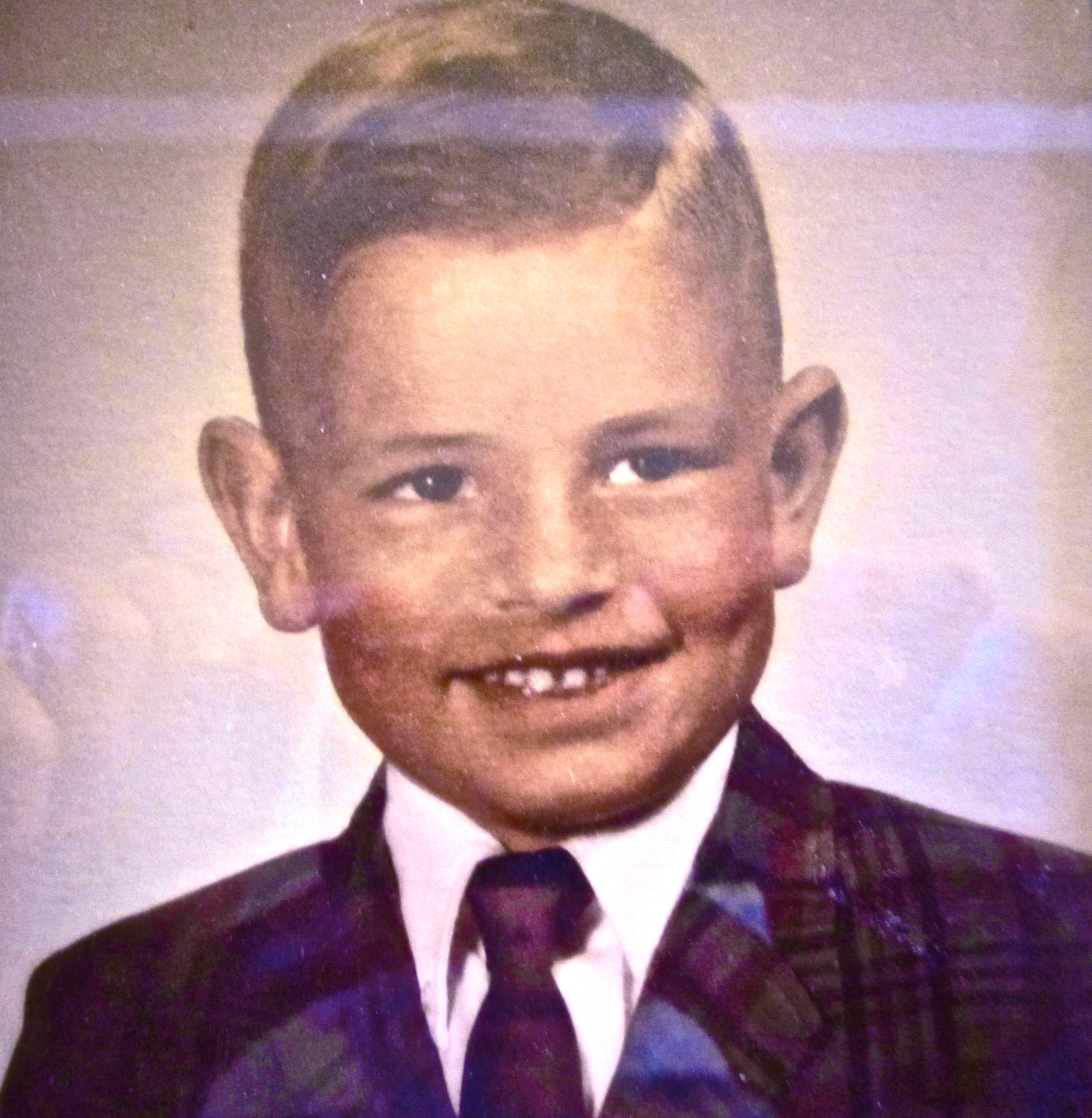
As an aspiring Stoic, I should embrace the new “old” reality, but that’s easier written than done. If I live as long as Steve Jobs, I have six years left; my dad, 19; Joe Paterno, 35; Jack LaLane, 46. The average of those four is 26.5. That’s kinda scary given how fast the last 50 have gone. Seems like just yesterday I was the most dapper dude in the first grade at Zachary Taylor elementary school in Louisville, KY. A dodgeball/kickball legend in my own mind. And yes, fortunately the rest of my gourd eventually caught up to my ears.

The key of course is making the most of however much time is left by listening a little more intently, by being a bit more observant, by putting my family’s needs before my own, by finding humor in things, by writing, by prioritizing friendship, by embracing nature.

At the risk of getting too sentimental, let me close by coming clean on that fact that I didn’t know how to spell “Niagra” Falls until using my dictionary app which offered up “Viagra” in it’s place. A few days ago at 49, funny, today at Fiddy, not so much.

Postscript—The Girls Club pooled their resources and got me the perfect gift.

Since I'm past the midpoint, it' can't be a mid-life crisis can it?

Battling Self-Doubt—Who to Believe?

When I was eighteen, nineteen, twenty, I remember being frustrated when home from college. I have three older siblings. One older brother is mechanically inclined, so whenever something needed fixing, it got fixed before I ever got the chance to swing the bat. And no one ever taught me how to work with my hands. Through teasing, I got put in a “mostly incompetent” box which hurt my confidence and zapped my initiative. Better not to try than to fail. A downward spiral of self-doubt. Alex Smith in need of a Jim Harbaugh.

Built like a pool cue, I was also labelled soft and spoiled. Truth be told, I shied away from physical contact, and by the time I came along, my parents were better off, the task master was often traveling, and Mother Dear had let her hair down. I did live a charmed life. I coasted through high school so much, my dad, who also thought of me as sheltered, discouraged me from going to college.

Proving him wrong was motivating. As a first year college student living on my own in a culturally diverse, challenging, and stimulating setting, I was transformed. Afraid of failing, I applied myself, studying intensely. I quickly improved as a thinker, writer, student. I gained confidence in communicating original ideas. I met lots of interesting people who had no preconceived notions about me. I spent a summer working at an inner-city Boston park and food bank with a dozen other college students from around the country.

Whenever I returned home though, time seemingly stood still. In the eyes of my family, I was still the mostly incompetent, soft, sheltered, spoiled seventeen year-old. The result was equal parts alienation and frustration.

So who to believe, others from the past or myself? Incompetent, soft, spoiled, sheltered, or increasingly capable, resilient, socially conscious, and experienced?

This “who to believe” dilemma is universal. Everyone has to contend with negative messages that go way back to parents, teachers, coaches, other authority figures, siblings. Why do some people succumb to long-running negativity and others rise above detrimental preconceived notions?

The single most important variable is whether you surround yourself with positive or negative people. A negative past can be blunted. Case in point, I love how my Better Half always goes into “compensation” mode and encourages me whenever I attempt to install or repair something.

Most of the time though, we have to confront our self-doubt alone. The way to do that is to build enough countervailing evidence to eventually tilt the balance from self-doubt to self-confidence. A marathon without shortcuts.

To illustrate, consider my preparation for IronPerson Canada in late August, a mere seven months away. Something about swimming 3.8 kilometers, riding 112 miles, and then running 26.2 sparks serious self-doubt. Athough I’m not building up for it yet, I can’t help but think about it from time to time. My mental prep is hampered by the fact that I’ve internalized the “soft” messages of my youth. I not only internalized them, I embellished them. Like a taller, skinnier Woody Allen, I even thought at times that I had a particularly weak constitution, and that I’d probably contract some chronic illness, and pass from the stage prematurely.

The self-doubt is playing havoc with my sub-conscious; consequently, I’ve had a series of disconcerting IronPerson dreams. In last night’s version, the brakes on my bike unravelled right before the start leading to the dreaded “DNF”—did not finish. I’ve had others where I swim completely off course and the race goes on without me. I probably haven’t dreamed about the most challenging leg yet because I haven’t worn out all the swimming and cycling nightmares.

Here’s the odd thing though, in the last two decades I’ve become an experienced open water swimmer, long distance cyclist, and marathoner. And while this is hard to admit publicly, I’ve gotten pretty good as an endurance athlete. Riding especially strongly at the end of RAMROD last July and my last half iron distance triathlon last September were major confidence boosters. Yet, I struggle to even write “pretty good” because deep down in my gut the cassette recorder quietly repeats “I’m soft, an impostor, a wannabe.”

I’m wrestling with who I am as an athlete. Ultimately of course, I’m an insignificant weekend warrior, but I have to get more specific to set goals and then devise and successfully implement a race strategy.

Am I still the third-grader who climbed down from the 10 meter platform too afraid to jump off, the scrawny junior higher who routinely got whupped in the 660 yard dash, the junior high cornerback who whiffed an easy tackle, the batter who was too chicken shit to hit a curve, or the long distance runner who was mentally tough and gutted out the last 10k of the 2010 Seattle marathon, or the cyclist who last summer got stronger the longer and tougher the mountain climb? If I’m more of the former, my goal should be the traditional “just to finish,” if more of the later, it should be to throw down with the fastest dudes in my age group.

Forget me and my inconsequential, irrational race. What negative messages limit your potential? Have you succumbed to the negativity of critical peeps from your past or are have you created a positive present?

[extra credit—What city is in the February header?]

If I Was President

Put your hands in the air like you just don’t cair if you think I need some hair extensions, a guitar, single speed bike, and vid like this one. Why should Wyclef Jean be the only one to imagine being president?

My betrothed was thrilled to score a Thanksgiving dinner invite. Didn’t have to cook a turkey or interact too terribly much with the normal one. Early on one of the seven adults at the very nice dinner lamented that getting to the pool in the morning to swim was just “too complicated”. About every 45 minutes, no matter where we were in the conversation, we’d return to that theme usually in the form of my betrothed suggesting alternative activities to our unmotivated friend. For each suggested alternative she presented separate complexities. She was a reminder that it’s a lot easier not to exercise regularly.

It’s been almost four years since I shared ten suggestions on how to create an active lifestyle. Since you didn’t click on that link you won’t notice the overlap in what follows.

If I were president, I’d charm Congress into passing a law requiring every physically able adult to engage in an hour of cardiovascular activity before 8 a.m. Employers would have to push back early starts. Based on personal experience and a constant stream of research, one hour of exercise makes the remaining 15 lots better. Benefits include lower health costs, increased productivity, improved community, and increased well-being. Brisk uncomplicated walking, running, swimming, cycling, water aerobics, elliptical exercises, rowing, or any combination of those for sixty minutes.

I joked with our “too complicated” friend that Betrothed sleeps in her bathing suit to simplify her morning routine. The night before swim mornings I pack my backpack and toss my jammers where I get dressed in the morning. By wearing them under my pants, I save a good 45 seconds in the Y locker room. Too much info I know, but the larger point being . . .

1.) An efficient, successful morning exercise routine begins the night before. Organize your gear so you can almost sleep walk out the door in predawn darkness.

Other suggestions:

2) Gradually pull the plug earlier at night, turn off the tube, forget the foreplay, close the book, and go to bed early enough to compensate for the earlier start.

3) If going somewhere with lockers, consider renting one to simplify what you have to cart back and forth.

4) Start right outside your front door or make sure you can get to your gym within five minutes. I believe a lot of indoor exercisers would be surprised by how much more fun it is to be outside if they invested in some technical fitness duds and were forced to do it by say. . . El Presidente. Of course we’re spoiled in Olympia with excellent sidewalks, street lighting, and bike lanes.

5) Most important of all, find anyone similar in ability to exercise with. Mutual accountability + evolving friendships = much higher success rates.

This challenge is similar to decluttering—logical suggestions aren’t enough to tip the sedentary scale (pun intended). Unless our “too complicated” friend finds a training partner who she enjoys spending time with, suggestions 1-4 won’t make much difference. The conundrum is until a person is able to compare and contrast what it’s like to be out of shape and in shape, they’re unlikely to muster up the self-discipline to change their daily habits.

Try it. Pick something at least semi-enjoyable, invite a friend to enjoy you, and gradually build to one hour, six days a week, before the day starts in earnest. You won’t regret it.

For the serial sedentary among us, I’m going to hire the cast from a very good, but brutal movie Betrothed and I recently watched, Sin Nombre, to enforce the law. Better start now in case I’m elected on 11/6/12. Trust me, you don’t want those hombres knocking on your door asking what you’re still doing in your pajamas.

2011 Seattle Half Marathon by the Numbers

1 2 3 4 5 6 7 8 9 10 11 12 13 .1
7:07 7:05 7:06 7:34 7:04 7:11 7:34 6:51 7:00 7:02 6:55 6:54 :43
7:24 14:31 21:36 28:42 36:16 43:20 50:31 58:05 1:04.56 1:11.56 1:18.52 1:25.53 1:32.47 1:33.30

52     degrees

6       ounces of Tillamook Vanilla Bean yogurt consumed pre-race

5       times I’ve been faster

136   seconds behind 2009 time

4       pieces of pumpkin and apple pie consumed in preceding days

3       pounds gained in preceding days

1       woman who changed out out of wet top next to me post race, posthaste

I Am the 1%

Not based on my five figure salary, my Kirkland Signature wardrobe, my penchant for water at restaurants, or my municipal golf courses of choice.

I am the “one percent” based upon health, meaningful work, beautiful surroundings, good friends, and a loving family.

Turning fiddy in a few months. My peers are showing varying degrees of wear and tear. Their setbacks help me appreciate how fortunate I am to be able to afford healthy food, to have time to exercise daily, to have access to quality medical care, and to feel younger than I am.

My work matters. How fortunate to get paid to help young people write, teach, and think through what they believe and how they want to live their adult lives. And remarkably, every seven years I get the ultimate gift, time to press pause and read, think, write, rest, renew.

Half the year I get to cycle in unbelievably beautiful mountain settings, swim in an idyllic next-door lake, and run on wooded trails and sleepy residential streets. In the summer it’s almost never hot or humid and there are no bugs that would prevent one from eating outside. There are no hurricanes and hardly any lightening, but I reserve the right to amend this post if I someday survive the overdue Shake.

I often climb the mountains, swim the lake, and run the trails with excellent friends. Fitness fellowship.

My extended family is a blessing. My wife and daughters especially so. Apart from one very bad leg, they’re healthy and happy. My Better Half and I just returned from visiting First Born at Leafy Midwest Liberal Arts College. Most nineteen year-old college students would be semi-embarrassed by visiting parents, but for some reasons ours was off-the-charts warm, inviting, and appreciative the whole time. Even invited her Spanish teaching mom to her Spanish class and took us to great student a cappella and modern dance concerts.

When we first arrived on campus, Spanish teaching mom went to meet her at the Language Building. I read in the “Libe”. At the appointed time I headed across campus to meet up with them. Turned a corner and there she was walking by herself to a piano lesson. Cue the killer off-the-ground hug.

We stayed in a room in this house which a woman left to the college with an unusual condition—that it always be available as a student hang out with the necessary ingredients to bake cookies.

Home Base

The suggested donation for staying there was $30/night. We had twin beds in a smallish room. The first hints of winter crept in through the window next to my bed. I could whizz while simultaneously brushing my teeth in the tiny bathroom.

But looks can be deceiving. No one would suspect that inside this humble house, in one of the modest rooms, a One Percenter slept contentedly.

Coaching’s Costs and Benefits

My Atul Gwande bro-mance or man-crush continues to build steam. He begins his most recent New Yorker essay explaining he’s been a surgeon for eight years and. . . for the past couple of them, my performance in the operating room has reached a plateau. I’d like to think it’s a good thing—I’ve arrived at my professional peak. But mainly it seems as if I’ve just stopped getting better.

He points out that top athletes and singers have coaches and asks whether you should too. He asks the question in the context of his own story of contacting his mentor from med school, a well-known highly respected doc, to see if he’d be willing to observe him in surgery and offer suggestions. I recommend the whole essay, but long story short, Gwande breaks through his plateau as a result of his mentor’s objective, insightful, detailed feedback.

Mid-point in the essay, Gwande explains how teacher-to-teacher coaching is one of the most promising reforms being implemented in some school districts.

He also acknowledges that many of his fellow docs and many teachers probably aren’t quite secure enough to open themselves up to pointed constructive criticism.

But he fails to mention another at least equally significant hurdle, sufficient money to compensate experts for their coaching time. School districts have to release coaches from their own classrooms meaning substitutes have to be paid for or everyone has to teach larger classes. And I can’t believe he expects teachers, lawyers, dentists, and other professionals making far less than professional athletes or elite singers to pay for coaching out-of-pocket. It’s unclear how financially strapped school districts and hospitals are supposed to add in coaching costs.

If only I had a magical “financial resource” wand. Now that I’m in better touch with my stubborn, self-defeating self-sufficiency, I see areas in my life where I could benefit from coaching.

In late August the personal trainers in mom’s swanky FL health club were doing some intriguing exercises with their clients. Made me want to toss medicine balls and run around with giant rubberbands around my ankles. And I’m sure I could benefit from swimming, running, cycling, triathlon coaching. Listening/marital bliss coaching. Cooking/nutrition coaching. Gardening coaching. Bicycle maintenance coaching. Golf coaching. Social media coaching. Parenting coaching. Writing coaching.

You get the drift.