
The Maximum Marriage

Man did I hit a wall a third of the way through David Brooks’s Second Mountain. Despite it weighing two pounds, I could not pick it up. Instead I watched The Handmaid’s Tale, Stranger Things, Billions, and went full New Yorker.

But since I keep thinking I may use a chapter of it in my writing seminar this fall, I have begun reading it again, Part III in particular, titled Marriage. The first of the five marriage chapters is “The Maximum Marriage”. At the risk of creating cliche-i-cide, this is the idea that you should never settle in marriage, instead you should go ALL IN with a soul mate who completes you.

I have several problems with Brook’s marriage advice. The first is that he failed at his. Of course this doesn’t disqualify him, assuming a greater degree of reflection and vulnerability than he shows. He alludes to being the problem and explains that his ex-wife and him have an agreement not to talk about the dissolution of their marriage, perfectly understandable, but then it’s probably best not to present oneself as an authority.

Brooks is newly married to his former research assistant, a much younger woman for what it’s worth. When reading him wax poetic about maximum marriage, I can’t help but wonder what went wrong, why, and what about the references to the “art of recommitment”?

I also have questions if not concerns about the concept of “maximum marriage”. Recently, an acquaintance gave up her will to live a few weeks after her lifelong husband unexpectedly died. That’s an extreme example, but surviving partners of long-term maximum relationships or marriages often struggle with how to live without their “soulmates”. Brooks makes passing references to “autonomy” when that concept, in my opinion, deserves more attention.

Brooks also breaks down the “stages of intimacy” in the manner of someone who gives too much credence to every social science article he reads. He slights the mystery of intimacy and the organic nature of how two people create intimacy and sometimes decide to team up for life. In addition to describing intimacy in too linear a fashion, he doesn’t offer young people any practical advice on how best to answer the innumerable questions he suggests people considering marriage ask themselves.

Sometimes I suggest, based upon my experience backpacking in Southern Mexico in 1986 with who would become the Good Wife on 7/11/87*, that the newly in love backpack together in a developing country. I promise you’ll learn more about one another in a month than you probably would in a year. How do they make decisions? How do they spend money? How do they deal with sketchy hostels? How respectful are they of others? Are they quick to laugh or humor impaired? And most importantly, are they kind and are you a better person as a result of their friendship?

It’s funny isn’t it, the Humble Blogger giving the New York Times writer a hard time about his book. But why quit now. Brooks quotes other people way too much. Half the time the quotes do not have the intended effect, I’m often left thinking “huh” even after a second reading, and the incessant quoting compromises his voice. Of course I’ve already argued he’s not the most credible person on the topic, but his consistent leaning on others doesn’t solve that dilemma, for me, it only adds to it.

Also, despite Brook’s fealty to all things social scientific, a glaring oddity is that he never mentions the role money often plays in failed marriages. I can only speculate that’s because his ex-wife and him never lacked for it and most of his friends and acquaintances are similarly well-to-do. How does he spend fifty pages giving marriage advice without even touching upon financial compatibility?

So why, given my criticisms, is Second Mountain a best seller? In fairness, there’s good mixed in, but I suspect a large part of it is professional reputation. Given his previous writing, and his very high profile, he gets the benefit of the doubt from most readers. Oh, Brooks is often insightful, so this must be too.

Not necessarily.

*don’t feel bad if your “Happy Anniversary” card arrives late
Everything From This Point Is Extra Credit

I’ve made a lot of bad decisions in my life.

  • Angel Flight pants paired with a silk shirt. Really a two-fer.
  • At age 16, getting shit-faced and hurling in the Disneyland parking lot after trying to sneak in through the employees’ exit. While wearing Angel Flight pants and a silk shirt. Can all of a person’s bad decisions coalesce in a single night?
  • Last Monday at Tumwater Valley golf course, repeatedly hitting gap wedge instead of pitching wedge and coming up short.
  • Weeding amongst poison oak in shorts and t-shirts. A couple of times.
  • Asking my eight year old daughter to help me jump start the car.
  • Running the first half of the Boston Marathon way too fast.
  • Using a clueless, commission-based financial planner.
  • Attempting to put Christmas lights on top of the steep ass roof.
  • Watching the Seahawks throw from the one yard line for a second Super Bowl victory.

Fortunately though, the biggies have gone especially well. I picked excellent parents who provided a loving foundation. I went to the right college because I had to work harder than I ever had to succeed there. And I am a much better person for partnering with The Good Wife.

Also, half way through college, discerning that I wanted to teach. And related to that, earning a doctorate early on opened doors to what has been an extremely fulfilling career in higher education. And while in graduate school, committing to daily exercise which continues to add to the quality of my life.

Recently, I reflected on these life decisions when a friend, the same age as me, late 50’s, opened up about her desire to change the world. It surprised me because she’s contributed a lot to a better world as an especially caring mother and volunteer. In hindsight, she said parenting was fulfilling, but only to a point. She regretted staying home with her son and daughter as long as she did. As she talked excitedly about plans to work outside the home going forward, I couldn’t help but think how different my mindset is.

If I’m honest with myself, I do not want to change the world too terribly much anymore. Why?

I think my spirit is relatively settled because of my decision to teach. The psychic renumeration has run circles around the financial. My soul is satiated with decades and decades of meaningful relationships with numerous students and co-workers. When deciding between vocations, young people don’t factor that in nearly enough. Being in debt certainly doesn’t help.

One huge advantage of working with adult students is after a class is over they often take time to write or say how much they appreciate my teaching efforts. And for all of the downsides to social media, it’s pretty cool to get “friended” by a former student who is flourishing as a teacher or social worker him or herself in some distant corner of the country or world.

If someone tapped me on the shoulder this September and said, “Sorry dude, but we have to go younger, you know, someone with hair,” I’d be cool with it. Absent that shoulder tap, I plan on continuing half-time for the foreseeable future because I think my teaching is mutually beneficial to both my students and me. At minimum, their idealism inspires me and they help me focus on more than baby rabbits.

I do not want to change the world in the manner my more energetic and ambitious friend does, but that doesn’t preclude me from doing so in small, subtle, nuanced ways.

If I don’t want to change the world, what do I want?

I want to invest in old and new friendships by slowing down and making time for others. I want to spend more time in the kitchen. I want to sit on the deck and watch and see if the four baby rabbits cuddling together in the planter survive the eagles’ daily fly-bys. I want to enjoy art, especially excellent literature and independent film. I want to swim, run, and cycle in nature. Mostly though, I want to be present in my marriage and as a father. I want to listen and understand my wife’s and daughters’ dreams and cheer them on as they achieve them.

And I still want to help others take small steps toward thriving families, schools and communities by putting pen to paper or keyboard to screen*.

*awkward phrase, one more bad life decision


Try To Stay Present

After a fun fiction jag, I’m reading David Brook’s #1 Best Seller in Philosophy of Ethics and Morality, The Second Mountain: The Quest For a Moral Life.

I’m only a third in, but my overwhelming thought so far is that it’s uneven. Some parts are clear, insightful and inspiring; others however, like Chapter Six, “Heart and Soul,” are so vapid I wonder if his editor is afraid of him. Brooks is like a batter that drills one pitch off the wall for a stand up double and then strikes out looking the next time up.

He argues Millennials are lost, which of course, is an exaggeration. Lost because nearly every American institution has declined in importance and young people are left with the admittedly inane advice to “do you” whatever you may be. He argues all people would benefit from living more committed lives to some combination of a vocation, marriage, philosophy and faith, or particular community.

He tells his story and stories of many others who prioritized their work lives and wealth and notoriety at the expense of deeper, more meaningful commitments based upon mutual vulnerability and selfless service. He’s best when he explains how these “Second Mountain” people lose themselves in listening and caring for others in ways that are mutually transforming.

The problem he slips into though is highlighting people whose transformations are so radical as to be nearly unrelatable. Like Kathy and David who extend dinner invitations to a hodgepodge of 40 struggling young people on a weekly basis. David left his job to create a nonprofit, All Our Kids, and gave his kidney to one of the young women when she needed a transplant.

Yeah, I’m sure I can high jump 10 feet if I just put my mind to it.

Or Etty Hillesum, a Jewish woman in Holland during World War II, who maintained a supernatural inner peace and joy all the way up to the point that her parents, brother, and she were killed in Auschwitz.

I set Brooks down for awhile to watch the first episode of HBO’s Chernobyl which is as scary a story imaginable for anyone who has ever worried about exposure to radiation at the dentist and/or airport. After that harrowing experience, I sought refuge in The New Yorker instead of immediately jumping back into Brooks.

There I think I found a more subtle and nuanced way forward for mere mortals like me. In a very short story about Maggie Rogers’s rise, John Seabrook, who hangs with her in New York one afternoon, tells this story:

A fan recognized her. “Wow,” he said. “Biggest fan. Can I actually ask a question?”

“Dude, I have no idea what I’m doing,” Rogers said, laughing.

“That’s what your album is about, right?” the fan asked. He was her age.

“Exactly,” Rogers said. “I’ve just really been trying to stay present.”

How does one stay present? By giving off a particular vibe that communicates “Heck no I’m not too busy for you.” By maintaining meaningful eye contact. By thinking about what others are saying instead of what you want to say the second they pause. By asking clarifying questions. By empathizing instead of problem solving. By learning to appreciate what’s unique about others.

Much easier to write than do.


The Mouse And The Man

Just received the meanest of text messages from the Bad Wife:

“I’m pretty sure I went 49 mph today coming down the hill between the Cove and Holiday Hills. Don’t have a computer so I can’t verify, but I’m pretty sure.”

There’s so much wrong with this text. First of all, what kind of person cycles without a computer?!

Secondly, I had just told the Bad Wife that I set a new cycling speed record during a group training ride in rural Lewis County (redundant). 48.8 mph.

I’m training for the annual sufferfest in Bend, Oregon in two weeks, the Central Oregon 500, which I turn into the Central Oregon 400, or last year 336, due to light snow on McKenzie Pass.

I am happy to report that I’m starting to feel some snap in my legs, but I coulda used a larger cassette on some of yesterday’s climbs. At times, I thought I might have to toss one or both water bottles overboard to breach the steepest pitches.

There were eight of us. I knew seven. Or so I thought. The eighth dude was someone I hadn’t seen in 15-20 years. The last time I saw him I was literally yelling at him at the finish line of the Black Hills triathlon. No, not in my character, but I watched him pass me on the bike, and then, totally ignoring the no drafting rule, suck another guy’s wheel for miles and miles. I did not reel him in during the run and did not take losing well. Keep in mind, this was before I studied Stoicism and got my shit together, by which I mean, got my ego somewhat in check.

Have you ever gotten so angry at someone that your anger ends up being much worse than whatever offensive action the other person committed? Me too.

Not immediately, but with just a little passage of time, I would’ve liked a do-over. As if an Olympic age group triathlon has any cosmic significance.

So imagine my surprise when The Drafter, a friend of a friend I learned, showed up for our group training ride. What to do? I intuited that he still remembered the psychotic break. Damn. Awkward. Thinking. Thinking. Thinking. I know what to do, pretend I don’t remember any of it!

That’s right, as a friend puts it, I was way more mouse than man. Why the hell couldn’t I have apologized and said what I was thinking, “Man, sometimes I think back to that time I lost it at the triathlon and I feel badly, sorry for all that anger.” And we rode together for 3+ hours. And we talked about our 26 year old daughters and life. His daughter is a first year teacher in Brooklyn and he was asking me for advice to pass on to her.

Having obviously moved on even without an apology, he was more man than mouse.

I know what you’re thinking. I’m a loser and that’s the one thing you’ll be most correct about today. You’re also wondering who was stronger two decades later? The Man or the Mouse? He did challenge me on several of the steepest climbs. He really shoulda known better. Revenge is a dish best served cold.


The Great Millennial Novelist

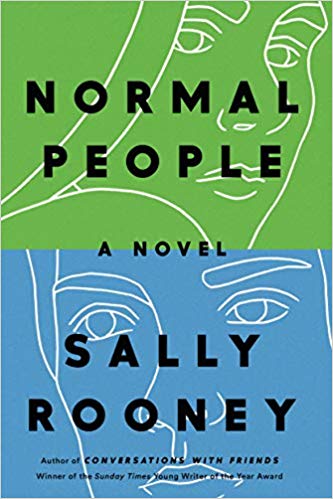
Sally Rooney. Or so “they” say. I just finished the 28 year olds second novel, Normal People. Eldest was mostly right about Rooney’s core readership.

From inside the cover:

“Sally Rooney brings her brilliant psychological acuity and perfectly spare prose to a story that explores the subtleties of class, the electricity of first love and the complex entanglements of family and friendship.”

Two-thirds of the way through I texted Eldest who devoured it in one marathon session:

“Normal People. Past half way, but having a wee problem with the intensity of their feelings for one another and their proclivity to spurn one another. Doesn’t ring true to me.”

Eldest, at 26 years young, is in a much better position than me to assess the believability of two characters in their early 20’s and she respectfully pushed back, to which I wrote:

“Yes, but in my experience, that’s the diff between high school and college. In college you quit caring what your friends think of your bfriend/gfriend.”

That prompted the most Millennial of texts:

“Hahahahahahaha. I WISH!”

Sadly, it appears I’m losing touch with today’s young adults.

By the end, the story not only rang true, it left me immobilized in my reading chair, like a great film sometimes does. The last sentence of my favorite review of the book resonated most with me:

“It is a long time since I cared so much about two characters on a page.”

And to think she’s just getting started. Here’s hoping expectations don’t take a toll.

41WnY659DnL._SX331_BO1,204,203,200_.jpg

How To Travel

Differently than the masses with their damn selfie sticks and incessant, narcissistic staged photographs in front of every god forsaken tourist landmark.

Call me hopelessly out of touch. A Luddite. A curmudgeon. A Luddite curmudgeon. Sticks and stones.

Dammit though, when exactly did everyone substitute smart phones for brains?! And my frame of reference was early April, I can’t imagine summer in European cities.

If you live in the US, what would you point a 21st century de Tocqueville to if he or she wanted to understand what life in the (dis)United States is really like? Disney World, the Las Vegas Strip, the National Mall in Washington, DC? If you live outside the US, what would you point someone to if they wanted to begin understanding life in your country in a short period of time?

The trap people fall into is being able to say they’ve seen the most popular places. Others travel in pursuit of good weather, or as a temporary respite from their hectic work lives, or to break out of the mundaneness of their lives.

I’m different, those things don’t motivate me. Not better, just different. I’m most interested in observing and reflecting on what ordinary day-to-day life is like in other places. And then thinking about similarities and differences with my life. I find ordinary aspects of daily life endlessly interesting.

How do parents interact with children? Gently, kindly, absent-mindedly? How much freedom are children and adolescents given? When alone, how do they play together?

Is there much community? How do people create it? In Spain, they go to Tapas bars and eat, drink Sangria, and talk late into the night. No introverts need apply, which probably explains why my application for dual citizenship was summarily denied.

I’d counsel a foreign visitor to the U.S. to skip the big city tourist magnets and instead live for a week or two in a few small to medium sized cities in different parts of the country. Like Marion, Ohio; Valparaiso, Indiana; Seal Beach, California, or Olympia, Washington for example. Attend a school play, get a day pass to the YMCA, attend Olympia’s Arts Walk and Procession of the Species. Go to Vic’s Pizzeria and while eating watch how families interact with one another. At Vic’s, almost always, I’m inspired by the care adults show one another and their children. So much so, I can’t help but think positively about the future. Our politics are hellish at present, but we’ll be okay.

Families—in all their myriad forms—are the building blocks of society, and therefore, a key to understanding any particular place. Whether home or abroad, I’m always eavesdropping on families, in restaurants, in church, in fitness centers, in parks.

How to travel? Go to the world famous museum, ancient city, or cathedral if you must, but resist a steady diet of tourist magnets, instead seek alternative, off-the-beaten-path places as windows into daily life. If my experience is any guide, your life will be enriched by taking the roads less traveled.

Like the Triana farmer’s market in Seville, Spain, where I sat for a long time watching a sixty something father and mother and their thirty something son, cut, wrap, and sell meat to a cross-section of Seville. It was artistry, the way they shared the small space, made eye contact with customers, talked them up, and effortlessly moved product. The son has to take over for the parents at some point, right? He’s a handsome dude with a winsome smile. Does he have a life/business partner to team with? Will he?

Or the small plaza in front of the Sophia Reina Museum in Madrid where school children played a spirited hybrid game of soccer and volleyball while dodging the occasional passerby. Dig that 11 year old girls vicious jump serve. How did she get so athletic so young? A natural. Will she become another great Spanish athlete on the world scene?

Then again, when it comes to alternative tourism, it may be dangerous following my lead. I have 9 pictures from our 11 days in Spain. If someone discovered that at Passport Control at JFK airport in New York, they probably would’ve shredded my passport.

IMG_0147.jpg

Another pro tip: always travel with smiley peeps


Of Mountains and Spain 2019

Three years ago, in light of our 30th anniversary, I promised the Good Wife a trip to a “Spanish speaking” country. It only took three years to pull of. The GW has always had a passion for languages, Swedish, Amharic, Spanish in particular. Sad isn’t it, that she married such a language loser, but she has to take responsibility for focusing exclusively on looks.

A week or two before the trip, while loitering in the kitchen, she said to me, “Being in Spain with you is going to be sexy.” Hubba hubba! All of a sudden the long distance flights seemed more manageable. But then I regained my senses and said, “Yeah, except for the fact that you invited our daughters.” Correcting the record, she smiled, “Ah, that was your idea.” What the hell was I thinking? Probably that their schedules would never allow it. They happily proved me wrong. We never should have taken them to live for short stints in China and Norway when they were young.

Here are the sordid details you so desperately want. The four of us shared small apartments in Madrid and Seville for eleven days. I was sick as a perro for about a third of the time. In the end, I’m sorry to report, there was very little hanky and next to no panky.

But all was not lost.

David Brooks in a recent piece, The Moral Peril of Meritocracy, contrasts first and second mountain life. He writes:

“If the first mountain is about building up the ego and defining the self, the second is about shedding the ego and dissolving the self. If the first mountain is about acquisition, the second mountain is about contribution.

On the first mountain, personal freedom is celebrated — keeping your options open, absence of restraint. But the perfectly free life is the unattached and unremembered life. . . . 

So the person on the second mountain is making commitments. People who have made a commitment to a town, a person, an institution or a cause have cast their lot and burned the bridges behind them. They have made a promise without expecting a return. They are all in.”

And:

“Over the past few decades the individual, the self, has been at the center. The second-mountain people are leading us toward a culture that puts relationships at the center. They ask us to measure our lives by the quality of our attachments, to see that life is a qualitative endeavor, not a quantitative one.”

I may finally be approaching the base of the second mountain. Why do I think that? Because when the GW asked me what my favorite moment of the trip was, I wasn’t quite able to tell her. Instead, I told her my second and third favorites.

My absolute favorite was witnessing the wave of emotion that came over her as the trip drew to an end.

The last morning in Seville, I rallied and we went for an aimless walk through our neighborhood’s ancient, narrow streets. Eventually, we ended up at the outdoor window of a tapas bar in a small, beautiful, mostly empty plaza. We ordered dos cafes con leche and waited at an outdoor table. Sipping our drinks, she started to cry. “This is exactly what I wanted to do. I wanted to sit with you at an outdoor cafe and just enjoy the moment.” Later that morning, the tears continued as she declared her abiding love for the whole dam fam. I can’t remember ever seeing her happier.

That made the lengthy planning process, the marathon plane flights, the expenses totally worth it.

IMG_1814.jpg

Rick Steves Wants to Save the World

One vacation at a time. Lengthy profile of the travel guru, but really well written and well worth the time. In the spirt of Steves, I’m off on a two-week vacation, during which I’ll be pressing pause on Pressing Pause.

I’m agnostic on marijuana. Apart from that difference, I’m down with damn near every other aspect of Steves’s worldview. At the same time, I get tired just reading about his frenetic pace. I’m far too slothful to aspire to be Steves-like, but his non-materialism and associated generosity are definitely inspiring.

I’ll post pics to Twitter, @PressingPause, of my travels. First person to guess the correct country wins an all expense trip to North Korea.

I Have a Theory

How are two people supposed to peacefully co-exist given their different childhoods, insecurities, unique worldviews, and imperfect listening? How given all the uniqueness and flaws each brings to the equation?

We’re often surprised by people we know, or think we know, who decide to divorce, but maybe the more pertinent question is how does anyone stay together long-term?

Why are the Good Wife and I getting along better than normal these days? Because the kitchen is clean and clutter free a majority of the time. I have decided the foundation of successful long-term intimate relationships is a clean and clutter-free kitchen.

Being on sabbatical, I am spending a lot more time in our kitchen than normal. It’s a very nice kitchen and I like spending time in it doing dishes, emptying the dishwasher, cleaning the espresso machine, putting groceries away, preparing food. The GalPal always pitches in too. The twenty-three year old temporary resident, no so much, but our games are so strong, we compensate for her twenty-three year oldness.

Eventually, the sabbatical will end, and my time in the kitchen will be drastically reduced. At which point, all bets are off.

Three Paths Diverge in the Woods

I know a lot about communication as it relates to interpersonal conflict. Problem is, I don’t always apply it. Which begs the question, what good does head knowledge do if it doesn’t make its way to the heart?

Case in point, last SatRun. Most every Saturday morning you can find a few of my ideologically diverse friends and me running 10 miles up, down, and around Olympia, WA. I’m the guy with the dorky calf sleeves.

While running, we share eventful stories from the work week, debate political hot potatoes, talk sports, and tell family stories*. The only thing all of us agree on is how fortunate our wives are to be married to us.

Last Saturday, I blew it. Despite just blogging about the futility of imposing one’s views on others, I entered into an unwinnable argument about the relative merits of our last president versus our current one. No argument is winnable when one or both participants’ contrasting viewpoints are based almost exclusively on emotion. No amount of reasoning; no matter how dispassionate, empirical, and persuasive; is any match for strongly held emotions. I forgot that I cannot alter my friend’s fundamentally negative feelings towards our previous president, just as there’s nothing he can say that will assuage my negative feelings towards our current one.

And so the “exchange” spiraled downwards so much so that one teammate purposely gapped us. The two us ended up much, much more irritated, than enlightened, about our differences.

So the first path in the interpersonal conflict woods, emotion-laden arguing, is not recommended. The second path, curiosity-based conversations, is a much preferred alternative.

Had I demonstrated just a touch of interpersonal intelligence, I would’ve asked questions to try to better understand my friend’s warped political perspective. Among others, WHY do you feel that way? Had I done that, two positive things may have resulted. First, he probably would have moderated his most outlandish claims, thus lowering the temperature of the entire convo. When agitated, it’s human nature to assert things much more intensely than necessary. In those situations, we in essence, surrender to negative emotions. Second, had I listened patiently enough; eventually, he probably would’ve asked me some questions in a similar effort to better understand me.

If I had gone full Socrates and focused on understanding my friend’s thinking, I probably would’ve kept my emotions in check. Meaning it could’ve ended up being a worthwhile conversation instead of the pointless argument paralleling the one playing out nightly on opposing cable news stations.

The third path in the interpersonal conflict woods is knowing the limits of one’s capacity for curiosity-based conversation. For example, I cannot practice curiosity-based conversation with anyone who looks passively at the continuous stream of mass shootings in the U.S., and repeatedly concludes, “We’d be better off if more “good people” had guns.” Just. Can’t. Go. There. Of course, there’s nothing requiring me to.

How much time do you spend on the three paths? Depending upon how centered I am, I see-saw between pointless arguing and enriching, curiosity-based conversations. A tiny fraction of the time, I opt out altogether. I hope to eliminate pointless arguing from my life by continuing to learn from my mistakes and living a long, long time.

Before next Saturday’s 10-miler, I commit to not just warming up my bod, but also my heart.

*or they bully the guy on sabbatical, the one with the humble blog