The Great Equalizer

As this recent New York Times article poignantly illustrates, Horace Mann was wrong, education is not the great equalizer of men. Or women.

As always at the end of the year, most major newspapers list the most newsworthy deaths of the calendar year. Some provide a few paragraphs about each person. The “newsworthy deaths” compilations are a nice reminder that death is the great equalizer. Of men and women. The rich and poor. Hawk and dove. Religious and secular. Well known and anonymous. Prepared and unprepared.

I imagine most people who read those “famous deaths” compilations think to themselves, “Wow, a lot of famous people died this year.” That’s the thing about death, it’s kind of consistent. A lot of famous people die every year. In the United States, in 2013, someone will be born every 8 seconds and die every 12 seconds.

Poor form I know, but I can’t help but wonder if the comrades—Hugo Chavez and Fidel Castro—will feature prominently in next year’s “famous deaths” lists. And what about Mugabe, Bush Sr, and Mandela, all quite skilled at postponing the great equalizer. Will they make it to 2014?

More importantly, will you and I make it to 2014? Psychologist Russ Harris suggests a simple exercise for being more conscious of The Great Equalizer (as described in The Antidote: Happiness for those Who Can’t Stand Positive Thinking). Imagine you are eighty years old—assuming you’re not eighty already, that is; if you are, you’ll have to pick an older age—and then complete the sentences “I wish I’d spent more time on. . . ” and “I wish I’d spent less time on. . .”

Whatever your age, that wonderfully simple exercise will improve your chances of reaching death having lived life as fully and as deeply as possible.

I hope this isn’t your year or my year, but just in case, let’s live it like it could be.

Thank you for making time to read my writing this year. Peace to you and yours.

The Essential Dilemma of Human Intimacy

Oliver Burkeman’s The Antidote: Happiness for People Who Can’t Stand Positive Thinking, with its discussion of Stoicism, has me thinking about the Newtown parents. Burkeman and the heartbreaking portraits of the dead first graders. With their beautiful, innocent smiles, and future promise.

It’s difficult to imagine anything more difficult to overcome than a parent having to bury their six or seven year old child. Friends of ours watched helplessly for a year as their eight year old son died from leukemia. I tried to empathize, but probably failed to scratch the surface of their heartbreak.

The Newtown parents didn’t have any reason to take a little extra time the fateful morning of the shooting to be especially present and loving. One wonders, how will they survive the shooting? Right now, their sadness is bound to overwhelm ancient Greek wisdom and everyone’s best intentions. The best way to support them is to respect their privacy and make sure our representatives enact meaningful gun control.

But what if we shift things a bit to think about Stoicism and our lives, and the people we’re closest too, and their eventual deaths. And the essential dilemma of human intimacy—the closer and more meaningful the friendship, the greater one’s vulnerability, the greater one’s vulnerability, the more intense the pain upon death.

There is a way to minimize the probability of intense grief, keep friendships superficial. But who wants to compromise the quality of their life that way? So what are we to do? Being intimate and dependent upon others doesn’t mean we’re doomed to debilitating sadness upon each of our close friends’ or family members’ deaths.

The ancient Greeks wrote about the impermanence of everything and encouraged people to reflect on the worst things that could happen to them. The result being greater appreciation for their material well-being, their health, their work, and their family and friends. Taking time to think about worse case scenarios, or negative visualization, also mentally prepares one for inevitable changes in life, including especially sad ones such as the death of a loved one.

The ancient Greeks also emphasized living in the present, an “easier said than done” cliche if not developed more fully. Think about how different birthday celebrations might be if everyone committed to living more in the present. Instead of giving the birthday person gifts (kind of an odd practice if you think about it, “Hey congrats on being born!”), and asking him or her to make a wish for the upcoming year, the party would be a celebration of the previous year. The message being that life is fragile and isn’t it wonderful that we had another year to enjoy the birthday boy’s or girl’s friendship. Each person could reflect on the birthday person’s previous year and share what has been most memorable and what they most appreciate about them. And yes, of course we can keep the cake and ice cream.

My dad died suddenly at age 69. I was 33. I was devastated in part because it wasn’t until my mid 20’s that we started to understand and appreciate one another. I thought we had the luxury of time for our friendship to flourish. But shortly afterwards, I started to think like a Stoic before knowing anything about Stoicism. I realized I could be upset that our friendship didn’t get to mature or I could be thankful that we enjoyed a positive and more personal 5-10 years. I’ve chosen the later. And that decision informs the way I try to live. I want to love boldly, fully appreciate my friends and family, and celebrate each passing year as an undeserved gift.

My hope is that with the passing of time the Newtown parents can make a similar switch from understandable anger at the time they won’t get to spend with their sons and daughters to appreciating the six or seven years they did get with them.

That math and psychology will be tough. Godspeed Newtown parents.

imgres

Living Healthily By Feel

As I wrote recently, modern life requires some dependence upon expert recommendations, but when it comes to our health, we’re too dependent upon scientists; when it comes to our money, we’re too dependent upon financial planners; and when it comes to our spirituality, we’re too dependent upon religious professionals.

A recent Wall Street Journal story described a study of older recreational athletes. The conclusion, past age 50, running more than 15-20 miles a week at faster than 7:30 per mile is associated with higher mortality rates. That makes sense since fast long distance running is a form of stress. So far, I’ve ran about 1,470 miles this year or almost exactly 30 a week. Most of those miles were in the 7:30 neighborhood (well, not the last 8 in Canada). In addition, I’ve swam about 185 miles and rode 5,272—all personal highs thanks to my Ironperson Canada prep.

According to some scientific experts, I’m killing myself in the predawn perpetual light rain, in the sense that I’m shortening my life. If you listen carefully, you can hear couch potatoes everywhere cheering lustily.

So do I dial things back? I accept the studies’ peer-reviewed conclusions, but I’m too skeptical to change my overly active lifestyle as a result of the study. When determining how far and fast to run, swim, and cycle; instead of living purely by science; I choose to live mostly by intuition or feel.

I know myself better than the scientists who conducted the study. Consequently, I’m just arrogant enough to think their study doesn’t apply to me. I’ve slowly built my endurance base over the last twenty years, I eat well, I prioritize sleep, and I’m pretty good about minimizing everyday stress. Regularly going semi-long contributes to the excellent quality of my life. I’m convinced I’m physically, mentally, and even spiritually healthier than I otherwise would be if I cut back based on this study’s recommendations.

I would like to live a long life, but I’m even more interested in maintaining a good quality of life. Late in life I want to remember my past; read The New Yorker; write regularly; and walk without falling down.

I could be wrong. About one of the most important decisions imaginable. The horrors, I may not be special. If some of you are at my funeral in two or twenty years, I give you permission to laugh one last time at me.

Saturday morning, I extended myself for only the second time since Ironperson Canada (the other was the Seattle Half Marathon two weeks ago). I ran 10 miles with my favorite right wing burners, inhaled a large bowl of oatmeal, and then celebrated Hob’s 52nd birthday by swimming 52 100’s. Dear longevity researchers, stick that in your pipe and smoke it.

IMG_1628

Life and Death as a Minimalist

Mark Albert was one of my best friends when we taught together at the International Community School (I.C.S.) in Addis Ababa, Ethiopia twenty-two years ago. A University of Pennsylvania grad, Mark was super smart, quirky/funny, outgoing, sports crazed, and overflowing with energy for middle schoolers and math. After watching most of his classmates go to Wall Street, he decided to teach math in West Africa as a Peace Corp volunteer. After three years in Gabon, he started his international teaching career at I.C.S. He arrived with a treasure chest filled with all of his worldly possessions which consisted mostly of math textbooks, some beautiful West African shirts, and an acoustic guitar. A model of minimalism. Maybe one can’t help but be a minimalist when living on a Peace Corp stipend.

Today, like me, Mark is 50 and a part of the Sandwich Generation (SG). The SG consists of people mostly in their 40s and 50s who are “sandwiched” between aging parents who need care and their own children. According to the Pew Research Center, just over 1 of every 8 Americans aged 40 to 60 is both raising a child and caring for a parent, in addition to between 7 to 10 million adults caring for their aging parents from a long distance. US Census Bureau statistics indicate that the number of older Americans aged 65 or older will double by the year 2030, to over 70 million. SGers face many challenges including saving for their own retirement while trying to save for their children’s education.

The Wall Street Journal recently wrote about common challenges SGers face after elderly parents die:

As older parents approach death, they often leave lengthy to-do lists for their children. The tasks can be both physical and financial. Some children must deal with a tangle of arrangements—everything from heating-oil contracts to trusts—along with jumbled stock certificates, car titles or life-insurance policies for which there may be no backup copies. Others must sift through boxes or rooms full of belongings. Sometimes siblings get involved, complicating matters further. When the chores become overwhelming, it can be difficult for family members to recover sentimental treasures or tie up financial loose ends. At the extreme, the sheer volume of stuff can clutter a house and weigh down its value—a problem if the home must be sold quickly.

Often the heir(s) get so overwhelmed they procrastinate indefinitely. I didn’t realize how many estate sale and related companies exist to help heir(s) tie up every imaginable loose end. Probably a growth industry given the aging population.

While reading the article I reflected on how extremely lucky I am that my mom and in-laws have wills; have made arrangements for and already paid to be cremated; and have provided detailed, organized info on their finances. Their end-of-life planning is a natural extension of their lifelong love.

Another blessing, they’ve begun giving away things, but all that means is they have a tad bit less than a lot. Which got me thinking about my own death and how radically simplifying my life could be a powerful final act of loving kindness for my wife and/or daughters.

The mindless cliche, “He who dies with the most toys wins,” is exactly backwards because the larger your material footprint upon death, the more onerous the task for your heirs to divide up, toss, sell, and just plain deal with everything.

What if, as I age, I gradually shift from run-of-the-mill decluttering to radical minimalism. And how cool if I could time my death to give away everything except a token or two for memory sake—say my iPad 56 with pictures and video of our life together. So after the funeral, my heirs return to a near empty house, relax in a peaceful unhurried manner, open a bottle of wine, and say nice things about the guy who left so few loose ends.

Happy “Half Century” Birthday to Me

By the time you read this, it will be too late to get me something for my 50th birthday. That’s okay though because I’m in permanent “declutter, give away things” mode. It’s never too late to drop by, wish me a happy b-day, and take something.

Recently Olympia’s semi-permanent winter blanket of low lying gray clouds parted so I headed out for a sun run with Regina Spektor pulsing through the iPod. Her “On the Radio” lyrics couldn’t have been more timely.

This is how it works
You’re young until you’re not
You love until you don’t
You try until you can’t
You laugh until you cry
You cry until you laugh
And everyone must breathe
Until their dying breath

I’ve always thought of myself as young. Younger than my sibs; younger than my betrothed; younger than Madonna; the 20-something high school teacher; the 30-something college professor. Like wooden barrels bobbing atop Niagara Falls, I’ve watched most of my friends disappear over the 50-year old ledge already. Now though older peeps aren’t enough to counterbalance Spektor’s undeniable truth—You’re young until you’re not.

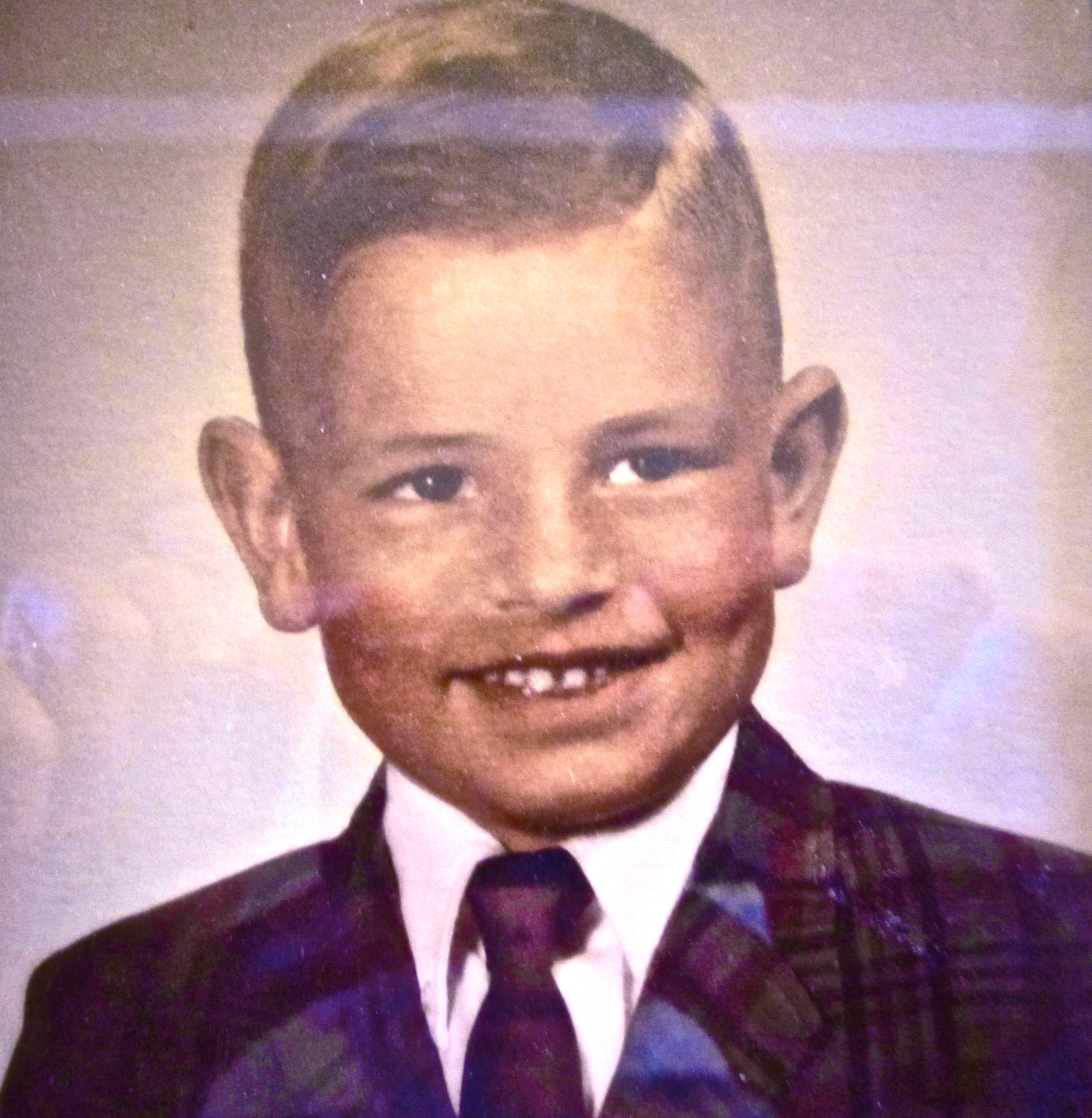
As an aspiring Stoic, I should embrace the new “old” reality, but that’s easier written than done. If I live as long as Steve Jobs, I have six years left; my dad, 19; Joe Paterno, 35; Jack LaLane, 46. The average of those four is 26.5. That’s kinda scary given how fast the last 50 have gone. Seems like just yesterday I was the most dapper dude in the first grade at Zachary Taylor elementary school in Louisville, KY. A dodgeball/kickball legend in my own mind. And yes, fortunately the rest of my gourd eventually caught up to my ears.

The key of course is making the most of however much time is left by listening a little more intently, by being a bit more observant, by putting my family’s needs before my own, by finding humor in things, by writing, by prioritizing friendship, by embracing nature.

At the risk of getting too sentimental, let me close by coming clean on that fact that I didn’t know how to spell “Niagra” Falls until using my dictionary app which offered up “Viagra” in it’s place. A few days ago at 49, funny, today at Fiddy, not so much.

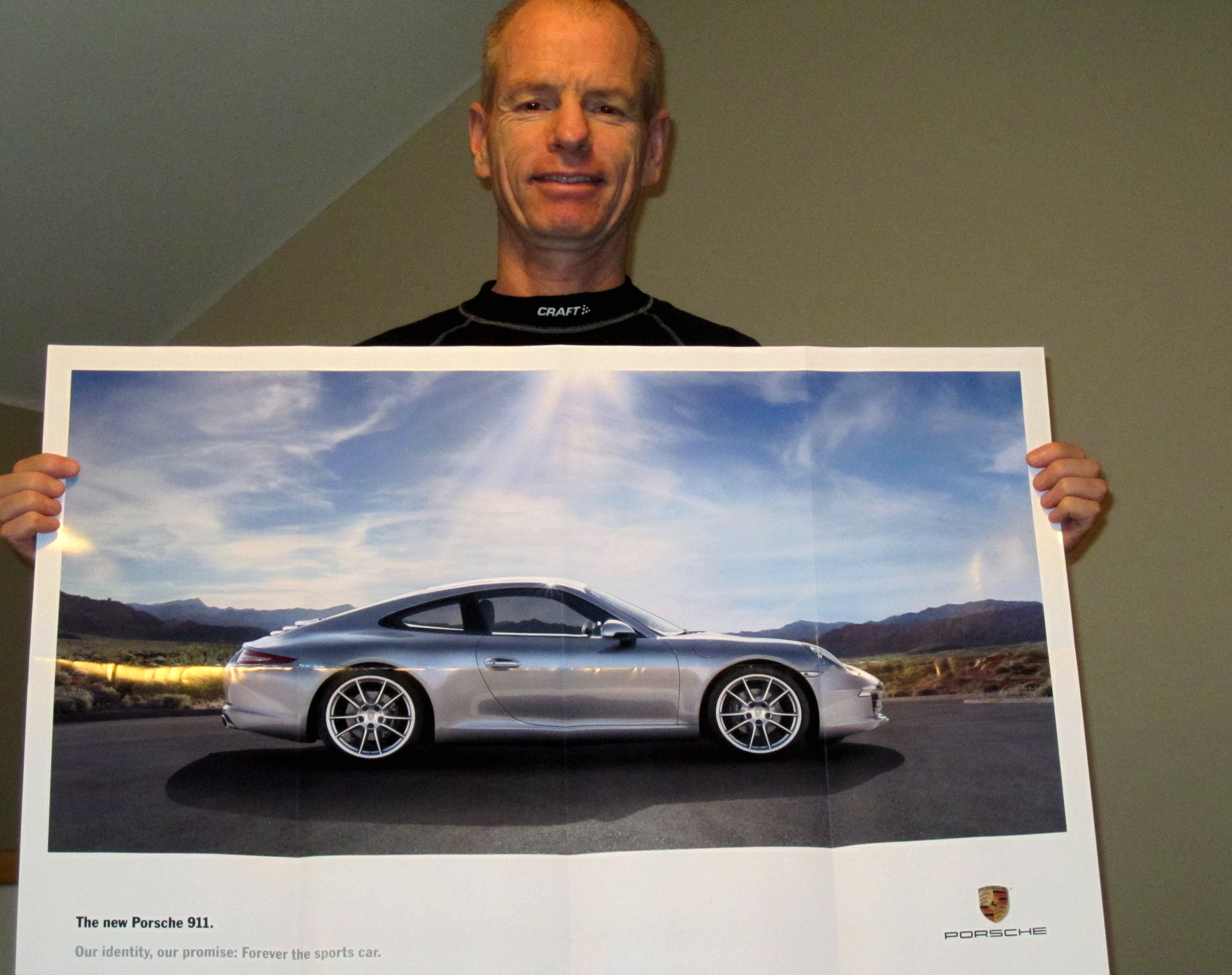
Postscript—The Girls Club pooled their resources and got me the perfect gift.

Since I'm past the midpoint, it' can't be a mid-life crisis can it?

Beautiful, Powerful, Markedly Different End-of-Life Celebrations

The on-line description of Mount Rainier Ranger Margaret Anderson’s memorial service was moving. As was the on-line retelling of Southern California surf-tech pioneer Sean Collins‘s recent memorial service.

Pictures of Anderson’s memorial are here. And here are more from Collins’s service.

One regimented, formal, set in a university auditorium, steeped in tradition. The other, free-flowing, informal, set in the ocean.

Notably different, yet equally beautiful and powerful celebrations of life.

The Most Difficult Three and a Half Words

A close friend has been experiencing extreme leg pain for over a year. She’s seen a medical conference worth of docs, had tons of tests, and is still lacking the thing she wants most—a diagnosis.

A month ago I went with her to an appointment with a rheumatologist who said the root problem was not rheumatological. Unable to string together the most difficult three and half words, he offered up a boilerplate myofascial something or other hypothesis.

Today we travelled long distance to see The Man at the Pain Center at the hospital in the Big City. I am always in awe of ace doctors. Dr. Ace studied her file for a long time, asked clarifying questions, and then continued with more questions during a physical exam.

In the end, he said, “I’m not clever enough to know what’s wrong.” I dig the way Brits use “clever” instead of “smart”. It’s clever. “There’s still a lot we don’t know about the brain,” he explained. Deeply disappointed, my long-suffering friend pleaded with him for a diagnosis. “I just want to know what’s wrong with me.” At which point he said the three and a half words, “I don’t know.”

Imagine if we lived in a world where one political candidate attacked another about flip-flopping and asked, “How can we be sure you’re not going to change your mind again?” And the candidate responded, “I don’t know.”

Or one in which every financial analyst asked to make predictions about the market in 2012 said, “I don’t know.”

Or one in which a Westpoint political science prof when asked about the lessons of the Iraq War said, “I don’t know.”

Or one in which Christopher Hitchens, when pressed to explain why he was so sure there’s no God had said, “I don’t know.”

Or one in which a man driving aimlessly in a car, when asked by a woman whether he’s going in the right direction said, “I don’t know.”

Or one in which Billy Graham, when asked to explain why he’s so sure there’s life after death said, “I don’t know.”

Or one in which Hilary Clinton, when asked what will be required to bring genuine Middle East peace said, “I don’t know.”

Or one in which Tom Friedman, when asked what the United States must do to reclaim it’s greatness said, “I don’t know.”

Or one in which Bill Gates, when asked why he thinks his teacher evaluation plan is going to improve schooling said, “I don’t know.”

Or one in which a blogger, when asked why he thinks everyone would be well served by greater humility and honesty said, “I don’t know.”

Steve Jobs—A Life Well Lived?

I enjoyed and recommend Walter Isaacson’s Steve Jobs bio. The overarching question it has left me with is what’s the best way to assess whether one’s living or lived a good life? And how best to define “good life”? Specifically, do professional successes trump the personal or vice versa? Do you most want to be remembered as an amazing chief executive, lawyer, teacher, trooper, counselor, sales manager, engineer, doc, pastor, carpenter, nurse, or as a caring and loving father, mother, husband, wife, brother, sister, aunt, uncle, neighbor, friend, citizen?

Everyone answers those questions somewhat differently in the way they live their lives. Jobs’s professional activities—he reinvented six separate industries—were clearly more important to him than his personal roles and identities—he was self absorbed, he was a distant father to his three daughters, and he rarely cared about anyone else’s feelings.

We seem to excuse people like Jobs—people at the very top of their field—for being what some readers of the book have described as a “self absorbed asshole”. Why is that? Is it because people at the very top of their fields tend to be extremely wealthy? Do we give the ultra rich a pass on being shitty parents or people?

Most of the time I’m proud of what I’ve accomplished throughout my thirty year teaching career, but in my own personal calculus of assessing whether I’m living a good life, I emphasize the personal. It’s most important to me that I be a good husband, father, friend. I can’t help but wonder though is that because I haven’t accomplished more professionally? Is my personal orientation an excuse for not being more ambitious and not working harder? Or do I emphasize the personal because I’m overcompensating for my dad’s explicit “professional accomplishment” orientation?

Jobs didn’t have the ideal balance, but I’m not sure I do either. More questions than answers.

Steve Jobs

John Gruber of Daring Fireball quotes Steve from his 2005 Stanford commencement address:

Remembering that I’ll be dead soon is the most important tool I’ve ever encountered to help me make the big choices in life. Because almost everything — all external expectations, all pride, all fear of embarrassment or failure — these things just fall away in the face of death, leaving only what is truly important. Remembering that you are going to die is the best way I know to avoid the trap of thinking you have something to lose. You are already naked. There is no reason not to follow your heart.

Puts the negative press coverage of the iPhone 4S in perspective. We forget we’ll be dead soon and lose sight on what is truly important and instead focus on the status phones provide, stock prices, and market share.

[Besides the commencement address, fav read from last night—The Steve Jobs I Knew by Walt Mossberg]

Getting Old Fast

Happened upon a t.v. magazine show segment on Keith Partridge/David Cassidy recently. He’s upset at companies that are using Partridge Family images, including ones of himself, to sell different products. Now he’s singing this slamin’ song instead of “I think I love you.”

She’ll deny it, but trust me, the GalPal recoiled at the sight of the 61 year old. “Change it! Change it!” She spent the better part of junior high fantasizing that she was the inspiration for “I think I love you.” Picture on the inside of the locker, poster above the bed, probably a Partridge Family lunchbox to rotate with the Planet of the Apes, the whole nine yards.

Goes both ways. Check out 1990 and 2011 Sinead O’Connor. I digged 1990 S.O. How many women have ever pulled off the buzz cut that well? Sedgy (combo of sexy and edgy) and pleasantly haunting voice. Still listen to her.

A couple of take-aways. First, Halle Berry and Orlando Bloom give the public time to accept your inevitable demise. Be sure to make at least a few public appearances every year.

Second, let’s all try to accept the fact we’re in decline, dying a little bit every day, week, month, year, decade. Forget the supplements, the surgeries, the moisturizers. Resistance is futile. Aging is natural. Death inevitable.

This is how the GalPal will always remember him