Everyone Should Have A Coach And Be A Coach

Michael Lewis, the prolific and highly successful writer, is now also a great podcaster. It’s not really fair, dude has too much talent. His second season of Against the Rules is about the proliferation of coaches in North American life. Lewis tells really interesting stories exceptionally well.* And the focus is not just on athletic coaches. Give him a listen.

His stories have sparked my thinking about coaching, my idiosyncracies, and the nature of schooling.

One of my idosyncracies is that I am coach-resistant, meaning I have gone through life mostly figuring things out myself. Or not figuring them out as it may be. As just one of myriad examples, when The Good Wife wanted to go to marriage counseling, I resisted. For awhile.

Part of it is I’m too frugal for my own good, but there’s a lot more to it than that. I wonder if my reticence is rooted in my parent’s Depression era, Eastern Montana upbringing which resulted in both of them being fiercely independent. My three siblings strike me as similarly coaching adverse. I suspect it’s in my blood.

Which is too bad because I could definitely benefit from some coaching. My golf swing is close. I am the Seattle Mariners of home maintenance. I find tax and estate planning awfully complex. My cooking repertoire is limited. My online teaching skills are nascent. I could go on. And on.

On the plus side of the ledger, I have coaching-like things to offer others interested in catching mice under their house or improving their fitness, finances, relationships**, or writing.

I doubt I’m unique. Couldn’t you benefit from some intentional coaching you currently aren’t receiving and couldn’t you coach others in meaningful aspects of life too?

If all of us would benefit from receiving and providing more coaching, why do we organize schooling as a super short 13 year-long period dominated by groupings that are too large for meaningful coaching to take place?

We could do more than talk about “life-long learning” if we had better ways of finding coaches. Some type of coaching online forum, where you could both find coaches and also connect with others looking for coaching. Moneyless coaching exchanges could even be arranged. You coach me on how to cook and I coach you on how to write your family’s story.

This type of “coaching-based life-long learning” would result in a deepening of community. More simply, less loneliness.

I would make this grass roots coaching “start up” happen, if only I had a start up coach.

* Particularly excellent—the May 12, 2020 episode, “Don’t Be Good—Be Great”.

**since I’ve been to counseling
 

When Police Kill

Alex Tabarrok has an excellent book review of When Police Kill by Franklin Zimring (2017).

Tabarrok ends with this Zimring quote:

[Police killings]…are a serious problem we can fix. Clear administrative restrictions on when police can shoot can eliminate 50 to 80 percent of killings by police without causing substantial risk to the lives of police officers or major changes in how police do their jobs. A thousand killings a year are not the unavoidable result of community conditions or of the nature of policing in the United States.

Our 15 Minutes of Fame

You know how A-list comedians like to play small clubs on occasion to try out new material and refine their craft, well that’s what Sacha Baron Cohen just did in little, out-of-the-way Olympia, WA, Saturday.

Watch Sacha Baron Cohen Troll Alt-Right Rally With Racist Singalong.

Saturday’s group run started and ended 100 yards from the stage. If only I had known what was planned, I would’ve stuck around to watch in person.

Being Twenty Something

A few months ago I wrote about all the challenges with “Being Twenty Right Now“. Fast forward to today, and I could add to the list.

Since writing that, I’ve heard lots of people talk about how miserable they were in their 20’s. So much so, it sounds as if people are writing off the decade. “If you can just hang on until 30,” their moto seems to be, “it gets much better.”

This idea is unfortunate. Life is way too short to write off any decade.

Being twenty something doesn’t have to be miserable. Why wait to make friends, do socially redeeming work, and build healthy habits?

Saturday Assorted Links

1A. That additional time you spend monitoring the pandemic and other crises, it has a name, ‘doomscrolling’. And it’s bad for your mental health. Or ‘doomsurfing’ if you prefer.

“Doomscrolling will never actually stop the doom itself. Feeling informed can be a salve, but being overwhelmed by tragedy serves no purpose. The current year is nothing if not a marathon; trying to sprint to the end of one’s feed will only cause burnout and a decline in mental health among the people whose level-headedness is needed most.”

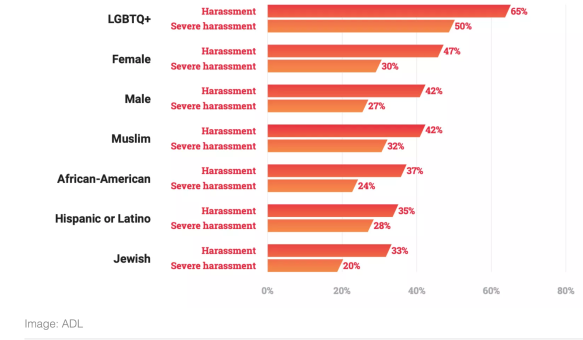
1B. More Americans are being harassed online because of their race, religion, or sexuality.

Screen Shot 2020-06-27 at 5.37.03 AM.png

2. Marquette University unveils cost-cutting plan to address budget short-fall. A template for nearly every institution of higher education. Just plug in the name of your favorite college.

3. Want to tear down insidious monuments to racism and segregation? Bulldoze L.A. freeways. Required reading for anyone that questions whether “systemic racism” is a “thing”.

“Poor communities of color continue to suffer most from the legacy of segregation and racially motivated freeway construction through their neighborhoods. The health outcomes in these areas are bleak. Pollution kills. Children directly exposed to freeway pollution have higher rates of asthma and unnatural cognitive decline. Segregation endures. Los Angeles is not unique in this regard. Cities across the country made similar choices. And yet nowhere have the consequences been felt more profoundly.”

4.  An inmate’s love for math leads to new discoveries.

“‘To whom it may concern, I’m interested in finding more information on a subscription to Annals of Mathematics for personal use. I’m currently serving 25 years in the Washington Department of Correction and I’ve decided to use this time for self-betterment. I’m studying calculus and number theory, as numbers have become my mission. Can you please send me any information on your mathematical journal? Christopher Havens, #349034′”

The End of College as We Knew It

Brian Rosenberg, who just finished a long stretch as president of Macalester College in St. Paul, Minnesota, observes:

“If one were to invent a crisis uniquely and diabolically designed to undermine the foundations of traditional colleges and universities, it might look very much like the current global pandemic.”

Frank Bruni quotes Rosenberg in his essay “The End of College as We Knew It?” A thoughtful lament on the decline of the humanities.

Rosenberg notes higher education was already on the defensive seeing that it is. . .

“maligned by conservative politicians for its supposed elitism and resented by students and their families for its hefty price tag.”

In my case, Bruni is preaching to the choir when making a case for the humanities. Despite agreeing wholeheartedly with him about the timeless importance of the humanities, his last argument seems specious.

He writes:

“We need doctors, all right, but not all doctors are the same, as Benito Cachinero-Sánchez, the vice chair of the Library of America’s board of directors, reminded me. If he were choosing between two physicians, he said, he would go with one who has read Chekhov, ‘because he’s a fuller human being and he’s going to treat me like a fuller human being.'”

Not everyone who reads classic literature becomes a fuller human being. It’s even more foolhardy to assume someone is going to behave markedly better as a result of having read Chekhov. The ink on the paper is not magic, more important are the institutions’ values and the overall ethos of the place where one engages with classic literature.

But let’s ask every medical student to read Chekhov just in case I’m wrong. Again.