Conscience Has No Color

A flag in Vermont reminds us conscience has no color

Originally published February 4, 2018 by Leonard Pitts Jr., Syndicated columnist.

What we’ve got here is failure to communicate.

Except it’s not really failure. It’s actually unwillingness to communicate, fear of what communication might mean. After all, if you communicate, you might understand some painful truths — and then where would you be?

That’s why discussing race with a white person is often one of the most vexing things an African-American person can do. You quickly come to understand that understanding is the last thing they want.

Take “Black Lives Matter.” Those words, if you are black, are both an assertion of self-evident truth and a way of saying you are sick of unarmed people like you being killed under color of authority while juries and judges shrug and look away.

That message would seem to be clear as mountain air, which, for many white Americans, is precisely what’s wrong with it. So they do everything they can not to comprehend.

They pretend confusion: “Black lives matter? Don’t all lives matter? Are you saying black lives are more important?”

They rationalize: “It’s not the cop’s fault. If the man had stopped moving/talking/breathing hard, he wouldn’t have been shot!”

They feign outrage: “Black Lives Matter is an anti-police terrorist group. They’re the black Ku Klux Klan.”

At some point, you begin wondering if the words you hear in your head are coming out in English. How is it you’re both speaking the same language, but you’re doing such a miserable job of being understood?

It’s a frustrating, exhausting experience. If you’ve ever had it, you’ll likely be touched by a recent story out of Vermont. It seems that, with the unanimous support of the school board, the Racial Justice Alliance, a student-led anti-racism group at Montpelier High, is commemorating Black History Month by flying a flag on campus. A flag that says, “Black Lives Matter.”

Lord, have mercy. Just when you think you’ve seen it all.

It’s stunning, you see, because there are no black people in Vermont.

OK, so that’s not quite true. There are some, but so few — 1.3 percent out of a population of 623,000 — that Vermont didn’t muster its first NAACP chapter until 2015. For the record, the student who founded the Racial Justice Alliance is a black senior named Joelyn Mensah. Still, we’re talking about one of the whitest states in the Union. So this flag flying at one of its schools is no small thing.

Not that everyone is pleased. State lawmaker Thomas Terenzini — you’ll be shocked to learn that he’s a Republican — told the local NBC affiliate that Black Lives Matter is “a national anti-police organization.”

That isn’t surprising. But the moral courage of these students and administrators is, pleasantly so.

We are indebted to them for a message that couldn’t be more timely. As appeals to our lowest selves flow down like sewage from the nation’s capital, they remind us that conscience has no color. It is a point proven in the past by white people like Elijah Lovejoy, William Lloyd Garrison, Andrew Goodman, James Zwerg, Joan Trumpauer Mulholland and Viola Liuzzo who fought — and sometimes died — for black freedom.

One hopes white people of today will take note. And black ones, too.

Because, for as much as that flag flying in that place speaks to the broad sweep of conscience, it also rebukes excesses of cynicism, shows what can still happen just when you think you’ve seen it all. To be black talking to white people about race is never easy. You’ll be frequently frustrated, often exhausted. But once in a while, you will also be something you never expected:

Heard.


Saturday Assorted Links

1. Lasers Reveal a Maya Civilization So Dense It Blew Experts’ Minds.

“Not far from the sites tourists already know, like the towering temples of the ancient city of Tikal, laser technology has uncovered about 60,000 homes, palaces, tombs and even highways in the humid lowlands.

The findings suggested an ancient society of such density and interconnectedness that even the most experienced archaeologists were surprised.”

Decidedly not a shithole civilization.

“The total population at that time was once estimated to be a few million. . . . But in light of the new lidar data, she said it could now be closer to 10 million.

‘To have such a large number of people living at such a high level for such a long period of time, it really proves the fact that these people were highly developed, and also quite environmentally conscientious.'”

Absent the United Fruit Company and the CIA, the Mayans’ ancestors would be a lot better off today.

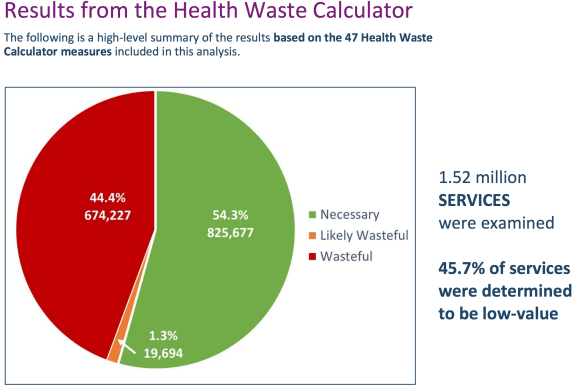
2. First Do No Harm, Health Care Waste in Washington State.

Screen Shot 2018-02-03 at 11.20.58 AM.png

Screen Shot 2018-02-02 at 12.54.52 PM.png

3. The shocking thing about D.C.’s schools scandal — and why it has national significance.

“. . . schools were essentially juicing the books to make it seem like they were graduating more students. Scams included phony “credit recovery” programs, failing to count all students, and, as the District just found out, letting kids graduate without the qualifications required for a diploma.”

And on Michelle Rhee, the darling of right wing business mad “reformers”:

“. . . the produce-or-else testing culture that she fostered — tying portions of some evaluations to growth in scores and securing commitments from principals to hit numerical targets — created a climate of fear, in the view of many school employees.

It also coincided with evidence of cheating on annual city tests.

A climate of fear in a school has never been known to produce much of anything useful.”

4. Ethiopia’s regime flirts with letting dissidents speak without locking them up. Incremental progress.

5. Letter of Recommendation: Rodney Dangerfield.

“Imagine having no talent. Imagine being no good at all at something and doing it anyway.”

6. How Building Codes & Taxes Shape Regional Architecture.

“Ever noticed how the bricks on newer British buildings are bigger, or stopped to appreciate hand-stenciled wallpaper, or enjoyed a sip from a fancy hollow-stemmed glass? If so, you may well be admiring a product of regulation and taxes as much aesthetic tastes. From basic materials to entire architectural styles, building codes and taxation strategies have had huge historical impacts on the built world as we know it.”

Add that to the ever burgeoning list of things I did not know. I’m sure DAByrnes did though.

“Dutch canal houses are another classic example of how rules and regulations can shape structures. Taxed on their canal frontage rather than height or depth, these buildings grew in tall and thin. In turn, this typology evolved narrower staircases, necessitating exterior hoist systems to move furniture and goods into and out of upper floors.”

Caption Contest

Winner gets to brag to their family and friends. Enter early and often.

  1. DUUzB7iWAAAygoC.jpg
  2. im-leaving-the-democratic-party-today-democrats-are-infuriated-by-their-own-partys-deal-with-the-gop-to-reopen-the-government.jpg3.  PqVgOsQL.jpg

1.Remember, Vlad said button our coats to signal all is good on the campaign collusion front.

2. Among your fav blogs, where does Pressing Pause rate?

3. Someday, you little shit, your hair is going to look exactly like this.

I Love It When

A Pressing Pauser, who happens to teach high school, approaches me after church in the narthex and says he doesn’t necessarily agree with me about college professors’ iffy pedagogy. And then thoughtfully explains that the older students are, the more they should adjust to their teachers since employers and the larger world won’t necessarily adapt to their individual learning preferences.

It’s at times like that I wish I had humble blog t-shirts to give away. Solid point. I went on to say, “Iffy Pedagogy—Take 3” was forming in the recesses of my pea brain. The final point in the series being that one other major, overlooked difference between his work and mine is that my students pay tens of thousands of dollars to attend, while some of his are only there because of compulsory attendance laws. More simply, K-12 teachers have to be masters of classroom management, my colleagues and I do not. When I roll into my seminar tomorrow at 11:30a, my students will all be there, having done the reading, ready to follow my lead, listening to and learning from one another.

Upon pointing that out, my friend proceeded to lament some of his ninth grade knuckleheads who it’s super difficult to get through to. Especially when there’s a gaggle in one class.

Of course, which educators deserve the most respect shouldn’t be a zero-sum competition. My primary point is that conventional wisdom, that profs deserve the most respect because they have the most education, is wrong. Elementary, middle, and high school teachers deserve at least the same amount of respect.

Over and out. That is, until hopefully, approached again by another active reader.


Saturday Assorted Links

1. UK Appoints a Minister of Loneliness.

“Throughout 2017 we have heard from new parents, children, disabled people, carers, refugees and older people about their experience of loneliness. Government research has found that about 200,000 older people in Britain had not had a conversation with a friend or relative in more than a month.”

Let’s not kid ourselves, this problem is not limited to the UK. Loneliness can be associated with. . .

“a greater risk of cardiovascular disease, dementia, depression and anxiety.”

2. How to Maintain Friendships.

“Ms. Nelson also suggests being aware of the three areas to measure and evaluate a functional friendship. The first area is positivity: laughter, affirmation, gratitude and any acts of service. The second is consistency, or having interactions on a continual basis, which makes people feel safe and close to each other. The third is vulnerability, which is the revealing and the sharing of our lives.

“Any relationship that doesn’t have those three things isn’t a healthy friendship,” Ms. Nelson said. If you’re noticing a cooling with a friend, usually one of these areas needs special consideration.”

Friendships are organic; consequently, I’d suggest “reflecting upon” instead of measuring and evaluating.

3. No One Wants Your Used Clothes Anymore.

“. . . this could add up to an environmental disaster in the making.”

I’m going to do my part by buying less.

4. Why Don’t Norwegians Immigrate to the U.S.?

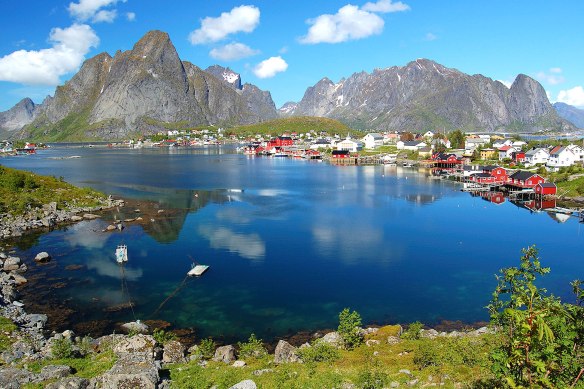
I was proud of the Gal Pal Monday morning in Victoria, BC’s Hotel Grand Pacific Garden Cafe for her skilled eavesdropping. Her smile and raised eye brow alerted me to a sixty-something man reading an article like this one to his wife. Between a steady stream of international statistics, he’d repeat, “Yeah, why would a Norwegian think of immigrating to the U.S.?!”

With lakes like this, reverse migration is more likely.

180117_LIFE_Norway-Paradise.jpg

5. A tiny insect stands between a billionaire and his golf course.

Such great pictures.

College Professors’ Iffy Pedagogy—Take 2

The tendency to assign more academic texts than students can realistically read closely isn’t the only, or even primary difference, between many higher education faculty and the best K-12 teachers.

The single greatest difference is most college professors expect their students to adapt to their teaching methods. In contrast, the most effective K-12 teachers learn early on to adapt their teaching methods to the various ways their students learn. As a result, accomplished K-12 teachers have many more methodological arrows in their quivers.

In elementary, middle, and high schools, the onus of adaptability is on the teachers to “differentiate instruction”. In higher education, the onus of adaptability is almost always on the students.

This is some far-fetched shit*, but imagine if the chairs of academic departments in colleges and universities across the country invited a handful of the most excellent K-12 educators from their communities to talk to their faculty about the myriad, student-centered ways, they promote genuine learning.

University students everywhere would be indebted to those enlightened chairs.

*just trying to sound Presidential


College Professors’ Iffy Pedagogy

Successful elementary, middle, or high school educators could teach a typical professor a shitload* about teaching excellence.

Why?

Because apart from a few more years of schooling, professors are like everyone else, meaning prone to insecurities, insecurities that often contribute to status anxiety about whether one is smart enough.

Consequently, on rare occasions that professors assemble to talk teaching, there’s often an odd, overly formal dynamic, devoid of authentic questions or humor. At faculty workshops where course syllabi are shared, the singleminded focus is on being more rigorous than the last person. “Well, you think your students are reading a lot of pages. . . ” “Well, you think your students are writing a lot. . . ” etc.

“How much,” no one ever dares ask, “can students realistically read closely and carefully?” When it comes to assigned reading in particular, there’s never any consideration of a point of diminishing return.” When I summarized this dilemma with my uber-smart, conscientious International Honors students in class recently, they laughed out loud at the naivety of faculty for thinking they’re reading everything that’s assigned. It was no different in 1984 when finishing up my history major, I had three history courses in a 10-week quarter, each with 7-8 books. I didn’t even buy all of them.

Rigor also means favoring academic texts over everything else, full stop, amen, forever and ever. Never mind the quality of long form journalism today; or the quality of wondrously diverse multimedia content; or heavens for bid, popular books.

*just trying to sound Presidential