Saturday Long Run Press Conference

CNN reporter: Strava shows you ran 9.6 miles in 1:17 for an average of 8:02/mile. What would you say to the American people who are afraid that you’re getting old and slow, now nothing more than a sad “hobby jogger”?

Me: I say that you’re a terrible reporter, that’s what I say. I think that’s a very nasty question and I think it’s a very bad signal that you’re putting out to the American people that I’m older and slower. The American people are looking for answers and they’re looking for hope. And you’re doing sensationalism and the same with NBC and Concast. I don’t call it Comcast, I call it ‘Concast.’ That’s really bad reporting, you ought to get back to reporting instead of sensationalism.

OANN reporter: How do you run so far, so fast?

Me: I love whoever you’re with. Because that’s such a nice question. I think you write fairly and do very fair reports. A lot of people always ask me, how do you run so far, so fast? I tell them I don’t know, I guess I just have a natural ability.

NBC reporter: How would you assess today’s performance?

Me: When you hear the number of miles I’m running and the pace, it’s incredible. And I’ve heard a lot of governors say the same thing. People are saying I’m doing a great job, the best job anyone’s ever done.

FOX reporter: What makes you such an incredible runner?

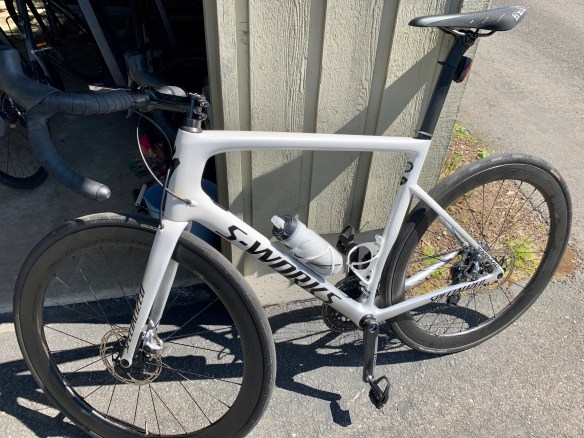
Me: Really lots of things, but what no one gives me credit for is when I first heard we were running, I immediately jumped on the stationary bike and got the blood flowing against many people’s advice. No one reports that. But I did, I got right on the stationary bike. Many exercise scientists—and I’ve read, many, many exercise scientists—can’t believe the great job that I’m doing.IMG_5669.jpg


Friday Assorted Links

1. Estimated car cost as a predictor of driver yielding behaviors for pedestrians.

“Drivers of higher cost cars were less likely to yield to pedestrians at a midblock crosswalk.”

What are your theories for this?

2. Olympic swimming champion Sun Yang banned for eight years. Long suspected. Eight years though, talk about swimming dirty. How to make amends to the numerous clean swimmers that lost to Yang?

3. The darts player beating men at their own game.

“She’s going to stand out. It’s great for the sport. Stereotypically, it’s associated with the pub, beards and beer bellies. But that’s changing.”

4. iPhone 11 Pro vs. Galaxy S20 Ultra camera comparison: Which phone is best? Damn, kills me to write the conclusion:

“. . . the iPhone can’t compete with Samsung’s zoom king.”

And only $1,400.

5. What’s happening with the stock market these days? A beginner’s guide to investing.


Jordan Hasay Wins

My pick to win the Olympic Trials Marathon in Atlanta Saturday was Jordan Hasay who is a family acquaintance. On the surface, I was way off, seeing that she crossed the line behind 25 other women.

But like everything in life, our perspective changes, that is we gain perspective, when we begin to understand the larger context.

Jordan’s mom died suddenly a few years ago. More recently, her coach of many years was banned from the sport. She has been battling a bad hamstring (public knowledge) and back (not known until now).

Her dream of making the Olympic team was over by mile 10. Meaning she faced 16 more hilly, windy miles with her back “feeling like it’s bone”. And she gutted it out in what may have been the most impressive performance of her stellar career.

Watch this interview and try thinking about her as anything but a winner. In sport and in life. And I will not be surprised if the spirit she displays in this interview enables her to return to the top of her sport.

Galen Rupp, the men’s winner, and friend, consoling Jordan post-race.

display.jpg

Friday Assorted Links

1. The Queer Opposition to Pete Buttigieg, Explained. Masha Gessen explains the two divergent tracks in L.G.B.T. politics:

“One kind of queer politics is rooted in ideas of liberation, revolutionary change, and solidarity. The vision of this politics is a society that is radically changed by many kinds of people fighting many kinds of injustice, a society in which economic, social, political, and sexual relationships have been transformed. The roots of this politics are acknowledged in an open letter authored by a group called Queers Against Pete. (The letter was signed, according to the organizers, by more than two thousand people.) They wrote, ‘We are clear that LGBTQIA people are directly and disproportionately impacted by police violence, incarceration, unaffordable healthcare, homelessness, deportation, and economic inequality among other things.’ The strategy of this brand of politics is to work across differences to bring about change.

The other, more mainstream, and often more visible kind of L.G.B.T. politics aims to erase difference. Its message to straight people is “We are just like you, and all we want is the right to have what you have: marriage, children, a house with a picket fence, and the right to serve in the military.” The vision of this politics is a society in all respects indistinguishable from the one in which we live now, except queer people have successfully and permanently blended in. To be sure, all kinds of queer people have been involved in both kinds of queer politics. But the politics of being “just like you” leaves out the people who cannot or do not want to be just like conventional straight people, whether in appearance or in the way we construct our lives and families.”

I’ll give you one guess on which one is Pete’s track.

2. For more than a year, a violent tow truck war has been raging across the Greater Toronto Area. Damn, I don’t like it when my idealized view of one of my favorite countries is challenged. You’re better than that Canada. Aren’t you?

3. Why Exactly Does Putin Love Bernie? No, it’s not because he’s a socialist.

“. . . helping Sanders helps Trump.”

4. Compassion-based Strategies for Managing Classroom Behavior.

“If you’re assuming the best about the kid, that they want to learn appropriate behavior, they want to be positively connected to you, but they somehow can’t, there’s something in the way. What can you imagine the invisible subtitle is for ‘I don’t care?’

‘For me, the invisible subtitle for ‘I don’t care’ is, Mrs. Dearborn, I really, really care, but I can’t tell you that. Do you care?’

Reading the ‘subtitles,’ as she calls them, has helped Dearborn to stop perceiving misbehavior as disrespect. That doesn’t make her a pushover, she said. It makes her an advocate for the student.

So now when kids say, ‘I don’t care’ to me, I say, ‘That’s OK because I care, and I can care for the both of us right now, so let’s do this.’”

“I can care for the both of us right now.” Beautiful.

5. Mike Pence, who enabled an HIV outbreak in Indiana, will lead US coronavirus response. “Only the best people.”

6. Analyzing the “Big Five” Women at the 2020 US Olympic Marathon Trials. The race is Saturday at 9a PST on NBC. I’m going all in on Jordan Hasay.

Cincinnati—You’re On The Clock

The National Football League Draft combine is taking place right now in Indianapolis*.

Everyone knows the key to success in the NFL is having an elite quarterback. Everyone also knows the key to being an elite quarterback is having big hands.

And so, Cincinnati faces a decision that could transform their franchise—Burrows or Byrnes?

Burrows was decent during his final season at LSU—60 touchdowns to 6 interceptions. But when it came to pickup basketball at UCLA’s John Wooden Center, Byrnes was an early 80’s legend. Among other things people on campus remember from his play was the way he’d palm the ball like a shorter, younger, whiter Connie Hawkins.

download.jpg

Byrnes easily palmed the ball because he has large hands. Burrows—9″. Byrnes—9.75″. Cincinnati’s dilemma is there’s not a lot of football tape of Byrnes since he retired to golf after whiffing a tackle in the eighth grade in Cypress, California. That was on the coach though because the young phenom told him that he was “. . . born to quarterback, not cornerback.”

People in Kentucky, Ohio, and Southern Cal still reminisce about his after school pick-up quarterbacking. It is Cincy’s bad luck that all of that was before pocket video cameras, GoPros, and drones.

Will Cincy go with the guy who is anxiously waiting for the iPhone SE2 so he can more easily grip it or the guy who can palm an 11″ iPad? We won’t know until April 23rd.

fullsizeoutput_5f3

*President Trump, that’s in Indiana.

Shaq Gets Big Laughs With Kobe Story

From Yahoo Sports. O’Neal provided perspective on Kobe like only he could, sharing a story about his early days playing with him en route to three NBA championships together.

“The day Kobe gained my respect, the guys were complaining, Kobe’s not passing the ball,’” O’Neal said. “I said ‘I’ll talk to him.’ I said ‘Kobe. There’s no I in team.’ Kobe said, ‘I know, but there’s an M-E in there mother f—er.’ I went back and told Rick [Fox] and Big Shot Bob [Horry], ‘just get the rebound. He’s not passing.’”

Book of the Week—Geezerball

I’m on a nice little reading roll, meaning a book a week. This week I cheated though when I subbed in a fun, short read, for a long, dryish, academic one that I was plodding through.

Geezerball: North Carolina Basketball at its Eldest (Sort of a Memoir) by Richie Zweigenhaft tells the story of the Guilford College noon pickup basketball game that I played in between 1993-1998 when I taught at the “small Quaker college”. The game is 44 years old and counting and some of the participants have been playing most or all of those years. One of the game’s mottos is “You don’t stop playing because you grow old; you grow old because you stop playing.”

Richie, also known as “The Commissioner” is an accomplished author of several books on diversity in the American power structure. Now 75 years young, he’s the glue that’s held the game together over the decades.

Geezerball prompted a lot of reminiscing about those years and reflection on what’s most important in life. I remember 11 of the 29 players on the current geezer email list which is pretty remarkable given how bad I am with names. It also speaks to the game’s stability and what demographers have been telling us for awhile—that Americans aren’t moving nearly as much as in the past.

The game combines two of the very few things upon which most medical doctors and social scientists respectively agree—the importance of exercise to our physical health and the importance of close interpersonal relationships to our mental health.

“My wife says she expects to get a call one day saying I’ve died on the basketball court,” one geezer writes in the book. “If that happens, she’ll know I died happy.” In actuality, the game is probably extending the life of the participants. Even more importantly, it’s adding tremendously to the quality of their lives. Their friendships, and the humor that marks their interactions, are testaments to the power of community.

Among other remarkable aspects of the game is the fact that nearly all the participants are men. As a runner, I can’t help but notice more women running together; like the geezers, strengthening their bodies, their hearts, and their minds simultaneously. Same with the Gal Pal and her girlfriends who go on long walks every Saturday morning while catching up on the week’s events. I don’t know if it’s true, but it seems like men are more prone than women to prioritize their work lives, often to their own detriment. Given that, I find it inspiring that a dozen men in Greensboro, NC have been defying that norm every Monday, Wednesday, and Friday for 44 years.

The sort of memoir reminded me of exactly how cool of an addendum the game is to the participants’ lives. But now, upon further thought, I can’t help but wonder if when those men near the end of their lives, they’ll think of the game as one of the most essential parts of their lives, and their work as more of an addendum. Meaning, what if we all have it backwards? What if the GalPal’s Saturday morning walks, my Saturday morning group runs, my Tuesday and Thursday night group rides are the core and everything else is the periphery?

This line of thinking may be just one more example of my economic privilege at work, but I can’t help but wonder what would happen if we organized our lives around Geezerball-like communities, where we prioritized movement and friendship over material wealth and status? Put another way, how much is enough? When it comes to work hours and money, there’s always a point of diminishing returns. At a certain point, more work means more impoverished relationships with family and friends.

In contrast, when it comes to walking, running, cycling, swimming, surfing, or playing basketball or golf with friends, there is no point of diminishing returns. Our physical and mental health just keep improving. Our entire well-being. That’s the lesson of Geezerball.

download.jpg

Weekend Assorted Links

1. Nearly all middle school teachers are highly stressed.

“The largest group, 66%, reported high stress and high coping. Nearly one-third of the participants, 28%, reported high stress and low coping. Only 6% of middle school teachers reported low levels of stress and high coping ability.”

2. Eleven minutes: A call from Kobe Bryant. Jayson Reynolds is an exceptional young adult author.

3. The killer(s) on the road: reducing your risk of automotive death.

“If I die in the next 10 years, the most probable ‘murder weapon’ is my vehicle or another vehicle on the road.”

4. All children are gifted—just in different ways.

“I’m sorry, but no school board, no group of parents has the right to label one homogeneous group of children ‘gifted’ based on the criteria established by the parents of those children and then consign the rest of the students to programs for the ‘not gifted’. That’s what happens.”

5. Can this one super-prospect revive the greatest dynasty in sports?

“She’s as good as anybody I’ve seen with the ball in her hands.”