We Can’t Handle the Truth

Concussions are brain injuries. When you read “Jay Cutler suffered a concussion on Sunday,” substitute “brain injury” for concussion. For example, “Recently, Michael Vick had a really bad concussion brain injury.”

And another. “The NFL should have strict protocols in place to establish when a player has been concussed,” should read, “The NFL should have strict protocols in place when a player has been brain injured.”

Newsflash—Missy Franklin Forgoes $6m to Swim in College

Seventeen year-old amateur swimming phenom Missy Franklin’s countercultural decision isn’t getting nearly as much ink as it deserves. I’ve lauded her parents’, coach, and her before. I’ll have to plead guilty if accused of putting a 17 year-old athlete on a pedestal.

If Franklin turned pro sports marketing experts agree she’d earn about $2m a year through product endorsements. Instead, she’s decided to swim at the University of California for a few years and then turn pro in 2015, one year before the Rio Summer Olympics.

Here’s the conventional wisdom on her decision:

While the opportunity to earn money from endorsement deals will not completely evaporate should Franklin delay becoming a pro-swimmer by competing at the NCAA-level, it will drastically impact the amount of money she will earn from endorsements. Not only will she miss out on a lot of money in some prime earning years for what are normally short Olympic careers, but she will likely also miss out on the chance to build her brand on a larger stage by way of the promotion and visibility that would come from advertisers using her in campaigns.

Another sports marketer adds, “I think it’s hard not to justify waving her amateurism.  If I was an objective advisor to her and her family, I would advise this way:  Her window to reap the rewards of her life’s work is relatively limited when you consider it over a traditional working career.  As such, her potential earnings in the next four years will be five-times greater than what she’ll be able to make in the subsequent 30 years.”

My brother, who I may have been a tad too hard on the last several months, weighed in more creatively, “Missy-stake! Shoulda took the money.”

She’s rolling the dice on avoiding injury, finishing third in 2016 Olympic Trial races, and having Michael Phelps pressure her into a bong hit.

All you have to do for an alternative perspective, is turn to Franklin herself:

“Someday, I would love more than anything to be a professional swimmer, but right now I just want to do it because I love it. Being part of a college team is something that’s so special. I went on my recruiting trip, and the team was so amazing. Just being with those girls, I really felt like I belonged there. The campus itself is gorgeous. Everything about it was just perfect.”

Borrowing from the linked article above, Franklin said the opportunity to compete with close friends to earn points toward a team total, rather than simply attending school with them, was an allure stronger than the potential millions of dollars she could earn in endorsements. She actually wanted to commit to a full four seasons of swimming for Cal, but her parents told her “that would probably be the biggest financial mistake” she “could ever make.” Franklin acknowledged, “This can pay for your future family. This can pay for your kids’ school, things that I really have to think about. So that’s been the hard part.”

The materially minded majority will lament, “She’s paying about $6m for the opportunity to ride on busses and stand in security lines in airports with her college teammates in order to score points in college meets.” The assumption being she’d be two and half times happier with $10m in 2016 than $4m. What’s lost in that calculus is the fact that her parents are professionals and she’s grown up economically secure. She’s comfortable, she’s a good student, and with her family’s resources and a Cal degree, odds are she’ll continue to be comfortable.

And if comfort was her primary goal, she’d cash in now. She’s saying you can’t put a price tag on some things like memories of close friendships strengthened through athletic competition. She’s wise beyond her years. She probably knows that multimillionaires tend to get caught on an ever speedier treadmill, and as a result, never pause long enough to ask, how much is enough? Franklin, who I suspect is extremely confident she can swim as fast or faster in Rio, is saying $4m is enough.

And what if somewhere in the world right now there’s a 12 year old girl who out touches Franklin in Rio?

I have no doubt she’ll handle it with grace and dignity. “Honestly anything can happen,” she recently reflected. “You can’t predict the future, so whatever God has in store for me I’ll just go along with it.”

Young People and Anxiety

Recent research suggests that as many as 1 in 6 young people will experience an anxiety condition at some point in their lives, this means that up to 5 people in a typical 30 person class may be living with anxiety, whether that be OCD (obsessive compulsive disorder), social anxiety and shyness, exam stress, worry or panic attacks.

That’s borrowed from this excellent overview on young people and anxiety.

And carve out eight minutes to watch this moving and educational documentary about a rookie professional basketball player who suffers from an anxiety disorder.

IronCanada 2012—Blood, Sweat, and Cheers

The Truthiness of Things

Swim 1:03:03 (6th out of 217 in 50-54 age group). T1 6:34. Bike 5:40:46 (33rd out of 217). T2 6:20. Run 3:50:30 (7th out of 217). Total, 10:47:12 (14th out of 217).

The Training

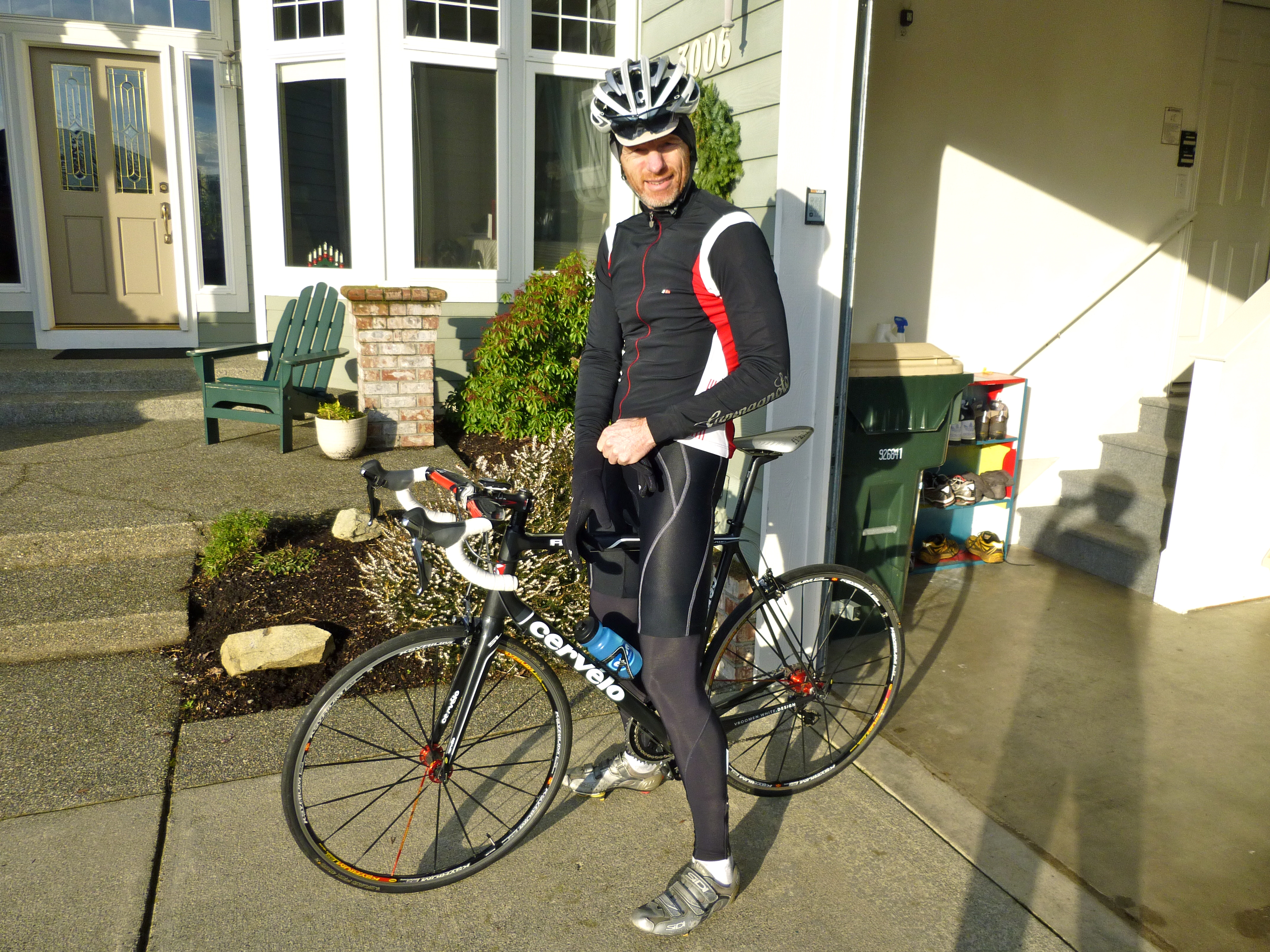
Twenty years ago I adopted an active lifestyle where I either swim, cycle, or run five or six days a week nearly every week of the year. I’ve done several Olympic distance triathlons and two half irons. I’ve long watched and puzzled over the 140.6 mile long distance scene. Eleven months ago, when intrigue trumped ambivalence and I registered for IronCanada, I had no interest in “just finishing”. Instead, I established one overarching goal, to complete the run in less than 3:59:59. I knew if I saw a “3” at the start of my run time, in all likelihood there would be a “10” at the start of my total time.

Once I started to train in earnest, I got more specific and thought if everything came together just right the following was possible—1:03, :06, 5:36, :05, 3:50, 10:40. To avoid unnecessary pressure, I kept that equation to myself. I also skimmed the results from the last few years to see how fast the burners in my 50-54 year age group were likely to go. Then, a month ago, when a serious heat wave settled over central British Columbia I decided it made more sense to shoot for a tenth place finish, whatever the conditions, whatever the time.

A healthy fear of racing the distances really helped narrow my training focus. There was little “I should probably work out today” dithering. Even if I was consistent I knew I was going to suffer mightily on race day. If I started cutting corners, I’d not only suffer terribly, but have the added disappointment of underachieving. Once in awhile I chose rest over a planned workout, but that was to avoid injury.

A typical training week was three swims for a total of 7-12 kilometers. No stroke work, no kicking, no drills, half with paddles and pull buoys. Two hundred miles of cycling. Typically two 60ish club rides (meaning intervals) and a solo 80 miler on my time trial bike on Saturdays. Four runs for a total of 30-48 miles. I almost always ran 8-10 miles off the Saturday long ride in increasingly warm afternoon temps. Two key workouts. I ran 15 rolling miles off a hot 70 miler and 4 miles off a 125 mile solo effort (ride time 6:32).

Early on I was dismayed by my average cycling speed, low to mid 18’s. In the last six weeks, without seeming to lean on the pedals any harder, I started to see improvements, regularly averaging low to mid 19’s and 20. And to my surprise, from the beginning of my five-month build, I always ran solidly off the bike. Maybe it was getting professionally fitted and my improved bike position, maybe it was the salt tablets that finally kept the cramping at bay, maybe it was my above average weekly run mileage, or a combination of each. I always ran between 7:45s and 8:15s off the bike, even on the hot and hilly 15-miler, even after 125 miles. I told the running posse that it was starting to feel easier to run 8 minute miles off the bike than fresh out of bed at 5:45a.

Running solidly off the bike built confidence. Confidence to post a “3” and a “10” given decent conditions. I also devised some unique mental strategies. One came to me at the top of a climb in the Eastern Sierras in May. As I sat by a beautiful mountain stream, I meditated on the water’s natural, effortless flow. What if I ran like that? Lightly, naturally, steadily. And then my most bizarre race prep idea of all time. The Canada run course borders Lake Skaha between miles 4 and 22. I started visualizing the lakeshore lined with Canadian Navy Seals (camouflaged and mostly submerged under water) who had “shoot to kill anyone walking” orders. The only way to survive would be to keep running, no matter how slowly. That of course introduced a real dilemma. How could I manage to adequately warn all of my fellow competitors who were slowing to a walk that their lives were in imminent danger?

Pre-race

I planned on traveling to the race solo, but I’m glad we turned it into a family vacay. We dig Penticton. Broke the bank on a house rental two blocks from the beach and start/finish. Sunday morn I left the house shortly before dawn with my wetsuit draped over my shoulders. Blue skies, next to no wind, a wonderfully flat lake. Athletes started appearing out of the glooming. It’s strange to train almost completely alone and then be surrounded by 2,700 other athletes. And to have lots of people watching what I’ve been doing in complete anonymity. I got somewhat veklempt walking down a semi-dark Main Street. Five months of anticipation finally giving way to racing.

Then, standing in the lake minutes before the start, the singing of the Canadian national anthem. A soul stirring rendition. From far and wide. O Canada.

Thankful to be healthy, to be in such a beautiful spot, for my family’s presence, and for all the friends and extended family monitoring and pulling for me from afar.

Act 1—The Swim

In the Torah it says, “We see things not as they are, but as we are.” This is how I remember the race. Which doesn’t necessarily mean it’s the way it went down.

Lined up just right of center in the second row. Anxious as hell. Anticipating an alley fight. Then, somehow, I cruised to the first buoy nearly unscathed. Piece of cake. Why does everyone exaggerate how physical the start is? Just when I started to relax and get a little cocky, I got seriously squeezed by 20 people on my left and 10 on my right. The 130 meters between buoy one and two were the longest two minutes of my life. I panicked, breaststroked a few times, and thought to myself, “Straight lines and the race clock be damned, I just want open water.”

I wanted to get ten people to my right, completely on the inside, but it was like trying to walk across a 30 lane freeway moving at 60mph. I slowed my already slow breaststroking to regroup and turned backwards to see if I could slip back and to the right, but it was a constant stream of rubberized humanity. I now understand how even strong swimmers who are comfortable in the water can get in trouble.

I don’t know how, but I pressed forward. Gradually, it loosened up just enough for me to calm down and get back into a rhythm of sorts. I spent a quarter of the rest of the swim on other people’s feet and three quarters swimming into small open pockets of water. I knew drafting off other people would be faster, but I didn’t care. I just wanted to pretend I was at home in tranquil Ward Lake. By the end, I took three shots to the head, but nothing debilitating.

I always loose my balance and end up semi-dizzy after open water swimming. After throwing in a few dolphin dives for the crowd and staggering for thirty seconds well right of the ramp, I made my way into transition one.

As per tradition, my transitions were disasters. When you exclude them, I raced faster than the 10th through 13th place guys in my age group. Wish I hadn’t crunched those numbers. I have a bevy of excuses, but there’s lots of human error mixed in too. Excuse. I had to hit the sunscreen hard given my fair skin and history of skin cancer. Human error. I wore my swimsuit instead of cycling shorts for the first time ever in a race. It was also hard getting my arm coolers all the way on with wet skin. And I ran to the wrong side of my bike rack and had to crawl under to get it unracked. Comedy of errors. But I hadn’t drowned and I was ready to ride.

Act 2—The Bike

Realized early on I didn’t have my gel flask in my jersey pocket. Another transition fail. I did take salt supplements every 30 minutes, 13 in total. And two powerbars. Felt good and settled in through downtown and up McClean and into Okanagan Falls. High cadence, low effort. Riding like a mountain stream. Reminding myself that the ride begins at the Husky Station at mile 40, at the base of the 11 kilometer long Richter Climb. Between OK Falls and Osoyoos three different groups of riders passed me in blatant violation of the no drafting rules. Hardest part was spending five minutes watching them slowly pull away. I’m guessing there were some 50-54 year olds mixed in there.

I was gradually improving my position on Richter which wasn’t as tough a climb as I had remembered from five years ago when I did it on a training ride. Just past the top I pulled over at an aid station for a bottle. Another cyclist rode into me, I braked too hard, and went over my handle bars at about 4-5mph. Probably my fault for not signaling clearly enough. He was fine, but I had a short, very deep cut on my right shin and was bleeding badly. I’m guessing it took five total minutes to find three bandaids that would stick. I probably could have used a stitch or two, but to borrow from Frost, there were still miles to go. The blood ran all the way down my lower leg onto my white sock which turned light red. Total badass. Look out now mothers!!!

The most amazing aspect of the second half of the ride was the utter absence of wind. I thought there was always a serious headwind throughout most of the second half, but the anticipated press against the chest never came. Which was wonderful. Like the IRS saying, “We’ve decided not to audit you after all.” Loved the smooth pavement on the out and back, up to Yellow Lake, and back into town. Stood a lot on the short climbs and broke up the long ones by standing at times too, but was careful to keep it under control. I rode like I trained, at about 80% effort. Max speed descending from Yellow Lake, 48.3.

Act 3—The First 18 Miles of the Run

Ran like I trained. Went through the half in 1:48:25 and continued to run low 8’s through mile 18. Passed a fair number of peeps. Took salt supplements every three miles and sports drink and flat cola every mile. Drank approximately 120 ounces. Blood was flowing from underneath the bandaids, but there were still miles to go.

Act 4—The Last 8.2 Miles of the “Run”

The ex-7x TDF winner likes to say, “Sometimes you’re the hammer, sometimes you’re the nail.” The last 8.2 miles was ALL nail. The internal dialogue. “F$*# the mountain stream metaphor. And I don’t give a sh&t if the Canadian Navy Seals have me directly in their sights. Go ahead and fire. Put me out of my misery. That’s it, I can’t take it anymore. I’m walkin’.”

I walk 16 minutes a mile so if I’m running almost 8 minutes a mile, it’s an 8 minute penalty per mile spent walking. I think I lost a good 12-15 minutes over the last 8.2 miles which means I almost walked two of the last 8.2 miles. Put differently, I ran 24 miles, which I’ll take. Especially given the second half headwind and temps in the high 70’s, low 80’s.

The finish. Pardon the sexism, but when a female athlete passes you in the last 100 meters of a triathlon, it’s referred to as “getting chicked”.  With 100 meters to go I was “geezered”. A ripped guy with the number “60” on his calf passed me at the 140.5 mile mark. I was relieved to hear the announcer say he won his age group (by 45 minutes it turns out), but still, to spot the guy ten years?!

My personal fan club was at the finish cheering wildly in their iRONman gear. Just like before and after the swim, just like before and after the bike. And best of all, somewhere on the Southern California coast, WonderYears Wayne slammed his laptop shut, ruing the fact that his run as the fastest Iron athlete in the fam was finally over, forever and ever, amen.

Act 5—Post Race

I told the race volunteers who “caught” me that I needed to have a cut cleaned, looked at, and taped up. They immediately labeled me “Walking Wounded” and ushered me into the medical tent. The World Triathlon Corporation is a much maligned organization these days, and in many cases for good reason, but the Penticton volunteers were unbelievable. Maybe the WTC deserves some credit for that. One doc said I had a piece of gravel in my cut. How badass is that?! All that extra weight I carried over the last 90 miles!

After getting my cut cleaned and taped up I felt nauseous, tingly, and altogether terrible. Probably borderline heatstroke. They moved me to the second level of the medical tent where I sat for a half an hour drinking soup with ice on my head while being attended to by a nice nurse. Gradually I felt good enough to make the three block walk home. The GalPal and 17 picked up the bike and gear bags and 20 warmed up an assortment of leftovers. I woke up at 3:45a.m. and made myself a peanut butter and jelly sandwich.

I had wanted to wade into the lake right after finishing to speed recovery, but didn’t because I was in such miserable shape. Nor did I eat nearly quickly enough. As a result, I’m still quite sore four days later.

Thanks to everyone who helped me train, offered advice, and/or cheered me on from afar. And thanks to my family for putting up with the extra training and fatigue.

And thanks dear reader for making it through the world’s longest race report. Congratulations, you’re an IronReader!

What’s the Educative Effect of High School Sports?

If my neighbors read this ESPN Grantland story about the scientist doing most of the brain research on deceased professional football players, boxers, other athletes, and war veterans, would they allow their sons to play football this fall?

Based on what dermatologists know now, my parents shouldn’t have let me play outside all summer without any protection from the sun. Burn. Peel. Repeat. Skin cancer.

Are public high school principals and athletic directors explaining the research findings to student-athelte parents so they can make informed choices about their children’s long-term health? No. Because if schools did think of football as a public safety issue, like absestos riddled buildings, and were on top of the research, they’d have a very hard time justifying fielding football teams at all.

Many citizens, like global warming skeptics who don’t want to change their lifestyles, will refute the research without carefully considering it. Culturally, there’s too much at stake. Exhibit A. This new $60m Texas high school stadium that seats 18,500. Friday Night Lights. Saturday tailgating. Sunday television. Maybe ignorance is bliss.

Most athletic directors are also boosters of sorts so I doubt they’re doing much to educate parents about the known risks of playing football. Principals would probably say they have too much on their plates and have to depend upon their A.D.’s. Hence the silence.

Principals get away with saying they have too much to do to oversee sports because we don’t think of the primary mission of schools—to enhance the life prospects of young people—and the primary mission of football as it’s played by most schools—to outscore the opponent as many times as possible for the sake of school spirit and community pride—as having much to do with one another. Coaches focus on the physical, and wins, losses, league standings, and state titles. Educators focus on students’ intellectual and social growth and future life prospects.

Everyone once in awhile a coach comes along with an educator’s mentality. And sometimes educator coached teams experience on-field success even though they don’t have a win-at-all-cost mindset. They think of their sport as a means towards an end, or ends rather, including the building of character, an insistence on integrity and fair play, and appreciation for teamwork. These coaches are beloved because they have perspective and are far and few between. They think of themselves as educators first, they manage their frustration, and they’re preoccupied with what type of citizens their teen-age athletes will be at age 26 or 36.

Instead of being integral to a school’s mission, high school football is almost always thought of as an add-on. A high status add-on that escapes critical inquiry. Given what we’re learning about chronic traumatic encephalopathy, it’s time that changes.

The newest Texas high school stadium. Deadspin, “It looks like a gorgeous place to watch boys’ lives peak before they’re old enough to vote.”


Olympic Medals and International Self Esteem

Poor Canada. They bombed at the 2012 London Olympics. One gold medal and it wasn’t even in a sport. Good thing Canada has an excellent sense of humor because their gold was in a childhood backyard activity. Trampoline.

Well, normally they have a great sense of humor. Apparently not when it comes to underperforming at athletic events on the global stage. As this Toronto Star headline illustrates, “Canada Ties Uganda, Uzbekistan, and Grenada in Gold Medal Count,” they’re beating themselves up over it.

Why do nations place so much importance on the Olympic medal count? It’s as if all of the world’s countries are fourteen year-olds starting high school with shaky self esteem. What will all the others think of me? China apparently feels better about itself because they kicked ass. Did you see the women’s beach volleyball finals? Or the gold medal basketball games? Maybe the U.S. isn’t in decline after all. In contrast, Australians, also serious underachievers, are mired in a post-Olympics depression.

The irony is Canada is excelling in a much more important “competition”, the overall quality of life of its citizens. According the 2011 United Nations Human Development Index, Canada is ranked 6th in the world in “human development” which is based on several quality of life indicators including life expectancy (81.0) and per capita income ($35,166).

First through fifth? Norway (gold), Australia (silver), Netherlands (bronze), United States, and New Zealand.

In what’s turning into a global medal arms race, Canada’s and Australia’s Olympic Committees will spend way more money than normal to turn things around in Rio. Less developed countries too.

Go ahead if it makes you feel better about yourselves, but don’t let it substitute for continuous investment and improvement in the quality of life of all your citizens. Otherwise, you run the risk of winning the battle of short-term national Olympic glory at the long-term expense of improved quality of life.

Oh, and Canada, don’t despair too much. Only eighteen months until the Winter Olympics begin in Sochi, Russia.

Ironperson Canada 2012—Almost “Go Time”

As ready as I guess I’ll ever be to swim 2.4 miles, cycle 112, and run 26.2 on Sunday, August 26th in Penticton, British Columbia.

I’m assigning myself an “A-” for my prep. I’m most proud of the fact that without being accountable to a coach, or anyone, I put the work in. I’m fit. There have been times in the last five to ten years that I’ve been faster in the water, faster on my bike, and I’ve ran faster, but I’ve never been as strong in all three disciplines. I am trained for a steady and solid all day effort. I’ve gone from doubting whether it’s possible to run a marathon off a long swim and bike, to dialing in the salt supplements, and thinking I can. When I get in trouble during the day, I’m confident I can pullback, regroup, and continue on. The half grade deduction is due to the record amounts of sugar I’ve consumed over the last few months. I’ve blown through pack after pack of Costco cookies and thoroughly tested a wide range of Dreyer’s ice-cream flavors. Someone asked Charles Barkley what he thought of my nutrition and his answer is below.

The four consecutive recent Tampa, FL runs were more important than meets the eye. It took me 15 of the 30 miles to learn to slow down and sustain anything through the heat and humidity. Mid-day Friday in Olympia I ran for an hour steadily and fairly hard in a long sleeve winter shirt. I couldn’t have done that before FL. I feel fairly acclimated to heat, an achilles heel of mine. Then again, it was 94 in Penticton yesterday. If it’s that warm on race day, all bets are off.

Recently, I met two people who couldn’t understand why anyone would voluntarily subject themselves to such extreme physical activity. I’ve wondered the same thing for years, but have made peace with my motivation which I’d describe as one part peer pressure and two parts the lure of trying to pace such an event correctly.

I am an ordinary age group athlete, but I am above average at pacing events correctly. I love the challenge of spreading out my effort as evenly and efficiently as possible. That’s part of my competitive advantage. I first learned to pace a 10k well, then a half marathon, then marathons, then half irons, then rides around Mount Rainier. This event intrigues me because it will be the ultimate test of that skill. The line between my “all day” pace and “too fast” is razor thin especially on the run. Even 10-15 seconds a mile too fast in the opening miles could very well cause me to blow up in the middle or late stages of the run.

The question is do I have sufficient self-understanding and body awareness? No power meter or heart rate meter for me, just g.p.s. and intense attention to my “perceived rate of exertion”. Put differently, for eleven hours I’ll be closely assessing whether I’m breathing too hard. I have a hard time living in the present for 11 minutes, here’s hoping I can do it for 11 hours.

My physical ordinariness is evident in the fact that true fish make me look silly in the water; I can’t hang with Cat 1, 2, and 3 cyclists; and the fifty year-old down the street would have to spot me at least 30 minutes in a marathon. But 90% of triathletes have a weakness. In contrast, I’m decent across the board. That’s another advantage. Being 50.5 in the 50-54 year old division is yet another.

Given my successful training and those advantages, what are some realistic goals? I’m conflicted. Half of me feels conventional, I want to start the run right around the seven hour mark and finish 10th in my age group (last year there were 245 in my 50-54 age group). The other half wants to have a spiritual experience and learn more about myself and life independent of the race clock. That’s vague because it’s not a goal as much as a tough to articulate feeling.

Recently, a friend and fellow long distance athlete had an epiphany. He realized that racing is about learning to set goals and persevere in attaining them and then applying those skills and discipline to his non-athletic life. For me, that’s too linear, or for lack of a better term, too Western. I want to experience something of the divine. Is that asking too much?

Post race I’ll share my more specific pre-race goals and my unconventional mental prep. Ultimately, finishing 10th in my age group will come down to one thing, being able to run steadily for the whole marathon leg. In training, salt tabs have been a godsend, keeping my chronic cramps at bay. I expect them to work on race day too. So then, only two things will determine my relative success, smart pacing, and mental toughness, or guts.

Do I have sufficient guts? I think so.

p.s. Noticed the dearth of pics lately? I gave my camera to 19 for her 20th b-day. I will buy a new one soon and jazz the place up. In the meantime, I will deputize 17 and 20 as race photogs.

Sayonara Ichiro

On Monday afternoon Ichiro switched lockerrooms and traded his Mariners uni for pinstripes. Wins for losses. Unless you’re a Pacific Northwesterner or serious baseball fan, you probably don’t know that veteran Mariners don’t fade away, they just sign with the Damn Yankees.

I’ll never forget one of Ichiro’s first Mariner games when he threw a guy out at third from deep right. The “laser beam”. The best throw I’ve ever seen (at 3:52).

Despite having played 11.5 years in Seattle and being a future Hall of Famer, most Mariner fans have an “it’s about time, don’t let the door hit you on the way out” attitude towards the trade. When Griffey was traded to the Reds in 2000, M fans were crestfallen. Why the dramatic difference?

Here’s the alleged rap against Ichiro:

• he’s selfish as evidenced by his singleminded pursuit of a record number of hits at the expense of working counts, getting walked, and creating even more havoc on the bases

• he’s selfish as evidenced by his keeping to himself and providing zero clubhouse leadership despite being the team’s best player throughout most of his M career

• he was a diva—as his salary skyrocketed and his skills declined in recent years, coaches couldn’t move him in the batting order, rest him, or (until Monday) trade him because over the years, the team’s Japanese owners, his agent, and him yielded more power than the team’s shorter-tenure GM and coach

• he was duplicitous, speaking English in private while using a Japanese interpreter in public

To muddy the water even more, reporters that covered the team in the 90’s describe Griffey as difficult, surly, impersonal. Maybe the dramatic difference is the result of one, or a mix, of three possibilities.

Theory One. Griffey’s passionate style of play, his prodigious homeruns and willingness to run full speed into the centerfield wall to make a catch, more than compensated for his own interpersonal limitations. Also add into the mix the way he came up, starring immediately, with his dad in the lineup. The Kid.

Theory Two. Griffey was beloved in part because at least half the time his M’s won. The M’s lost for eleven of Ichiro’s twelve years. His popularity suffered as a result of management that wasn’t willing to spend enough to build a team that could compete. Just as Griffey benefited from positive winning vibes, Ichiro paid the price of mounting fan frustration.

Theory Three. Admittedly, far less flattering. Instead of seeing Ichiro as one, especially introverted person, many M fans didn’t understand or appreciate the cultural differences he had to deal with daily, and ultimately ended up resenting his foreignness. Given the stark contrast, I can’t help but wonder if the Grif-Ichi public sentiment chasm is at least partially explained by xenophobia.

Any of these resonate? Have another theory?

Before

After

In Praise of Meghan Vogel

All the news isn’t bad. And maybe today’s youth aren’t a lost cause after all.

Sick and tired of big time college and professional sports? Knuckleheads running afoul of the law, the commercialism, the cheating, the excesses of competition. Then take a few minutes and read about how Ohio high school trackster Meghan Vogel (on the right below) recently stopped to help a fallen competitor across the finish line near the very end of the 3,200 meter final.

Maybe it’s an especially touching story because we mistakenly think competition is an elixir for all that ails us. Vogel’s decision highlights the power of cooperation. Her compassion and humble response to her fifteen minutes of fame inspire me. And the surprising decision by the meet officials not to apply the letter of the law and disqualify the two student-athletes warrants praise.

[But of course, all the news isn’t good on the adolescent front.]

Vogel, “I just did what I knew was right.” Credit: AP Photo/The Daily Call, Mike Ullery