
Selecting The Wrong Leader. . . Again

Fighting an insidious attack on my immune system, I’ve opted to lean in to the sickness by reading the Atlantic’s God’s Plan for Mike Pence and the New York Times’s Inside Trump’s Hour-by-Hour Battle for Self-Preservation.

Journalism is hemorrhaging jobs, but fortunately, in some places, long form journalism is flourishing. These are detailed; thoughtful; and if you’re left-leaning, harrowing pieces.

From God’s Plan for Mike Pence:

“Scott Pelath, the Democratic minority leader in the Indiana House of Representatives, said that watching Pence vouch for Trump made him sad. “Ah, Mike,” he sighed. “Ambition got the best of him.” It’s an impression that even some of Pence’s oldest friends and allies privately share. As one former adviser marveled, ‘The number of compromises he made to get this job, when you think about it, is pretty staggering.'”

Tucked in the NYT piece were passing references to Trump’s twelve daily Diet Cokes and his regular dinner of. . .

“plates of well-done steak, salad slathered with Roquefort dressing and bacon crumbles, tureens of gravy and massive slices of dessert with extra ice cream.”

I’m calling bullshit on his doc’s glowing reports on his health. #fakenews

Why do we as citizens, employees, members of civic organizations, make leadership decisions we often regret? Why is our batting average too often Seattle Mariner-like?

Because we pick leaders based upon tangible qualifications that most closely match those we detail in our job postings, with far too little attention paid to the finalists’ psychological well-being. Granted, psychological well-being is hella-hard to assess in even a series of interviews, but somehow, we have to get better at it.

Let’s start with this premise, on a “Psychological Health” scale of 1-100, the most self-actualized person in the world is a 90. Put differently, everyone has “issues” and is fallible. The goal is to select leaders with the fewest inner demons so as to avoid getting hopelessly side-tracked from the group’s overarching mission. How about this for an interview question: Which of your inner demons are we likely to learn about six months from now? Maybe I should use italics when joking. But seriously, how do interviewers enter the side or back door to assess a candidate’s relative mental health and basic people skills?

My best work friend of all time took another job two and a half years ago. When the damnable university called me to talk about him, this is some of what I said, “He utterly has no ego. As a result, he doesn’t care who gets the credit for the good work that get’s done. All he cares about is that good work gets done.” His lack of ego was an indicator of genuine psychological health, the foundation of which, was equal parts a wonderful marriage and extended family, a deep spirituality, and a commitment to physical activity. Importantly, he also laughed a lot, often at himself.

Maybe the answer to the question, how do we assess job finalists’ psychological health, lies in the previous paragraph. Talk to more former co-workers in greater depth. I’m interested in other ideas you may have.
 

Retrain Your Brain to Be Grateful Part Two

Ledgerwood’s and the others research applies most poignantly to teaching. Consider this hypothetical. A teacher has 25 students, four whom really like her, 19 who don’t have strong feelings one way or the other, and two who really dislike her class. The two act out regularly and are highly skilled at getting under her skin. Even though they represent 8% of the classroom total, they occupy 80% of the teacher’s thinking. Consequently, they teacher wrongly concludes that most of the students are unhappy and thinks negatively about their work more generally.

This phenomenon, which Ledgerwood describes as “getting stuck in the loss frame” applies to school administrators too. More often than not, administrators’ thinking is disproportionately influenced by a few especially adversarial faculty.

Maybe the same applies to doctors working with lots of patients or ministers interacting with numerous parishioners. Or anyone whose work is characterized by continuous personal interactions.

Ledgerwood ends her talk by sharing the personal example of being pressed by her husband to “think of the good things” that happened during her day. And she’s quick to describe two positive memories. But what if you’re work or life situation is so difficult that when it comes to cultivating gratitude, you can’t gain any traction or develop positive momentum?

If I was to take the baton from Ledgerwood at the end of her talk, I’d pivot from psychology to sociology. Meaning you greatly increase your odds of being more positive if you consciously surround yourself with “gain framers”. The inverse of this, you greatly increase your odds of being more grateful if you assiduously avoid people who are “stuck in the loss frame”.

Ledgerwood contends we have to work really hard at retraining our brains. The sociological corollary is we have to be more intentional about who we seek out to partner with—whether in our work lives or our personal lives.

What People Get Wrong About the NBA and Corona Del Mar High School

Alternative title: Why We Stereotype. Subtitle: Because our pea brains can’t handle complexity.

A sports-minded friend of mine likes soccer; Washington State Cougar football; and this time of year; the Stanley Cup playoffs. But don’t try talking professional basketball with him. He despises The Association because he decided a long time ago that the inmates are running the asylum.

College educated, and a successful professional, he’s like a lot of people who have negative preconceived notions about the league’s players. That because the minority of knuckleheads dominate the news. In fact, there’s greatness in the league, Exhibit A is Kevin Durant’s Most Valuable Player Award speech that you can watch here. Here’s a two-part challenge. Watch the first 4 minutes and then skip to the 22:50 mark and watch the last few. Try not to cry and try not to generalize about NBA players being brash, arrogant, everything that’s supposedly wrong with contemporary culture.

A Los Angeles Times story is titled “‘Prom draft’ reflects Newport Beach Culture, ex-official says“. Here’s the sordid heart of the article:

In 2009, the American Civil Liberties Union sued the school, alleging that the campus fostered a sexist and homophobic atmosphere. The civil rights suit stemmed from an incident in which three male athletes at the school posted a video on Facebook in which they allegedly used homophobic slurs, “outed” a student and threatened to rape and kill a female student.

Nearly a dozen students were expelled this year after it was discovered that a tutor who worked with some of the students accessed school computers and changed their grades.

Newport-Mesa Unified School District officials declined to comment on the prom controversy but in an email to parents, Corona del Mar High Principal Kathy Scott said she’d heard about an ongoing “prom draft” and that it appeared there was a similar draft last year.

“I need your help. I urge you to talk with your student(s) and discuss the seriousness of this type of activity,” Scott wrote. “I do not believe this is intended to be harmful, but this is not behavior that is consistent with our school’s outstanding reputation.”

Jane Garland, head of discipline for Newport Mesa Unified School District until she resigned this year, said some students there live up to stereotypes tied to Newport Beach. “There’s definitely issues at that school with certain students feeling entitled,” Garland told The Times. “The culture in Newport Beach is ridiculous and CDM personifies it.”

Garland should have stopped after saying some students feel entitled. Why? Because some CDM students may not be super wealthy and some who are may actually be mindful of their privilege. When addressing the school’s larger context, she could have said, “Newport Beach’s culture can be ridiculous as illustrated at times by some students at CDM.”

Based on his acceptance speech, Kevin Durant may be a better human being than he is a basketball player. Part of his likability is he doesn’t seek attention for his on or off-court accomplishments. ESPN is much quicker to detail the legal failures of the league’s knuckleheads than it is to describe players’ community service. Similarly, the LA Times is much quicker to detail the moral failings of some Southern California high schoolers than it is to tell the story of appreciative, selfless, ethical young people.

If it bleeds it leads. The end result? We succumb to the media’s knucklehead bias, a phenomenon that hardens our negative preconceived thoughts about people seemingly different than us.

I’ve never been on CDM’s campus, but here’s what I know to be true about it. Its students reflect the good and the bad of their parents. If Garland is right and Newport Beach’s culture can be ridiculous, then no one should be surprised by the aforementioned crises.

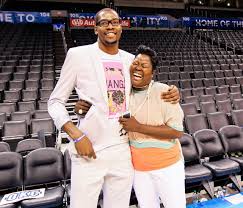
For better or worse, young people follow the lead of their parents. Kevin Durant is worthy of admiration because his mother has been for thirty years. Some CDM parents deserve scorn for a litany of parenting failures. Inevitably though, other CDM parents have more in common with Wanda Pratt, Kevin Durant’s mother, pictured below.

We struggle with nuance, subtleties, and ambiguity. In my alternative version of A Few Good Men, Jack Nicholson shouts at all of us, “You can’t handle complexity!”

imgres

The Most Valuable Person with the leagues best player for 2013-2014


What Engineers Get Wrong

Mr. Money Mustache, a former engineer and Longmont, Colorado-based blogger, has struck a chord with his retire early gospel. To the tune of about 800,000 separate vistors and 3.5 million page views a month. A large part of his appeal is his directness about people’s tendency to waste money unnecessarily.

I like his thesis that community is far more fulfilling than material pursuits, but dislike the groupthink his followers often display.

His advice is to get a good paying job (easier written than done) and then work for 10-15 years saving half of what you earn. Then, when you have $500k or so saved up, quit work and spend time doing whatever you find most meaningful. For him that’s blogging, carpentry, and spending time with family and friends. $500k is far less than nearly every other retirement “expert” recommends saving. MMM believes everyone can do what his family does, live quite comfortably on about $25k a year.

Their house is paid off and they have one inexpensive car that they rarely use. Instead, they bicycle almost everywhere. His most recent post was titled “Bicycling: The Safest Form of Transportation”. That post has generated over 360 comments, many which consisted of a mathematical back and forth, some challenging his use of statistics, others defending him.

In reply to one commenter, he shouted, “You can’t disagree with the math by listing four pieces of anecdotal evidence!” And then, at the end of the of the same reply added what might be the engineers’ motto, “Calculations and spreadsheets for everything.”

These aren’t just the words of one widely read blogger, they succinctly articulate the central message of a wide range of policy makers that see data analysis as a panacea for nearly all of society’s ills. That belief, “calculations and spreadsheets for everything,” is what informs the emphasis upon STEM education—science, technology, engineering, and math—at the expense of the the humanities, the arts, and foreign languages.

I can’t help but wonder if MMM only interacts with other engineers with the exact same “calculations and spreadsheet” worldview. Mind boggling that someone as smart as him believes that any spreadsheet might make someone less afraid to ride their bike across a major metropolitan area. As if phobias are rational and can simply be argued away with math. If that was true, people wouldn’t see psychologists, they’d see mathematicians. “Let’s see, you’re afraid of flying in airplanes. Take a look at this spreadsheet then.”

Engineers think people are rational. If that were true, people would change their favorite Starbucks order based on their new calorie charts and every investor would always buy low and sell high. A more realistic counter motto is “Subjective emotions for everything”. Few people study calculations and spreadsheets when making friends, love, or decisions about how to get to and from work. They do it based upon a messy, unscientific, imperfect combination of intuition, feel, and emotion.

That’s what engineers get wrong.

A Better Way To Treat Anxiety

The title of a recent Wall Street Journal article about exposure therapy. 1.8 million young people, or nearly 10% in the U.S., experience anxiety disorders of some sort. Researchers at the Mayo Clinic, Virginia Tech and other institutions are finding that slowly exposing children to the things they are anxious about, at an early point in treatment, can be highly effective in helping them overcome anxiety.

Stephen Whiteside, a  Mayo pediatric psychologist, in the article:

When parents help children to escape from feared situations, anxiety symptoms may worsen and children frequently become more impaired.

Exposure therapy explained. Also verbatim from the article:

1) Children are gradually exposed early in treatment to things and situations they fear, and parents receive training as ‘exposure coaches’. Instead of avoiding things, the child begins to learn new ways to behave.

2) Don’t overreact. If your child is complaining or distressed about an upcoming situation—say a math test—tell him you understand how upsetting it is but you are going to be very proud of him for trying.

3) Save the praise. Praise the child only after she actually takes a step toward dealing with her fear, such as germs (‘You did a great job of riding the bus on the field trip.’)

4) One step at a time. Encourage your child to take small steps toward a goal, such as visiting an airport in advance of a scheduled flight.

5) Encourage decision making. Let your child make some choices on his own, such as whether to walk past a dog or visit a house where there is a dog.

6) Grin and bear it. Encourage your child in situations that might involve her fears, such as conversing with strangers—even if you think she might become upset or make a scene.

7) Positive reinforcement. Communicate that you are confident that your child can accomplish the goal, such as separating from the family for a camping trip. Tell her it will get easier every time she does something new.

Number five reminds me that when I was young, I was deathly afraid of dogs. In the sixties, with three older sibs, I was left to my own to work it out. Less intelligent than the dogs that scared the sh*t out of me, I tried to outrun a few. Which of course only made things much, much worse. Now, I’m happy to report, the family sometimes worries I may be too close to one particular doggie.

IMG_0386

Spare me the “guess marijuana really is legal in Washington” jokes. It’s early.

photo

The Great Equalizer

As this recent New York Times article poignantly illustrates, Horace Mann was wrong, education is not the great equalizer of men. Or women.

As always at the end of the year, most major newspapers list the most newsworthy deaths of the calendar year. Some provide a few paragraphs about each person. The “newsworthy deaths” compilations are a nice reminder that death is the great equalizer. Of men and women. The rich and poor. Hawk and dove. Religious and secular. Well known and anonymous. Prepared and unprepared.

I imagine most people who read those “famous deaths” compilations think to themselves, “Wow, a lot of famous people died this year.” That’s the thing about death, it’s kind of consistent. A lot of famous people die every year. In the United States, in 2013, someone will be born every 8 seconds and die every 12 seconds.

Poor form I know, but I can’t help but wonder if the comrades—Hugo Chavez and Fidel Castro—will feature prominently in next year’s “famous deaths” lists. And what about Mugabe, Bush Sr, and Mandela, all quite skilled at postponing the great equalizer. Will they make it to 2014?

More importantly, will you and I make it to 2014? Psychologist Russ Harris suggests a simple exercise for being more conscious of The Great Equalizer (as described in The Antidote: Happiness for those Who Can’t Stand Positive Thinking). Imagine you are eighty years old—assuming you’re not eighty already, that is; if you are, you’ll have to pick an older age—and then complete the sentences “I wish I’d spent more time on. . . ” and “I wish I’d spent less time on. . .”

Whatever your age, that wonderfully simple exercise will improve your chances of reaching death having lived life as fully and as deeply as possible.

I hope this isn’t your year or my year, but just in case, let’s live it like it could be.

Thank you for making time to read my writing this year. Peace to you and yours.

A New Approach to a New Year

I’m a monogamous reader. When I commit to a book, I commit. No late night flirting with other authors that I might regret in the morning. Another idiosyncrasy, I can be slow to ditch flawed books. I was on a nice reading roll during the first half of 2012, but got totally stalled in a cook book somewhere during the summer. Yes, you read correctly, a cook book! You’re forgiven for wondering what kind of imbecile sets out to read a cookbook cover to cover. The same kind that set out to read the bible from cover to cover in the sixth grade. Wasn’t able to check that one off either. Damn Leviticus.

But, I’m happy to report, my reading self is back. In fact, I may read more in January and February than all of 2012 combined, but more on why in a future post. At present, I’m wedded to Oliver Burkeman’s The Antidote: Happiness for People Who Can’t Stand Positive Thinking. Although it’s clearly written, Burkeman’s ideas are so provocative and contrary to conventional wisdom, The Antidote will probably require a re-reading, making it my last book of 2012 and first of 2013.

If like me, you enjoy holding up common assumptions to the light of day, I especially recommend Chapter Four, “Goal Crazy: When Trying to Control the Future Doesn’t Work”. In short, Burkeman convincingly argues that most everything you and I have been taught about goal setting is flawed. In part, his argument rests on what went wrong on Mount Everest in 1996 when many climbers died because they didn’t turn around in time to survive the descent. In his view, Krakauer’s Into Thin Air analysis is “ultimately dissatisfying” as an explanation.

He finds Chris Kayes’ interpretation more persuasive. Kayes, a former stockbroker turned business professor and expert on organizational behavior, suspects the climbers were “lured into destruction by their passion for goals”. Burkeman writes of Hayes, “His hypothesis was that the more they fixated on the endpoint—a successful summiting of the mountain—the more that goal became not just an external target but a part of their own identities, of their senses of themselves as accomplished guides or high-achieving amateurs.”

“If his hunch about the climbers was right,” Burkeman adds, “it would have become progressively more difficult for them to sacrifice their goal, despite accumulating evidence that it was becoming a suicidal one. Indeed, that accumulating evidence. . . would have hardened the climbers’ determination not to turn back. The climb would have become a struggle not merely to reach the summit, but to preserve their sense of identity.”

One take-away from the chapter is that there are often unintended consequences when people focus intensely on especially lofty goals. Kayes points out that the mountaineers who died climbing Everest in 1996 did successfully reach their goal: they ascended to the summit. The tragic unintended consequence was that they didn’t make it back down.

Burkeman also offers up a  challenge—to become more comfortable with uncertainty, to turn towards it, to exploit the potential hidden within it, both to feel better in the present and to achieve more success in the future. Burkeman sites a person who says the key to this approach is to think more like a frog. “You should sun yourself on a lily-pad until you get bored; then, when the time is right, you should jump to a new lily-pad and hang out there for awhile. Continue this over and over, moving in whatever direction feels right.” The imagery of sunbathing on lily-pads isn’t mean to imply laziness, the emphasis is on enjoying one’s work in the present rather than postponing happiness based upon endless five year plans.

Burkeman’s thinking challenges my default tendencies to plan and set goals. My goal for 2013? Have fewer goals and turn towards uncertainty.

imgres

Can Grit Be Taught?

Angela Lee Duckworth, a University of Pennsylvania psychology prof, studies “grit” which she defines as  “perseverance and passion for long-term goals“. In this 18 minute-long TED talk titled, “True Grit: Can perseverance be taught?” she summarizes her research without really answering the question.

Her premise, I assume, jives with most everyone’s life experience—achievement involves far more than natural intelligence. An impassioned, focused, single-minded person who perseveres in the face of obstacles almost always accomplishes more than the really smart person who switches from project to project and quits when things don’t go smoothly.

From wikipedia: Individuals high in grit are able to maintain their determination and motivation over long periods of time despite experiences with failure and adversity. Their passion and commitment towards the long-term objective is the overriding factor that provides the stamina required to “stay the course” amid challenges and set-backs. Essentially, the grittier person is focused on winning the marathon, not the sprint.

I think “resilience” is synonymous with “grit”. So can resilience or grit be taught? If not, why not? If so, how?

A lot of especially resilient or gritty people seem to have tough childhoods in common. Yet, there are a lot of people who had tough childhoods who aren’t particularly resilient or gritty. So does genetics or “nature” play a part? Probably, but that doesn’t mean one’s environment is irrelevant. I suspect one’s environment is more influential than one’s DNA.

So what kind of environments cultivate resilience or grit? This recent essay titled “Even Happiness Has a Downside” provides insight into family settings that are unlikely to cultivate resilience or grit—most contemporary ones where the parenting default is to remove obstacles from children’s lives. An excerpt: “. . . being happy, being satisfied, saps the will to strive, to create. It’s why we don’t usually expect trust-fund babies to be cracker-jack entrepreneurs. For all our happiness talk, we actually cultivate dissatisfaction. We don’t want to hog-wallow in the useless sort of contentment that H.L. Mencken derided as “the dull, idiotic happiness of the barnyard.” 

Of the cuff, in her TED talk, Duckworth uses a  related phrase that may be the ultimate target for those interested in cultivating resilience or grit—”intestinal fortitude”. Related question. If a young person is to learn “intestinal fortitude” are they more likely to learn it in school, through a curriculum designed to cultivate it or at home or in their community by observing adults who model it? I would enjoy the opportunity to design a resilience, grit, or intestinal fortitude curriculum, but when it comes to cultivating those things in young people, outside of school modeling probably holds far more promise.

Young people are unlikely to develop resilience, grit, or intestinal fortitude given the extreme child-centeredness that characterizes contemporary parenting. That doesn’t mean families should intentionally accentuate dysfunction, but they shouldn’t shield their children from the inevitable headwinds every family faces either.

I’ve enjoyed coaching girls high school swimming from time-to-time the last few years. The swimmers are wonderful young people, but few of them show much resilience or grittiness. When practice is most difficult they suddenly have to go to the bathroom or stretch their shoulders. They’re unaccustomed to being truly fatigued and they’re mentally unable to push through temporary physical pain. They have a lot of great personal attributes, but for most of them, intestinal fortitude is not among them.

At dinner tonight (Sunday the 15th), the Good Wife suggested we watch Mad Men tonight after it airs (to avoid commercials) instead of Monday or Tuesday night as has been our recent habit. Why? So that Sixteen can watch her show uninterrupted Monday night. Some context. Sixteen is a great kid, works exceptionally hard at school, and looks forward to chilling in front of the t.v. for an hour at the end of several hours of homework (with some Facebook mixed in for good measure). The Good Wife’s intentions are understandable, it’s a well deserved dessert, but I ask you Dear Reader, how gritty is our next generation likely to be if they’re not even expected to share a television from time to time?

[Postscript—Thanks Kris for the Duckworth link.]

How Well Do You Know Yourself?

The wife recently asked me to take the Jung/Myers Briggs personality test available here. Probably wanted to find out what’s wrong with me. It was relatively pain free and the results mostly jived with my sense of self. Take it and tell me what you think of the results.

I’m an INFJ or “Idealist Counselor”. Here are some excerpts from the “Idealist Counselor” description:

Counselors have an exceptionally strong desire to contribute to the welfare of others, and find great personal fulfillment interacting with people, nurturing their personal development, guiding them to realize their human potential. Although they are happy working at jobs (such as writing) that require solitude and close attention, Counselors do quite well with individuals or groups of people, provided that the personal interactions are not superficial, and that they find some quiet, private time every now and then to recharge their batteries. Counselors are both kind and positive in their handling of others; they are great listeners and seem naturally interested in helping people with their personal problems. Not usually visible leaders, Counselors prefer to work intensely with those close to them, especially on a one-to-one basis, quietly exerting their influence behind the scenes.

Except for the fact that I could be a much more patient listener, that’s accurate to the point of almost creepy. Helps explain why I prefer small dinner get-togethers to large cocktail parties and why I loathe self-promoters. There’s more.

Counselors are scarce, little more than three percent of the population, and can be hard to get to know, since they tend not to share their innermost thoughts or their powerful emotional reactions except with their loved ones. They are highly private people, with an unusually rich, complicated inner life. Friends or colleagues who have known them for years may find sides emerging which come as a surprise. Not that Counselors are flighty or scattered; they value their integrity a great deal, but they have mysterious, intricately woven personalities which sometimes puzzle even them.

Isn’t blogging going against the Counselor grain? Not necessarily. I share thoughts and emotions, but not my innermost thoughts or most powerful emotional reactions. I’ll probably peel more layers off over time, but never get to the core in this format at least.

Counselors tend to work effectively in organizations. They value staff harmony and make every effort to help an organization run smoothly and pleasantly. They understand and use human systems creatively, and are good at consulting and cooperating with others. As employees or employers, Counselors are concerned with people’s feelings and are able to act as a barometer of the feelings within the organization.

That explains in part why I’ve been in a professional funk. My workplace has lacked harmony for quite awhile. Outnumbered by those who think people’s feelings are unimportant, I’ve thrown in the towel on trying to help things run smoothly and pleasantly.

Blessed with vivid imaginations, Counselors are often seen as the most poetical of all the types, and in fact they use a lot of poetic imagery in their everyday language. Their great talent for language-both written and spoken-is usually directed toward communicating with people in a personalized way. Counselors are highly intuitive and can recognize another’s emotions or intentions – good or evil – even before that person is aware of them. Counselors themselves can seldom tell how they came to read others’ feelings so keenly. This extreme sensitivity to others could very well be the basis of the Counselor’s remarkable ability to experience a whole array of psychic phenomena.

Psychic phenomena strikes me as over the top. And do you think they purposely write all the descriptions as positively as possible so that everyone feels better about themselves? And you gotta love the examples of other Counselors—Gandhi, Eleanor Roosevelt, Jane Goodall. Nice company to keep. I’m a confident writer and speaker, but as clearly demonstrated in Wednesday’s “Fall” post, I’m anything but poetic. And when it comes to others’ feelings, my antenna do seem more finely tuned than most.

For example, I picking up on things right now. You think I’ve been a bit self-absorbed in this post and I’ve gone on too long. Points well taken.

We’re All Lance Armstrong

We’re greatly influenced by—sometimes positively, sometimes negatively—those we associate closest with in our work lives and our private lives.

I found Tyler Hamilton’s 60 Minutes interview fascinating from more of a social science perspective than a moral one. Hamilton’s and Armstrong’s performance enhancing drug use is an interesting social-psych case study. At some point, probably decades ago, performance enhancing drug use reached a tipping point where a majority of cyclists said, “Screw it, I’m in.”

From that point forward, anyone with Hamilton’s and Armstrong’s physical tools and off the charts competitive drive probably had very little problem rationalizing it with the same mindset that regularly trips up thousands of young people every year, “Everyone’s doing it.”

It’s the same phenomenon we sometimes see on the freeway when it’s turned into a parking lot as a result of a bad accident. One person eventually decides the risk-reward is worth it, so they pull out from the far right lane onto the shoulder and take off into the horizon. Then, a second person. Then, a third. I can either sit and reflect on my moral superiority or get home at the same time as them, but not both.

Given the work culture of his chosen profession, I almost find Armstrong a sympathetic figure. To have “just said no” he would have either had to have found something else to do with his life or settle in as a second-tier domestique stuffing water bottles down his back.

Almost a sympathetic figure because through his repeated, robotic denials, he wants everyone to believe he’s special. He’s the only one who stayed in his lane, but somehow still arrived home before everyone else. That’s how good he was.

It’s as this point, Armstrong turns into a fascinating psychological case study. In one respect, we’re all Lance Armstrong in the sense that everyone one of us maintains public personas, revealing less than the truth about ourselves to the larger world. Of course the difference with Lance is the degree of duplicity.

He must wake up at night worried about what the federal grand jury’s findings might do to his athletic legacy, his future marketing potential and income, and donations to his foundation.

I hope I’m wrong, but I don’t ever expect him to come clean, just doesn’t seem he’s nearly introspective enough. And that’s too bad, because I’d gain some respect for him if he did. Of course, my acceptance and approval are meaningless compared to the rewards of self acceptance.