Pedestrian Safety Versus The Speed Of Traffic

Pedestrian safety is all about the “built environment”. From “Determining who gets blamed when cars hit pedestrians.”

“’But what we’re seeing in this research is that the built environment is a key factor. People make errors in judgment, but no one deserves to die or get injured for such errors. And they would be less likely to make these choices if there were more pedestrian infrastructure,’ said the director of the Center for Urban and Regional Analysis at Ohio State.

One recommendation from the researchers is to redesign the crash forms completed by police to include information on the built environment around the crash site, such as distance to the nearest pedestrian crossing, to give more context on why pedestrians make certain choices.

The built environment for pedestrians isn’t just a problem in Columbus, according to the researchers. Many cities have similar issues. And the situation in Columbus is improving because of Vision Zero Columbus, a government effort focused on reducing crash-related fatalities and injuries in the city.

But this study shows the importance of a Safe System Approach to designing roadways to minimize the effects of human errors and allow pedestrians, as well as cars, to move safely through the city.

“We don’t have to design the streets the way we do. We can make fundamental design choices that could prioritize safety over the speed of traffic,” Miller said.

Put more simply, the relative frequency of cars crashing into pedestrians based upon the presence of cross walks and related pedestrian infrastructure is fairly predictable. No, that’s not surprising. The larger question, I suppose, is how can citizens get their municipalities to prioritize pedestrian safety over traffic speed?

Imagine If

The doctor says it’s terminal and you only get one more walk or run. Where and when? I’d be torn between these beauts.

The Arb, Carleton College, Northfield, Minnesota. Miles of incredible, meandering trails. Some by a river, some surrounded by head high grasses, often accompanied by deer. I always get lost and never sweat it. More miles, more better. Great anytime, but especially primo in the fall.

Bodega Head Trail, Bodega Bay, California. What it lacks in distance, it more than makes up in natural beauty. 1.9 miles of exquisite Bodega Bay and greater Pacific Ocean views. Stop anywhere, lay down, and soak up the Vitamin D. The ice plant makes great cushioning for a mid-day nap. An all-time great spring run.

Oak Bay Loop, Victoria, British Columbia. From the Hotel Grand Pacific to Dallas Road around Ross Cemetery and back. ANY sunny morning, but especially nice in the summer. If those coastal views don’t lift your spirit, you really are terminal.

Sunriver, Oregon, Benham Falls Deschutes River Trail. Another summer gem. Beautiful green grasses, a calm river mixed in other places with beautiful water falls, all framed by high desert pines. Full disclosure, since it’s my last run, I’ll be shirtless on this one.

Lastly, if the diagnosis comes in winter, really anyplace with two inches of fresh snow will suffice, but it’s tough to beat Hamar, Norway and Olympia, Washington.

What am I missing?

If You’re Not Looking Forward To It, You’re Doing it Wrong

I enjoy watching Lionel Sanders triathlon training videos on YouTube. I dig his honesty and no-nonsense competitiveness. He said something in a recent one that was particularly insightful. Tying his shoes before a track workout, he said, “If you’re not looking forward to it (meaning workouts generally), you’re doing it wrong.”

Great advice for any walker, hiker, tennis player, yoga aficionado, swimmer, cyclist, runner. Whether you’re looking forward to your activity is a great litmus test of whether you’re overtrained or just going through the motions out of habit. What would it be like to be fully present and genuinely appreciative each time you lace em’ up?

Last night, before expiring, my final thought was, “I’m fortunate I get to swim tomorrow morning.”

This Tuesday afternoon I found myself shoulder-to-shoulder with Brett near the very end of the “Mostly Retired Lunch Hour” ride. Brett is the Presiding Judge at our County’s Courthouse and one of two regulars on the ride still working full-time (I’m half-time). In his mid-60’s, I asked him if he has an “end-date” in mind. He said he’s up for re-election in a year and a half and he’ll have another four-year term. Groovy confidence, but what I most digged was how much he enjoys his work. I told him it was really refreshing to hear since it seems to me that 8 to 9 out of every 10 of my peers are counting down the days until they can stop working.

Brett talked about the Court’s ‘rona inspired virtual proceedings and how engaging the associated intellectual challenges were. And about how much he enjoys working with young attorneys and other people. And about how no one will give a damn about what he thinks as soon as he unplugs. Irrespective of his age and all his peers exiting the stage, he looks forward to what the next several years of work will bring.

He also acknowledged that “we live in a beautiful spot” and that he can enjoy playing outdoors when not working. Because of that, he said he doesn’t feel compelled to move anywhere.

As we approached his Courthouse’s start and end point, he said to me, “It was great riding with you again Professor. It was nice to have a little infusion of intellect.” I think he emphasized little, but still, I’m concerned his judgement may be lacking.

Slowing Down

This spring I’m working my way through a laundry list of medical issues. Meaning I’m unable to run or cycle or swim right now. So I walk at Priest Point Park or Woodard Bay or Capitol Lake or closer to home. One cool thing about slowing down to 3-4 miles per hour is seeing A LOT more. 

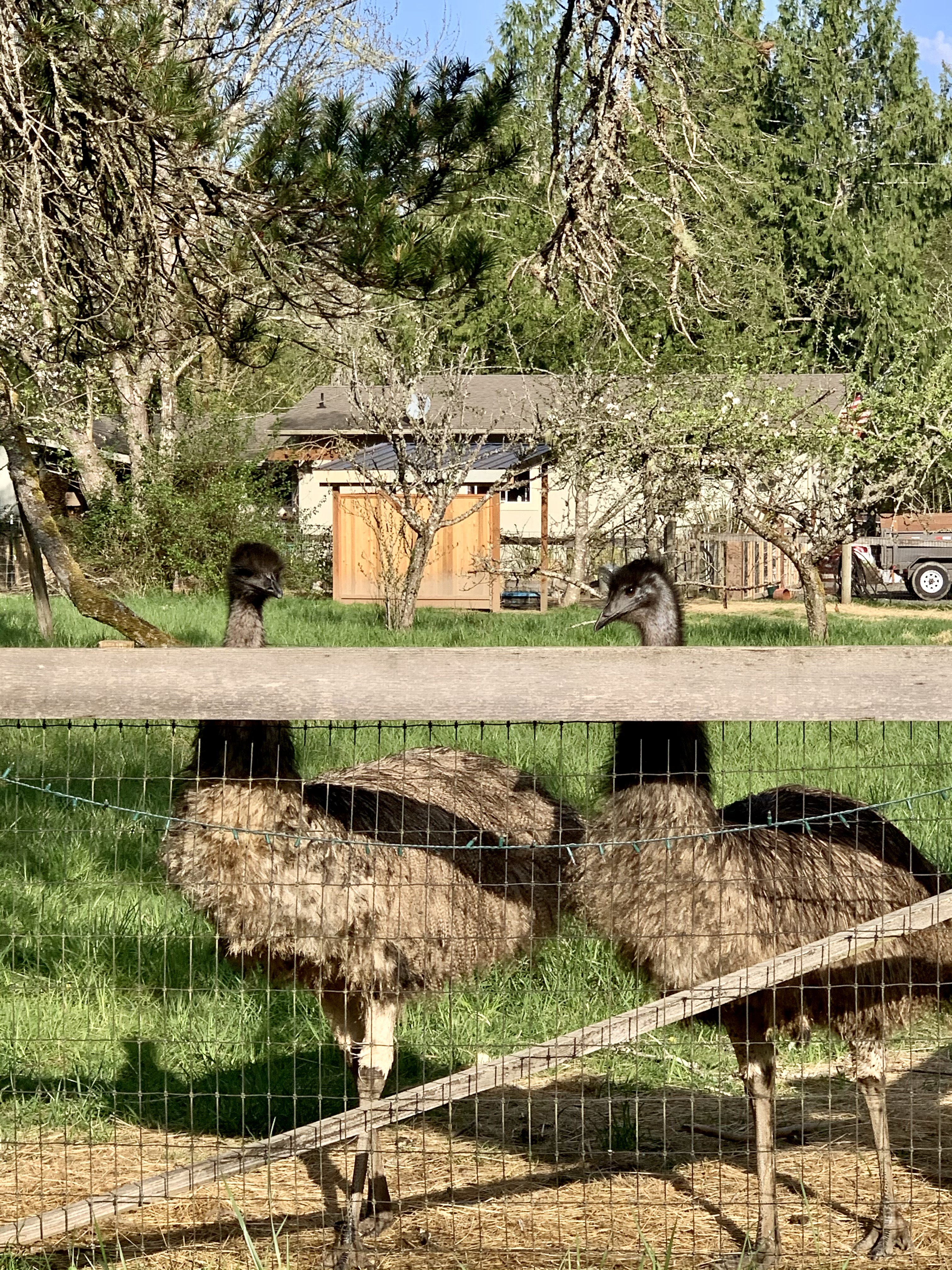
It’s nice to notice things. Sometimes. The trash on the side of Woodard Bay Road—decidedly not nice. Reuniting with Rudi yesterday morn—very nice. As was making two new friends. I’ve run and cycled past my new friends’ house several times, but since they’re natural camouflagers, I’ve never come close to noticing them.

A little research reveals they’re socially inquisitive which explains their walking to the road to introduce themselves. And they can run up to 31 mph at which speed they prob don’t notice much at all.

Rudi not happy that I’m apple-less.
My newest friends.

‘Rona Silver Lining

Americans exercised more in 2020, according to data tracking service, Strava.

“In addition to jumps in running and cycling activity in the U.S., Strava also saw booms in walking, hiking, indoor cross-training activities such as yoga and weight lifting, and water sports like kayaking and stand-up paddleboarding.

‘There was just so much uncertainty surrounding COVID […] it was great to see people deal with that by finding some sort of certainty and an everyday routine,’ Megan Roche, an ultra-runner and epidemiologist, told ESPN.

Women drove the increase in fitness — both in the U.S. and all over the world. Between April and September, women aged 18-29 saw a 45.2% increase in the median number of activities uploaded compared to a 27.3% increase by their male counterparts, the Strava data shows. Women were also biking more, logging a 72% increase in bike trips compared to 2019.”

Case in point, none other than one of my twenty-something daughters. Summer spent lake swimming. Migrated to the pool in the fall. Cycled with friends in the summer. All the while, she turned into a certifiable WALKING machine. 120 miles in November.

Be The Rower

Early one morning last week I cycled indoors because Blanca is injured.* Afterwards I plopped into my desk chair to swat back the day’s first wave of emails. All while looking at the Salish Sea.

A rowing scull suddenly materialized. The solo rower probably launched from OAR’s (Olympia Area Rowing) downtown marina dock. With steady strong strokes, they disappeared as quickly as they appeared. Then, five minutes later, after reaching their appointed turn around, they shot by again heading south back to the dock no doubt.

I thought about the probable outline of the rower’s morning—waking early, driving to the marina, lifting the boat from its rack, being on the water at dawn, and rowing a long ways on beautiful glassy water with real purpose. And as required for all Pacific Northwesterners, stopping for the daily latte on the way home.

Then I thought about the rest of the rower’s day and despite everything—the ‘rona, the impending forest fire smoke, the faux electronic schooling, the negative national politics—I bet they had at least a decent, if not good, if not great day. How could they not with that kind of start?

Be the rower. Wake up early. And move. Outside**. Walk, bike, swim, run, paddle, row, skate. With someone or alone. Add some caffeine. Then try to have a bad day. I dare you.

* long sordid story starring a real duffus

**once the fire smoke apocalypse is over

Sports Utility Vehicles

IHS Markit forecasts that SUVs will make up half of all U.S. car sales this year for the first time, strengthening further to 54 percent of sales by 2025.

“SUVs are a monument to a broader American failure that has seen pedestrians and cyclists forsaken for endless miles of road building, with non–car users forced to push what Miller calls “beg buttons” to pause traffic to enter roads that should be egalitarian public spaces.

SUVs . . . not only bring a stew of pollution and an element of fear to those attempting to traverse roads on foot or bike—they are also fundamentally inefficient. ‘You are taking a 200-pound package, a human, and wrapping it in a 6,000-pound shipping container,’ he said. ‘For some reason we think that is a good way to move through a city. If Amazon used that rationale it would be out of business in a week.'”
