Good and Bad News—Your Life Experience is Unique

No one has followed your exact path. No one has grown up in the same family, attended the same schools at the same time, read the same books, worked the same jobs, traveled to the same destinations, settled in the same place. Ever. Your unique life path is a wonderful strength. As a result of it, you “get” the specific people you grew up with and you’re an insider at the places you’re most familiar.

But your unique life path is a serious limiter too. One that inevitably handicaps you at times. It’s the reason you struggle to understand people and places with which you’re unfamiliar. Clearly, seeing the world from other people’s points of view does not come naturally. More specifically, we routinely fail to adjust for other people’s different life paths. Which is why there’s so much interpersonal and intergroup conflict.

A close friend attended a mostly white, mostly upper middle class liberal arts college. By most conventional measures, she received an excellent education. But in some ways she was ill-prepared for an increasingly diverse world. At one of her first teaching jobs she had a militant African-American colleague who routinely ruffled her feathers. Deeply frustrated, she complained to me, “He’s racist!”

In college she had few opportunities to interact with African-Americans and never with militant ones. If she took the time to learn more about his life path she would have been much more sympathetic to his radical critique of the dominant culture of which she was a part. And consequently, she wouldn’t have taken his anti-white diatribes quite so personally.

Can you supersede your life path? Can I? Partially.

How? By purposefully seeking out unfamiliar people and places through literature, the arts, and travel whether near or far. And when interacting with unfamiliar people, substituting curiosity for negative preconceived notions. Asking, for example, why do you believe what you do? And then listening patiently.

Reinventing Teaching, Reinventing School

Olympia High School’s spring orchestra concert. A young woman sits down at a large, beautiful harp. Her sound is transcendent. I’m transported to a sun-filled Thirteenth Century Renaissance faire. I also think about dying and how her music would ease the transition.

Next, the Chamber orchestra takes the stage. They practice together four days a week, before the sun or their classmates rise. They sit in a semi-circle with a wood stool front and center. A double bass player enters, sits on the stool, and adjusts his music stand as his compatriots tune their instruments. He follows suit. Eventually, he turns to the left, looks over his shoulder and makes eye contact with the first violinist. Next, he turns to the right, looks over his other shoulder and makes eye contact with the first cellist. It’s time.

Their excellence moved the audience, but a more subtle aspect of their performance was overlooked, their utter and complete independence. They have an outstanding orchestra teacher, but his work was done in class during January and February; as a result, he sat backstage out of the limelight. The education reformer in me wanted to freeze that image of the teacher backstage listening to his students playing on the stage, stand up, and bellow, “That’s what Decker Walker meant when he wrote, ‘The educative effect is greater when students do something than when something is done to them!'”

In schools today, “something is done to students” ninety-five percent of the time. Adults make all the important decisions with little to no student participation. Student governments have next to no impact on meaningful day-to-day school life or climate. Adults out-think and out-talk students to such a degree that interrupting student talk and thought is accepted as normal. So much so that students know they can out wait their teachers, that in short order their teachers will fill any empty spaces with their words and thoughts.

Athletics, or coaching more specifically, could provide a more hopeful, student-centered model for improved teaching and learning, one where students take on ever increasing responsibility for both their school environment and learning, except for the fact that most coaches overcoach, greatly limiting their athletes’ participation in decision-making, calling timeouts the second something goes awry, and yanking players after their first mistakes. There are exceptions, but the fact that they are exceptions illustrates the problem.

Maybe the best model is the music program’s artistic cousin, drama. When the curtain rises on a play, there’s no calling timeouts. The student-actors work especially long hours to prepare because they know they’re going to be on their own. For better or worse. Just like when they graduate and the curtain rises on their adult lives.

Empowering students to help make meaningful school decisions and become more independent learners doesn’t mean teachers will spend their days playing Scrabble on their smartphones. While backstage, the orchestra teacher was listening intently to his students, taking notes, preparing to critique their performance in class in eleven hours.

Conventional wisdom aside, teaching isn’t someone standing at a podium talking endlessly to rows of passive students. That’s “presenting”. Reinventing school requires reinventing teaching, reinventing teaching requires elevating the careful and thoughtful assessment of student work to new heights. Teachers must talk less and observe and listen more as students demonstrate what they know and can do. And then the teacher’s job is to help students figure out how to sound even better, solve even more difficult problems, and write even more lucidly.

February 2013 Awards

Improbable sentence. “Ex-NBA star Dennis Rodman hung out Thursday with North Korea’s Kim Jong Un on the third day of his improbable journey with VICE to Pyongyang, watching the Harlem Globetrotters with the leader and later dining on sushi and drinking with him at his palace.

Personal finance vid of the month. Helaine Olen, author of “Pound Foolish: Exposing the Dark Side of the Personal Finance Industry“.

Apocalypse sign. CTA Digital’s iPotty with Activity Seat for iPad.

Noteworthy death. Mr. Matthew Crowley.

Weightroom t-shirt. “Gardening. It’s cheaper than therapy.”

Non-conformist. Photos.

Wasted talent. Professional sports division. My favorite excerpt, “Justify My Glove”.

Word—sequester.

Social media app—SnapChat. This news story gives it real cred. Maybe they’ll make a movie.

Consumer purchase, minimalist division.

IMG_0212

Nature pic—Holden Village (taken by La Fuerza)

Near Stehikin, WA

Near Stehikin, WA

Weekend get-away—Holden Village

Sitting in the bus I was flashing back to when I was a high school water polo legend traveling to away games.

Sitting in the bus I was reminiscing about when I was a SoCal high school water polo legend traveling to away games wit da’ boys. Lake Chelan water visibility, easily 25′.

Most widely read post. The Link Between Walking or Cycling to School and Concentration.

Be Less Lonely

By making time to read. Every day. And not just periodicals, blogs, email messages, Twitter feeds, and Facebook updates. Fiction and non-fiction books.

Bookish people are less lonely because they have an endless supply of friends. With the exception of some especially good long running series, television and film characters usually don’t rise to the same level of friendship as literary ones.

Cleo, an eighth grader at a middle school I’ve been helping out at this year, figured this out about eight years ago. She reads incessantly. Averaging about a book a day. Substantive books typically read by high schoolers. And then she reviews them on her blog, Cleo’s Literary Reviews. Apart from sometimes reading in classes she’s not supposed to, I have no idea how she does it.

Our negative preconceived notions of bookworms as socially stunted people ill-prepared for the “real world” are anachronistic. Cleo likes her school and gets along great with her classmates. She appears imminently happy and has a promising future in the “real world”. Cleo will impress with her vocabulary, imagination, and knowledge of the world.

But the longest lasting gift of reading doesn’t have anything to do with competing in the global economy. Most importantly, Cleo’s happiness won’t fluctuate as wildly with the vagaries of “real life” relationships because she’ll always be buffeted by a steady stream of interesting people, created by an endless army of imaginative authors.

The Link Between Walking or Biking to School and Concentration

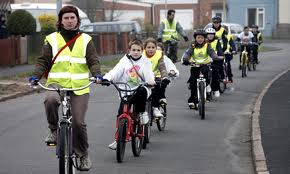
My seventeen year-old supper nanny of a daughter babysits for a Mormon family up the street. They have six children, the oldest in fifth grade. When she got home from their house Saturday night, she excitedly announced that number seven is on the way. The coolest thing about this constantly expanding brood is that they walk, or scoot, or cycle to school during the week and walk to church on Sundays. Whatever the Pacific Northwest weather. They’re quite a spectacle, all dressed up, scattered up and down the sidewalk. School is two miles round-trip, church almost four. Early elementary children walking four miles to and from church, someone call Social Services.

Probably without knowing it, our Mormon neighbors are onto something. Sarah Goodyear recently reported on the results of a 2012 Danish study that found that kids who cycled or walked to school, rather than traveling by car or public transportation, performed measurably better on tasks demanding concentration, such as solving puzzles, and that the effects lasted for up to four hours after they got to school.

The study was part of a Danish project that looked at the links between concentration, diet, and exercise. Researchers were surprised that the effect of exercise was greater than that of diet. According to one:

“The results showed that having breakfast and lunch has an impact, but not very much compared to having exercised. As a third-grade pupil, if you exercise and bike to school, your ability to concentrate increases to the equivalent of someone half a year further in their studies.”

Goodyear writes the process of getting yourself from point A to point B has cognitive effects that researchers do not yet fully understand.

Another research conclusion jives with my experience:

“We learn through our head and by moving. Something happens within the body when we move, and this allows us to be better equipped afterwards to work on the cognitive side.”

Here’s the problem though. Goodyear:

“Nationally, as of 2009, only 13 percent of kids in the United States walked or biked to school, down from 50 percent in 1969.”

Her related questions:

“But if more parents realized that packing the kids into the back seat actually affects their ability to learn, would they change their ways? Advocate for building schools in more walkable locations? Demand improved bicycle and pedestrian infrastructure? Or simply make the time and effort required to get to the kids to school under their own steam, accompanying them if need be?”

And the excellent concluding paragraph:

“Many parents pay for test prep and after-school enrichment programs to make their kids more academically competitive, and go to great lengths to schedule time for those activities. Imagine if they invested those resources instead in something as simple as helping their children to travel safely from home to school on foot or by bike, arriving ready to learn.”

Public policy questions always involve challenging trade-offs. This particular one seems like a rare exception. School transportation costs make it difficult for districts to commit adequate resources to teachers’ professional development, students with special needs, better curriculum materials, and building improvements. If schools districts started requiring students that live within a mile or two of their school to walk or cycle, the savings could be used for those other priorities, teachers would accomplish even more as a result of increased student concentration, students would be healthier (and their adult chaperones), roads would be less congested, and the environmental impact of school travel would be greatly reduced.

Win. Win. Win. Win. Win.

imgres

If Only Schools Were More Like Businesses

Every once in awhile, it’s important to inflict pain on yourself. Builds character. Run a marathon. Fast for a day. Do your taxes. Watch a Wayne LaPierre press conference. Or most painful of all, listen to politicians and business people talk about what we need to do to reform education in the United States.

Their message—breakdown the government monopoly on schools by infusing them with business principles. Most importantly, competition. Between teachers, schools, and districts. Highest standardized test scores win. Their unquestioned premise is that the business community has its shit together. The pro-business propaganda is so steady we start to believe it.

Yeah, if only schools were more like businesses.

Lots of schools would close every year. But I guess we could just tell the affected families that “creative destruction” is just a natural, even healthy part of the business cycle. They’ll understand. Yeah, if only schools were more like businesses.

And teachers would start relating to students the way my local bankers and insurance agents routinely do, from behind websites, and sometimes via the telephone. Last week I received birthday cards from my bank and my insurance agent. I recycled both cards without opening them. No one at my bank or insurance agency would know me if I walked into their offices. We have no personal relationship, only an economic one. The best teachers know their students individually, and something about their families, their interests, their hopes for the future. But maybe all that effort to connect with students is misguided. Maybe teachers should be more like my banker and insurance agent. Just design some websites where students can get assignments and submit their work and mail out computer generated birthday cards once a year. Yeah, if only schools were more like businesses.

And every school would ace every state assessment whatever the form. Because that’s the way my car dealership works. When I take my car in, I’m told they have to get perfect scores on the evaluation they mail to me afterwards. Heaven for bid if they get any “9’s”. It seems like gaming the system to me, but I guess it’s just an advanced form of assessment thinking, everyone getting perfect scores all the time. Yeah, if only schools were more like businesses.

Most importantly, the best thing about business people is they’re always accountable for their performance. Regular performance reviews ensure it. That’s what teachers need most of all, more business-like accountability! Or maybe not. Here’s Nassim Taleb blowing that fallacy apart:

Those who have the upside are not necessarily those who incur the downside. For example, bankers and corporate managers get bonuses for “performance,” but not reverse bonuses for negative performance, and they have an incentive to bury risks in the tails of the distribution – in other words, to delay blowups.

Read the history of Wall Street from 2007-2008 for sordid example after example. Five years later, in the U.S., there’s a sure-fire way for business people to avoid accountability. Climb the corporate ladder as high as possible. Yeah, if only schools were more like businesses.

imgres

Tired

I used to be more like Bill Gates, my sister, Jon Kitna, and my wife. I wanted to help people improve their lives. Volunteer time in my community. Change the world for the better.

Now, Stoic sensibilities make it unlikely you’ll see me in a street protest near you. When I read essays like Gates’ recent one titled “My Plan to Fix the World’s Biggest Problems,” I marvel at his ambition. Twenty years ago I could have written a decent essay with that same title, but not now.

Saving any subset of the world requires endless teaming with others. Which makes me wonder. Or makes me worry. Being an introvert, and having taught for three decades, am I bumping up against my optimal number of lifetime interpersonal interactions?

Just because my gray-bearded self is less activist than my younger self, it doesn’t necessarily mean I’m more selfish. I still care about teaching well. And I’ve enjoyed helping other teachers refine their craft this academic year. And I hope this blog occasionally entertains, informs, or enlightens. And I vote (in most elections), try to encourage my family and friends, help old ladies across the street, and never litter.

I don’t begrudge the World Changers anything, I just don’t feel as much camaraderie with them as in the past. This isn’t flattering to write at all, but compared to the past, I’m more accepting of many of my community’s, country’s, or world’s long-standing problems. More content to study and try to understand the root causes of problems. When I try to tap some sense of righteous indignation, all I get is Buddhist detachment. More honest and authentic. Less a role model.

No, I was not the male lead in Silver Lining Playbook, but I can understand your confusion.

No, I was not the male lead in Silver Lining Playbook, but I can understand your confusion.

The Limits of Obama’s Liberalism

Post Inaugural Address, Slate Magazine trumpeted, “A Liberal Love Letter”. The tease read, “Obama’s partisan speech was a pledge to gays, women, immigrants, and the working class.

So forget all that January 2009 naivete about bipartisanship. The plan is to put the activist government pedal to the metal for the next 16-18 months.

Except when it comes to teachers and education. Obama’s education policy is nearly indistinguishable from George W. Bush’s whose reform proposals were nearly indistinguishable from Bill Clinton’s, whose policies were nearly indistinguishable from George Bush Sr’s. Pre-Senior, the education policy pendulum swang about every ten years between traditional schooling practices and progressive reforms. About twenty years ago the pendulum got seriously stuck. Wedged in wet cement that then dried when Bill Clinton adopted Senior’s narrow, uninspiring, national education goals.

Granted, President Obama jammed a lot into his inaugural address and inaugural addresses are more about vision and guiding principles than specific policies. Given that, here’s what President Obama should do before (#1) and during (#s 2-5) his State of the Union Address on Tuesday, February 12th, to extend his “liberal love letter” to education.

1). Thank Secretary of Education Arne Duncan for his service and appoint someone with real life K-12 teaching experience. A woman with credibility. Someone less inclined to use international test scores to criticize teachers. Someone less likely to mindlessly preach the math/science “economic engine” gospel.

2) Repeat this weekly. “We must learn to think about students as future citizens first, not consumers or employees.” And also, “We’ve erred in thinking about schools like businesses and only emphasizing math and science education. For the sake of our democracy, we must pay much more attention to the arts, the humanities, and social studies education.”

3) Empower teacher leaders—not Governors or other politicians, business people, or education bureaucrats—to design rigorous teacher evaluation systems. Acknowledge that the curriculum grew frighteningly narrow over the last twenty years in part because education bureaucrats have insisted on tying together students’ standardized test scores, teachers’ evaluations, and teachers’ compensation.

4) Acknowledge that appeals to economic competitiveness and national greatness don’t inspire teacher or students. Stop asking teachers and students to work harder for the sake of the country. Remind everyone that academic achievement results when students have inspiring teachers; positive peer pressure; and most importantly, caring adults in their lives who combine high expectations with tireless support and encouragement.

And since I’m in “pie in the sky” territory. . .

5.) Start a “MaD” program or “Mothball a Drone” and use the Defense Department savings to A) fund scholarships for especially capable, culturally diverse, college students pursuing teaching certificates and B) to boost teacher compensation more generally.

imgres

I hereby swear to continue the education policies of George W. Bush (whereever he might be).

Aaron Schwartz—What Made Me Different From the Other Kids

Via Ronaldo Lemos in Brazil.

When I was a kid, I thought a lot about what made me different from the other kids. I don’t think I was smarter than them and I certainly wasn’t more talented. And I definitely can’t claim I was a harder worker — I’ve never worked particularly hard, I’ve always just tried doing things I find fun. Instead, what I concluded was that I was more curious — but not because I had been born that way. If you watch little kids, they are intensely curious, always exploring and trying to figure out how things work. The problem is that school drives all that curiosity out. Instead of letting you explore things for yourself, it tells you that you have to read these particular books and answer these particular questions. And if you try to do something else instead, you’ll get in trouble. Very few people’s curiosity can survive that. But, due to some accident, mine did. . . . Curiosity builds on itself — each new thing you learn about has all sorts of different parts and connections, which you then want to learn more about. Pretty soon you’re interested in more and more and more, until almost everything seems interesting. . . . I feel like the only thing I’ve really done is followed my curiosity wherever it led. This isn’t easy. . . but it’s always worked for me.

Erring on the Side of Student Smarts

When asked what was most memorable about high school, my first year university students talk about play performances; athletic competitions; service club activites; and jazz band, choir, or orchestra concerts and trips. Their coursework is forgettable, too often even mind numbing. Why?

In part, because they’re rarely asked difficult open-ended questions upon which reasonable people in the “real world” disagree. Too few adults respect students’ intelligence. Also, we lazily and artificially carve up the subject matter into smaller pieces called math, science, language arts, social studies, foreign language, and art—and thereby fail to frame lessons, units, and courses around especially challenging questions.

I’m in the earliest stages of a new project—curriculum writing for a team of explorers who hope to engage large numbers of students in different parts of the world through their expedition to the South Pole in eleven months.

My plan is to err on the side of student smarts and engage middle and high school students through a series of challenging case studies that rest on open-ended questions upon which reasonable people disagree. If successful, the cases will help teachers help students not just learn factual information about fresh water flashpoints around the world, but also to listen, read, and write with greater purpose; think conceptually; and develop perspective taking, teamwork, and conflict resolution skills.

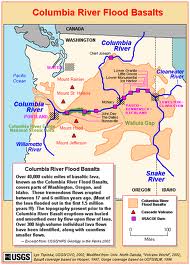
I’m just getting started. Last week I finished an excellent book about the Columbia River that I highly recommend, A River Lost: The Life and Death of the Columbia (second edition). The author, Blaine Harden, is an excellent story teller. It’s required reading if you live in the Pacific Northwest. The primary question raised by Harden is what’s the best way to operate the world’s largest hydroelectric system? Harden’s story centers on a confounding mix of economic interests, biological imperatives, and environmental values.
imgres

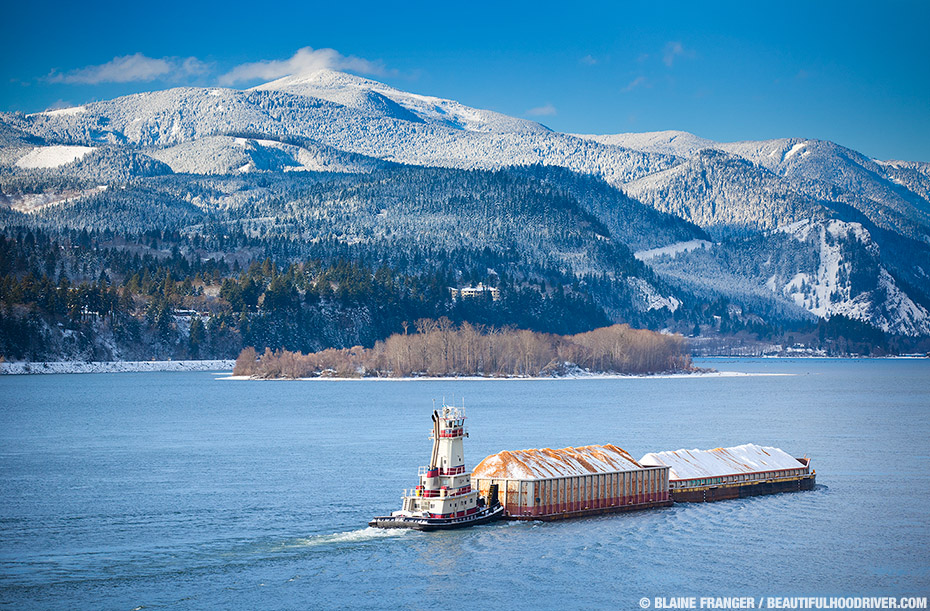
Most of the players in the drama defend the numerous dams that have turned the Columbia into a “machine river”—electric utility providers; irrigators and farmers; tow barge operators; boaters, windsurfers, and waterskiers; Google, Amazon, and Microsoft with their newish server farms; and elected officials and lobbyists who look out for the interests of utilities, irrigators, the internet goliaths, and other river users. The “other side” consists of Indians whose economic, nutritional, and spiritual lives were built around salmon, and fish biologists and Western Washington environmentalists who advocate for environmental restitution.

Students will research, debate, and decide among three possible outcomes:

  1. In the interest of maximum economic growth and inexpensive electricity, maintain the status quo of the “machine river”.
  2. In the interest of compromise and moderate economic growth, allow more water to flow over the dams thereby slightly reducing the total electricity available while simultaneously increasing the number of salmon in the river.
  3. In the interest of environmental restitution, the return of historic salmon runs, and revitalized Indian life, remove the dams and allow the river to return to it’s natural state.

Teachers will assess the relative thoroughness and thoughtfulness of each team’s proposed outcome. More specifically, they’ll be deciding which is most persuasive and why. Interestingly, this “Machine River” case study has real urgency because a federal court in Portland has given the National Oceanic & Atmospheric Administration until January 1, 2014 to submit a plan on how best to proceed. Many people whose livelihood’s will be dramatically effected by the outcome are anxiously awaiting the Court’s plan.

columbia_river_gorge_barge_snow_mg_8363_3

Even more challenging than evaluating the costs and benefits of the different possible outcomes, is extrapolating “lessons learned” from the Columbia to other river systems in other parts of the world. For example, Vietnam is upset that Laos is planning to dam the Mekong River. Here’s a question upon which I’ll base an “extension” or “enrichment” activity: Based on Columbia River “lessons learned”, how would you advise Laotians and Vietnamese officials to proceed on the Mekong River? Why?

Even more challenging than applying Columbia lessons to the Mekong is developing a set of principles for 21st Century development more generally. How can local communities, sovereign nations, and international groups maintain healthy economies without compromising natural environments? Or more simply, how do we build vibrant, sustainable communities?

I have more questions than answers. Which is the single best formula for revitalizing schooling.

580px-Grand_Coulee_Dam_Panorama_Smaller