Preach it my reddish/gray-headed brother from another mother.

Preach it my reddish/gray-headed brother from another mother.
Thanks to Steve for this inspiring vid. Be sure to watch in HD.
That phrase is from my favorite sentence in Dahlia Lithwick’s recent funny-sad Slate essay (penultimate paragraph). Thanks to Dahlia for saying aloud what all of us have long suspected, educational jargon is out-of-control.
Why so? Because education is so much more complicated than in the past? That might explain a tenth of it. More consequential, educator’s confusing language reflects muddled thinking.
Here’s a recent fav example from the torrent of acronyms and tortured language I have to wade through daily. It’s from the promotional materials of a highly sought after teaching consultant.
Students advocating for educational improvement, researching classroom climate, and leading new approaches to learning and teaching stand together in the architecture of involvement, effectively demonstrating what school change looks like when the hearts, heads, and hands of students are infused throughout the process.
Come again? The “architecture of involvement”. Please stop. The more times I read that sentence, the more confused I become. Maybe I’m just not smart enough to appreciate his brilliance.
I should start a contest for the best example of educational jargon by a non-computer, and by “best” of course, I mean worst. But participants would probably cheat by using this educational jargon generator. The situation is so desperate that humor is the only viable response.
Switching gears, I added the briefest of postscripts to Friday’s triathlon post. Basically, a link to the results. If you take the time to skim the results, you’ll see that I HMAHTM (that’s a triathlon acronym which stands for Had My Ass Handed To Me). Props to Kennett. I can’t complain. I raced well and was only 2 seconds slower than two years ago. At this stage of my life, I’ll gladly give Father and/or Mother Time one second a year.
Kennett passed me early on the bike and then we leap frogged a bit. The first time he said, “You’re in the duathlon right (a separate bike/run division)?” To which I said “No.” Afterwards I thought of better responses like, “Yes” or “You don’t swim that fast.” A few miles later, when he passed me again, he asked me my name and I didn’t reply. Regretted that and so when I passed him back a mile later, I told him my name and asked his.
When racing I enjoy taking time checks on the guys ahead of me to see if I’m gaining ground or not. When they pass a landmark I glance at my computer and then glance at it again when I pass the same place. Throughout the middle of the bike his cushion yo-yoed from 11 to 31 seconds. By the 56 mile finish he had put about 2 minutes into me. I was hoping I could run him down, but he ran really well and beat me by 7-8 minutes. Based on athlinks.com, it was a career day for him. Afterwards, he didn’t bother to thank me for pushing him to a personal record and when I congratulated him on his race he barely acknowledged me. The only consolation was he could barely walk and looked like shit. In contrast, after a quick dip in the lake, and a change of clothes, I was my normal uber-handsome self.
Right now, according to edmunds.com, my 2006 Honda Civic Hybrid with 100k miles on it, is valued at $6,800. His bike cost well north of that. More triathlon jargon—Cervelo P5, Di2, Zipps. My old hand-me-down, heavyish, Dura-Ace 9 speed time trial bike is probably five minutes faster (over 56 miles) than my roadbike. I think I might gain another five on his bike. Then it would just be a matter of those pathetic/disastrous transitions. Send money so I can take revenge next year!
A jargon-related footnote. In my postscript I said I got spanked, which is of course, sports jargon. It’s a synonym for ass whupping. A few weeks ago, the GalPal said some team really “spanked the other”. To which I immediately said, “No!” “What?” she said innocently while smiling. She knew just how dangerous it was for her to start down the path of sounding like she knows what she’s talking about. I told her that you have to have an athletic background to use the work “spank” or “spanking” in a sports context. The zenith of her athletic career was when she laid the basketball in the opponent’s basket while “starring” at Peralta Junior High School in Orange, CA.
Fight the power this week, write and speak plainly.
The best matchup of the weekend is Byrnes-Kennett.
Black Diamond Half Ironman Saturday morn @ 0900 at Nolte State Park.
Last year Kennett destroyed the 50-54 year old division by 22 minutes. I was recovering from Iron Canada. My plan tomorrow is to sneak up on him and make him earn the victory.
| Swim | Transition 1 | Cycle | Transition 2 | Run | Total | |
| 2011 Byrnes | 30:42 | 3:12 | 2:42:54(road bike) | 1:52 | 1:40:09 | 4:58:49 |
| 2012 Kettering | 33:37 | 3:12 | 2:39:32 | 1:20 | 1:39:51 | 4:57:33 |
I’m fit, but not as fit as 24 months ago. Unlike the run up to Canada, I’ve missed workouts. I feel undertrained and it’s going to be unseasonably warm (70s), but I will empty the tank and report back in case no one from SportsCenter shows.
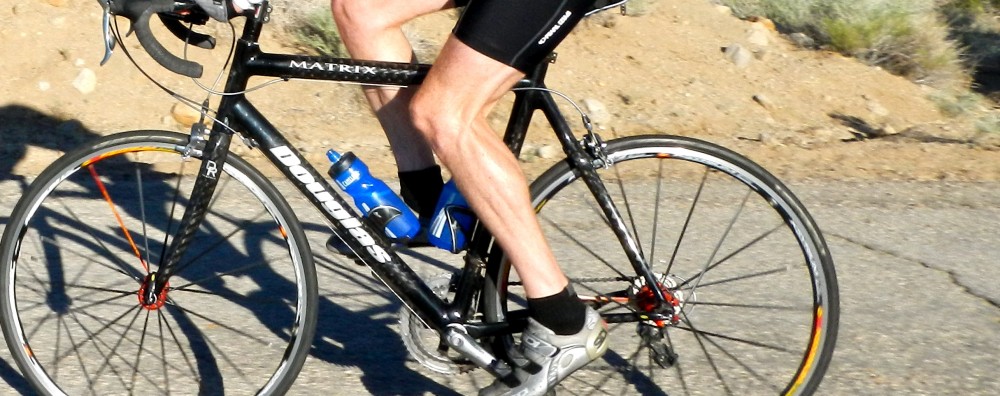 Postscript—I got spanked.
The hippy title of my first year writing seminar at Pacific Lutheran University.
I just read my 32 students’ initial essays in which they summarize what they think they know about the theme and then describe their writing process, strengths, and weaknesses.
Most of them hope the class and I will help them figure out what to study and do upon graduating. That’s not terribly realistic, but I suspect they will spend more time thinking and writing about how they want to live their lives during our seminar than throughout kindergarten through twelfth grade combined.
First Born, starting her last year in college, is also thinking with more urgency about what to do for work after graduating. She’s a religion major without any interest in seminary or much in teaching. Everyone tells me she’ll land on her feet and I think they’re right.
The GalPal and I took her out for pizza recently in her Minnesota college town where she spent the summer working full-time in the college’s library. I was happy she got the library gig because given her passion for books, I’ve thought she might end up a librarian. Over pizza she explained that she liked her job, but doesn’t want to be a librarian, because “It’s not creative enough.”
I was impressed with her self understanding. She doesn’t know what jobs to apply for yet, but she has a pretty good feel for what type of work she’d most enjoy—creative work that is sometimes team-based, sometimes solo.
Recently it was reported that 70% of US workers “are not particularly excited” about their jobs or “are actively disengaged” and “roam the halls spreading discontent”. If we use world history as our frame of reference, I’m guessing that number would be well north of 90%. Most of the world’s people most of the time do monotonous work to feed, clothe, and shelter themselves.
So when my students write that they want to enjoy their work and First Born says she wants creative work, they’re planting a distinct, 21st century, privileged stake in the ground. Normally, the concept of “privilege” has negative connections since it’s associated with preferential treatment and a sense of entitlement; however, in the case of my students and First Born, their preference for meaningful work is undeniably positive.
They want to earn enough money “not to have to worry about it all the time,” but beyond that, they want to be like me and 30% of US citizens for whom work is creative, engaging, and meaningful. Every young person should embrace that form of privilege.
In May, 2011, Atul Gawande gave an insightful commencement address to Harvard’s Medical School graduates.
He reminded the graduates that the practice of medicine had changed markedly, and that increasingly, the best docs are members of teams.
Gawande pointed out that, “The doctors of former generations lament what medicine has become.”
I’m having my graduate-level teacher certification students read the address. On the copy I’m providing them, I’ve lined out “doctors” and “medicine” and written in “teachers” and “education”.
Here’s Gawande’s primary point:
The core structure of medicine—how health care is organized and practiced—emerged in an era when doctors could hold all the key information patients needed in their heads and manage everything required themselves. One needed only an ethic of hard work, a prescription pad, a secretary, and a hospital willing to serve as one’s workshop, loaning a bed and nurses for a patient’s convalescence, maybe an operating room with a few basic tools. We were craftsmen. We could set the fracture, spin the blood, plate the cultures, administer the antiserum. The nature of the knowledge lent itself to prizing autonomy, independence, and self-sufficiency among our highest values, and to designing medicine accordingly. But you can’t hold all the information in your head any longer, and you can’t master all the skills. No one person can work up a patient’s back pain, run the immunoassay, do the physical therapy, protocol the MRI, and direct the treatment of the unexpected cancer found growing in the spine. I don’t even know what it means to “protocol” the MRI.
Today, isn’t it a workplace truism for nearly everyone that “. . . you can’t hold all the information in your head. . . and you can’t master all the skills”?
Gawande adds:
The public’s experience is that we have amazing clinicians and technologies but little consistent sense that they come together to provide an actual system of care, from start to finish, for people. We train, hire, and pay doctors to be cowboys. But it’s pit crews people need.
On my students’ copies, I’ve lined out “doctors” and “people” and substituted “teachers” and “students”.
Gawande acknowledges that medical education fails to teach docs to function like pit crews for patients. The same is true for teacher education.
Too often nursing, medical school, and teacher education faculty wrongly assume that novice nurses, docs, and teachers will naturally, through osmosis, form knowledgeable, skilled, interdependent work teams. Absent intentional team-building curricula, in which case studies would be an integral component, professional apprentices depend upon the modeling of their veteran colleagues, often out-of-step ones pining for old school independence and autonomy.
When in comes to intentionally teaching teamwork, what can and should professional preparation programs do to shift the balance from cowboys to pitcrews? More generally, what can employers do to teach teamwork?
They shouldn’t assume it’s something someone is either born with or not. Effective teamwork can be taught through case studies that illuminate what the best teams do and what commonly trips up most others. And by proactively providing pre-professional students positive examples of excellent teams during their fieldwork.
Watching an ESPN documentary about Mary Decker Slaney, and The Wire, and the Netflix original series “Orange is the New Black“, has me thinking about the American Presidency, Martin Luther King’s “I Have a Dream” speech, and how illusive equal opportunity still is.
Without a doubt, U.S. citizens have greater opportunity to improve their lives than the average world citizen. And U.S. citizens have more opportunity today than fifty years ago when King and others marched on Washington. Those two points are inarguable, but too many U.S. citizens extrapolate from them to argue that everyone in the United States—young, old, female, disabled, dark, poor, heterosexual, non-English speaking—has equal opportunity to succeed. Thinking that we’ve achieved equal opportunity for all may be the most pernicious myth we tell about ourselves.
I was shocked by a scene from the middle of the Slaney documentary. In one of her best performances ever, she won the 3k at the 1985 World Championship in Helsinki, Finland. Amazingly, there wasn’t a single East African in the race. Today, nine or ten of the fastest ten middle distance women runners in the world are Ethiopian or Kenyan. They have only had the opportunity to demonstrate their excellence on the international scene for a few decades. Now, the international track is a level playing field.
Watching the Wire and Orange is the New Black back-to-back is eye-opening. They remind the viewer just how white and middle class most television is. And the incredible amount of acting talent that resides in every ethnic group. The Wire, about Baltimore’s inner city, had a mostly African-American cast. Orange, set in a women’s prison, has a culturally diverse, predominantly female cast. The writing, acting, and producing on both shows is remarkable.
It makes one wonder how many other just as talented culturally diverse writers, actors, and producers are trying desperately to get their feet in Hollywood’s mostly monocultural door. For every actor we see on a small or large screen there are at least another hundred who are equally talented. The only difference is they lack connections and opportunity. Give black, hispanic, asian, and female actors equal opportunity and they will do memorable, award winning work.
And if that’s true in athletics and the arts, why wouldn’t it also be true in education, business, medicine, politics and every aspect of modern life? It’s laughable that we maintain the myth of equal opportunity in the U.S. when we’ve had 44 in a row male presidents.
We should celebrate the slow but steady extension of opportunity in the United States, but not kid ourselves with claims of equal opportunity writ large. Everyday, some in our communities are told by others that they’re too young, too old, too female, too disabled, too dark, too poor, too queer, too foreign. Refusing to see that doesn’t change reality.
With apologies to Adrian Peterson, Walter Mondale, and Prince, I’m really starting to hate Minnesota. Saturday it swallowed up Second Born. Now instead of aggravating us one minute and entertaining us the next, both our daughters are college students inside Minnesota’s borders. Now, the house seems too large for My Bethrothed, the Labradude, and my sad sack self.
I laid in bed too long on college move-in day, so after a 1 mile warm up, I decided to run a timed 5k on the school track. For those keeping score at home, Dave and Travis, after a 1 mile warmup I posted a 21:51, 7:10, 7:00, 6:51, :50. I had to hurry because the fam was loading up the college’s Zip Car with Target largess. Bright and early we drove to the dorm to meet the roommate, move-in, and start independent semi-adult life.
The roommate was nowhere to be found, the room was small even by college dorm standards, and it was hella hot and humid. When no one was looking, I slipped out, choosing instead to hang out in some shade in front of the dorm. It was a great perch from which to reflect on life changes while watching Second Born’s dormmates and their parents enter and exit with hands full.
I loved Knee High Black Socks neighbor’s look. Sun dress, knee high black socks, thickish glasses. A wonderful mix of independence and eccentricity. And then there was The Athlete, 6’2″, slender, perfect posture. She walked out, grabbed a road bike leaning against a Subaru, and took off. She returned five minutes later, tossed it back against the car and said to her family, “Okay, now I feel better.” The swim-bike-run sticker on the car made her my front runner for fav dormmate. Another had cross-country skis in her room, which puts her in the running too.
I was parent watching too. Amazing how all of the moms and dads looked so much older than me. The veggie burger and M&M cookies at lunch were great, the dean of student’s talk (“you can find it on the website”), not so much.
Who knew moving in was a marathon? I returned to my front porch perch and met Amy, one of Second Born’s Resident Assistants. Amy is a junior from Sioux Falls, South Dakota, but she spent the summer as a counselor at a fine arts camp in Michigan (not the most prestigious one). She’s a music education major who plays the clarinet. Bright, personable, genuinely interested in Second Born and myself, a pure delight.
Eventually, I headed for the Den, the student lounge where I watched Premier League soccer with several loud 18 year olds. Always a trailblazer, once I broke The Den age barrier other sports-starved dads followed course. We outlasted the youth, as the defacto leader I commandeered the remote, and then switched to the US Open and college football.
Finally, the roommate arrived from forty minutes away. Nice family, positive first impression, a sigh of relief from SB.
A college official made us say goodbye at 4:45pm CST. Tears were shed.
Fascinating essay last week by Don Van Natta, Jr. on the 1973 Billy Jean King-Bobby Riggs “Battle of the Sexes” tennis match that 50 million Americans and I watched on television. I was eleven and still remember it.
Riggs was a masterful hustler who “stayed in the barn” early in high stakes tennis and golf matches, meaning he purposely played well below his potential to lure his opponent and other bettors into a false sense of accomplishment. Then, mid to late match, Riggs would “come out of the barn,” play as well as possible and ultimately win. The art was in the timing.
The most talented, compelling artists almost always appear to be at least partly in the barn. As if they always have another gear or two in reserve. That’s what makes their performances so compelling. My first memory of this phenomenon was probably around the “Battle of the Sexes” when I was awestruck by a televised Dionne Warwick performance. She seemed to be expending about a third of her energy. Here’s just one example from the video archives:
When My Betrothed dances, she’s partly in the barn. And when watching my friend Brian ride his bike, with his rhythmic high cadence, perfectly still body, and oh so steady pace, I think, “Damn, if only it were that easy.”
Lake Center Dive is an immensely talented and stylish, up-and-coming foursome that conveys that “partly in the barn” feeling big time. Dig these examples:
Of course, an individual or group can only make something look effortless when they combine natural talent, intense commitment, and serious preparation.
My Betrothed, Brian, and Lake Center Dive owe people like me, who try to compensate for a lack of talent through extra effort, with a huge debt of gratitude. The rough edges of our extra effort is what makes the truly talented appear so stylish in comparison.
Since my “What Engineers Get Wrong” post went viral I figured people are anxious for me to overgeneralize about other groups. Thus, a series is born. This is the second, back-to-school installment. The full title, “What Parents Get Wrong about Their Children’s Teachers”.
I received this letter from a teacher friend who was seeking my advice with in her words, “my current least favorite set of parents”.
The Least Favs wrote to my friend:
I am encouraged to read your statement in the newsletter that arrived today, that students “shouldn’t be afraid to say something if they need help,” because “C” does. He needs more challenges than you have been providing.
C is still not challenged in math. From talking to him and following class work through homework, nothing seems to have changed since we brought this to your attention at the first parent teacher conferences and during two subsequent meetings. C still says “It is not that I know the material, but after we learn new stuff for a day or two it is pretty slow.” If you changed anything in the way you challenge the faster learners in your class neither C nor we noticed. We do not see that you implemented any ideas we talked about, like more challenging text problems with the same underlying pre-algebra for the faster learners, or different homework options like the link to [another school] we sent you.
We would like to again explore solutions to make sure that C will be challenged for the final trimester. For us it is sad to see that his former favorite subject rarely make his eyes light up any more. The one time you offered alternative math homework, C had so much fun and walked us through his thoughts and discussed approaches with us. This is what we asked you about and are looking for! We are hoping that maybe drawing on others experience with highly gifted education and the curricula used at other schools will help us find solutions. Also, we would appreciate [the principal’s] mediation to this time come to a clear understanding about next steps. We feel that after our last conversations, other than changing C’s class placement, which we appreciate, you did not follow up with us on letting us know which other options you explored. This lack of communication leaves us with the impression that nothing has changed.
We would like to emphasize that C likes you as a teacher and that the way you explain things seems to work well for him. It is solely the lack of challenges and the speed of learning that we perceive as a problem as well as the lack of communication with us as parents.
I’m giving the Least Favs a “C-” in teacher partnering and problem solving. It’s a flawed letter, but parents like this trounce ones who are asleep at the wheel. At least they’re engaged. I’m also giving them a few points for some positivity in paragraphs three and four.
My teacher friend was wrong for not communicating better with the Least Favs after the previous conference. The problem is the Least Favs use that against the teacher in a way that clearly suggests, “We’re in the right and you’re in the wrong,” instead of “Let’s find a way to meet in the middle and move forward together.”
Also problematic, the parents assume their child is gifted and yet their son admits “It’s not that I know the material. . . .” The student feels the pace is a little slow, but the parents don’t ask the teacher, “Is it possible to increase the pace?” They’re focusing exclusively on their child, who they believe, rightly or wrongly, is gifted. In contrast, the second year teacher is attempting to do her best for all of the students in the class. That’s one important thing parents get wrong, they assume secondary teachers, who typically interact with 100-150 students a day, are able to know their child well and individualize their curriculum and adjust their instructional pace for them. The very best can and do, but they’re the exception to the rule. Most teachers, especially new ones like my friend, teach to the middle to the best of their abilities.
Most problematic is the tone of the letter. Granted, as taxpayers the Least Favs pay the teacher’s salary, but teachers are human, and therefore parents are most effective when they seek common ground with teachers. Like trial lawyers, the Least Favs seem intent on winning an argument without any feel for what “winning” will cost in terms of the teacher’s sentiment towards them, and possibly their child.
Take aways or how to partner more effectively with teachers:
1) When communicating concerns with teachers, start positively. I suspect the first two paragraphs were like body blows; consequently, the positive points in paragraphs three and four were probably lost on my friend. Everyone is more receptive to constructive criticism after positive feedback.
2) Create good will by conveying reasonableness. Before pressing a teacher to differentiate their instruction, acknowledge that it’s “probably not very easy” to account for individual differences in background knowledge, skill, and aptitude.
3) Create positive momentum by honoring the teachers’ experience by asking “What have you or colleagues of yours done that’s worked in situations like this in the past?” The implication being “You’re a professional who can resolve the dilemma or partner with other teachers to resolve it.”
4) Create good will by conveying reasonableness. Instead of demanding follow up communication, say you’d appreciate some sort of follow up in the next few weeks. Increase the odds of a quick response by acknowledging that it’s “probably not very easy to communicate promptly with every parent every time something bubbles up.”
5) Ask what, if anything, you can do at home to also help improve the situation.
 Pressing Pause