How to Help Young Graduates Flourish

High school and college graduation approaches. How will the graduates you know fare in the “real world”?

Historically, parents assumed their children would live more economically secure, comfortable, and enjoyable lives than themselves. Now, as a result of heightened global economic competition, the loss of manufacturing jobs, and higher education and health care inflation, many parents worry about whether their new graduates will live as well as them.

Apart from the vagaries of the national and global economy, and health care and higher education inflation, what will determine how the new graduates fare? Many believe people’s success is a result of their initiative, ability, and work ethic. Others highlight the importance of family background, gender, and ethnicity. I believe it’s both/and. 

But there’s one other indispensable variable—the vision young graduates have of their future. More specifically, how positive that vision is. Can they picture themselves educated, healthy, doing meaningful work, fulfilled? I wish I could interview all four hundred graduates at Olympia High School to discover patterns and themes in their personal visions. “Describe your 25 year old self,” I’d start. Initially at least, many would stare blankly at me, but with follow up questions and disciplined listening, I’d learn a lot.

Parents worry. Incessantly. Will their children be able to afford to continue their education and graduate college? Will they find a job that pays a livable wage? Will they have medical benefits? Are they going to manage money wisely? Will they avoid the pitfalls of addiction? Will they enjoy good mental and physical health? Will they make friends upon which they can depend? Will they be okay? Understandably, many young people internalize their parents’ anxiety.

One thing determines whether a young person enters the “real world” with a positive vision of their future—whether the adults they interact with on a daily basis transmit hope for the future. If young graduates are surrounded by people who live as if “things are getting better” the more likely they are to flourish.

This isn’t just positive thinking bullshit. What does it mean to live as if things are getting better? It means denying one self day-to-day in the interest of the future vision. People with positive visions get up and go to work and save money. They eat healthily. They exercise. Their careful with their money, meaning they spend most of it on essentials. They take care of their possessions. They care for the environment by picking up trash, recycling, and reducing their energy consumption. They volunteer their time to make others’ lives better. They live their day-to-day lives mindful of their children’s and grandchildren’s lives. And other people’s children and grandchildren.

Some young graduates are surrounded by adults—older siblings, parents, grandparents, teachers, coaches, youth pastors, neighbors—with positive visions of a better future. Adults who unwittingly teach delayed gratification. Those young grads can’t help but get caught up in the positive momentum. Their grades and test scores aren’t that important. Or how prestigious their college. They’ll be okay.

Others are surrounded by adults living day-to-day without any vision for a better future. They don’t have a feel for delayed gratification, and therefore, can’t help but get caught up in the negative momentum. They’ll struggle.

Give a graduate the best gift possible this year, model a positive vision of the future.


Why I Don’t Own a Cell Phone

Sherry Turkle, the author of Alone Together—Why We Expect More from Technology and Less from Each Other (2011), is a modern sage. Next fall, my writing students and I will read and discuss Chapter Eight, Always On. Maybe we’ll start with that subtitle. Do we expect more from technology and less from each other? If so, why? Since my first year college students will be card carrying members of the first always on, internet generation, that discussion could fall flat. More how? Less than what?

Dig this excerpt:

These days, being connected depends not on our distance from each other but from available communications technology. Most of the time, we carry that technology with us. In fact, being alone can start to seem like a precondition for being together because it is easier to communicate if you can focus, without interruption on your screen. In this new regime, a train station (like an airport, a cafe, or park) is no longer a communal space but a place of social collection: people come together but do not speak to each other. . . .

When people have phone conversations in public spaces, their sense of privacy is sustained by the presumption that those around them will treat them not only as anonymous but as if absent. On a recent train trip from Boston to New York, I sat next to a man talking to his girlfriend about his problems. Here is what I learned by trying not to listen: He’s had a recent bout of heavy drinking, and his father is no longer willing to supplement his income. He thinks his girlfriend spends too much money and he dislikes her teenage daughter. Embarrassed, I walked up and down the aisles to find another seat, but the train was full. Resigned, I returned to my seat next to the complainer. There was some comfort in the fact that he was not complaining to me, but I did wish I could disappear. Perhaps there was no need. I was already being treated as though I were not there.

Some people are incredulous when they learn I don’t own a cell phone. My students, last fall, for example. One couldn’t comprehend how I grocery shopped without the ability to call home and double check on what was needed.

Some of my friends would say I don’t have one because I’m a cheap, antisocial bastard. Only partially true, my parents were married when they had me. But those charming attributes aren’t the main reasons. I don’t have one in large part because you haven’t convinced me that your lives are substantially better with them. Convenient at times no doubt, but just as often I hear you lament how dependent upon them you are. At least among middle aged cellphoners there’s a nostalgia for simpler times when people weren’t always accessible, people sometimes made eye contact, and you might meet someone new in public.

Of course, ambivalent cellphoners could turn off their phones on occasion, but that defeats the whole purpose of instantaneous accessibility. Everyone expects you’re all in.

I’m sure my daughters are tired of hearing me say that I’m going to buy the next iPhone. I probably will conform sometime in the future, but I know once I take the plunge, my life will change. Thanks to you, I’m just not convinced it’s for the better.

Mindfulness

Have you noticed? The term is cropping up everywhere. Alina Tugend, in an informative blog post that I borrow heavily from, explains:

Elementary school students practice it. Doctors practice it — and their patients. Prisoners practice it. There’s mindful eating that promises a healthier way of eating. And scans show mindfulness may change the way our brains function and help us improve attention, reduce stress hormones and even bounce back faster from negative information.

I dig Janice Marturano’s definition, mindfulness is “intentionally paying attention to the present nonjudgmentally”. If I could learn to intentionally pay attention to the present nonjudgmentally, my personal relationships would markedly improve.

According to Marturano, mindfulness isn’t only about reducing stress. Or about emptying our minds of all thoughts. Or about religion.

A few years ago I team taught a course with a friend who was taking classes in a mindfulness credential program. She’d occasionally fly from Seattle to Oakland for weekend courses. She suggested we integrate mindfulness training into our graduate course for teacher credential candidates. I liked her teaching instincts and philosophy so I agreed to give it a try even though apart of me worried that it might be New Age hocus pocus. In the end, it went beautifully and I became an advocate for mindfulness.

Martuarno explains the basics:

Find a quiet place to focus your attention — on your breath or perhaps on an object. It’s not deep breathing, but rather experiencing when the breath enters and leaves. Feel the stretch in the rib cage, without me doing anything. Can I notice when the mind takes a hike and redirect it? That redirection is the exercise.

Tugend adds:

There’s also what Marturano calls ‘purposeful pauses.’ Deciding that instead of thinking of a coming meeting while brushing your teeth you really focus on the taste of the toothpaste and the bristles and the water.

My attention is so scattered sometimes I think there’s only two times when I’m truly “in the present”. The first is when I’m exerting myself when cycling at high speeds in a group and the second I don’t dare describe since this is a family friendly blog.

Marturano again, “Take yourself out of autopilot and eventually expand that ‘being in the moment’ to other parts of your life.” 

Tugend says, “the idea is that over time you’ll feel more focused and more connected to yourself and others.”

Ever been at a large, raucous social gathering with someone whose unusually focused eye contact and attention made you feel heard and understood above the din? That’s mindfulness in practice.

Tugend again:

It sounds simple, but it’s not, because it so goes against the grain of how most of us think and operate. We want to get things done, to identify and fix problems. And that’s the opposite of what mindfulness is all about.

Christy Matta, author of the book “The Stress Response”, notes:

The way it’s presented in the media, people begin to believe it’s a magic pill. I’ll clear my mind and I’ll be peaceful and stress-free. If that’s what people think, they’ll be disappointed.

She adds:

If you go into it with the idea of reducing stress, you’re working against the very thing you’re trying to attain, because you’re aiming toward a goal. Mindfulness is about being present. You have to do it just to do it. You can’t strive for things.

Matta also cautions:

While being aware of your feelings may be nice when drinking a lovely cup of tea or relaxing in a garden, part of mindfulness is also uncomfortable feelings — not trying to change or judge them, but being aware of them. And that may not feel so pleasant.

Dr. Baime notes another common misconception about mindfulness, that it’s about learning to be happy. It’s not. Nor is it about eliminating stress.

Stress doesn’t go away, ever. That’s why we call it stress management rather than stress elimination. Rather, mindfulness can create a world where you experience depth, meaning and connectedness. You see joy and sadness more fully and settle more deeply into an authentic way of being.

That all important insight reminds me of a related book I previously recommended, “The Antidote: Happiness for People Who Can’t Stand Positive Thinking“.

Marturano says mindfulness is supposed to:

Help us spend less time worrying about the future or fretting about the past. We’ll gain perspective, listen better and step back to consider more choices and make decisions more clearly and intentionally, rather than reactively.

But Tugend cautions people not to assume that mindfulness is some sort of miracle cure. For example:

While It has been used to good effect in classrooms, it shouldn’t be used in isolation. . . . Mindfulness can increase attention and focus, and help children respond to stress in a calmer manner, but it also needs to be part of learning concrete emotional and social skills.

Tugend also contends it’s difficult to learn to be mindful on one’s own. She says:

There are some good books that offer guidance like “Full Catastrophe Living,” (Delacorte Press, 1990) by Jon Kabat-Zinn. Professor Kabat-Zinn, founder of the Stress Reduction Clinic and the Center for Mindfulness in Medicine, Health Care and Society at the University of Massachusetts Medical School, is considered one of the foremost experts on the subject.

“Everyone I spoke to,” she explains, “said that you need to take a course and perhaps go on a retreat to fully experience and gain value from mindfulness.”

Like Tugend, I can see why other people are drawn to it, given, as she says, “that we’re living in a such a fractured, information-overloaded world. We’re looking so far ahead to the next thing, we miss what’s going on in the present.” 

Guilty as charged.

Job Prospects in the New Economy

Last Sunday the family and I woke up at 3:45a to drive the college junior to the Portland airport to catch an early flight. The airport was the midway point of our ultimate destination, a vacation spot in central Oregon. Like a couple of comatose puppies, the high school senior was curled up with her older sissy in the back seat of the car. Picture overlapping blonde hair everywhere. While they dozed the GalPal and I listened to a BBC segment about job prospects in the new economy.

The participants were Oxford or MIT professors. Cut me some slack, at 4:30a.m. the world’s best universities all kind of blur together. They made two points, the first which I’ve been making for awhile. The more my daughters (and their friends) develop sophisticated data processing knowledge and skills, the more job opportunities they’ll have. Quantitative analysis is probably a better term since data processing might conjure up mindless keypadding. This turn towards numbers is not a fad, the Quantitative Era is here to stay. Nearly every organization is analyzing more data than ever before—hospitals, schools, businesses, prisons, college and pro athletic teams, churches, you name it. People steeped in statistics and adept at using SPSS will be able to write their own tickets.

Which doesn’t help the sound asleep sisters. They did well in math, but didn’t embrace it, and have and will stop as soon as they’re able. According to the egghead professors, all is not lost, there’s another strand in the economy that holds promise for secure employment. Work that requires empathy.

They highlighted the work of preschool teachers. I was surprised by the choice, but clearly, unlike most jobs today, skilled preschool teaching can’t be automated because it requires nonstop empathy. The problem of course is unlike most quantitative analysis jobs, preschool teaching doesn’t pay a livable wage.

This excellent BBC dialogue made me think about our empathetic daughters who may end up leveraging their empathy as teachers or counselors. Other empathy-dependent jobs include pastor, social worker, nursing home worker, and nurse.

Had the BBC invited me to participate in the dialogue I would have posed some questions.

• Given the breadth of probable work in the future, why do we emphasize STEM education (science, technology, engineering, and math) at the expense of the humanities and related disciplines?

• Certainly, empathy is part nature, but also part nurture. How do parents nurture empathy?

• How do primary and secondary teachers encourage it—without usurping parents’ rights?

• More specifically, how do we help young males be more empathetic?

As always it seems more questions than answers, for me, for you, for the sleeping sisters and their friends.

Feeding the Spirit. . . Slowly

Most days I’m bullish, in a two-thirds kinda way, on our future. But about a third of accelerating modernization worries me. For example, young people gravitate almost exclusively to high speed, visual media that leaves the future of non-visual slow mo media like National Public Radio extremely vulnerable.

This was painfully apparent the other day while I was listening to NPR while driving through downtown Bend, Oregon. I learned that the “Talk of the Nation” call in program was going off the air after 21 years. Something about a $7m debt. Next, as I drove back to Sunriver, I listened to a riveting, seemingly unbelievable (it was April 1st) story about a Portland State University student who got caught in a gruesome, downward sex trafficking spiral.

And I thought it was an exotic, mostly Southeast Asian story. I needed educating and was schooled by a memorable story that stuck with me the way powerful journalism does. Journalism that educates, pricks your conscience, and tugs at your emotions.

Youtube videos are often funny diversions from day-to-day life, but few rise to the level of powerful journalism.

I had to listen to the same station for twenty minutes and use my imagination to envision the young women’s harrowing story. Devalued attributes in today’s social media landscape.

I’m a frugal fool meaning my money saving strategies are sometimes irrational. So I identify closely with my friend who likes the Washington Post. I sent him a link to a recent article that described the Post’s new pay wall. He quickly fired back, “It will never work, I’ll just read the minimum number of articles and then turn to other news sites.”

But when it comes to the potential of our journalism to challenge our intellect, hold our public officials accountable, and sometimes even nourish our spirit, we get what we pay for.

I can’t help but wonder, no make that worry, about what happens to 21st Century media when young people are unwilling or unable to paint pictures for twenty minutes and their parents refuse to contribute to the salaries of the skilled men and women who excel at telling our stories.

Good and Bad News—Your Life Experience is Unique

No one has followed your exact path. No one has grown up in the same family, attended the same schools at the same time, read the same books, worked the same jobs, traveled to the same destinations, settled in the same place. Ever. Your unique life path is a wonderful strength. As a result of it, you “get” the specific people you grew up with and you’re an insider at the places you’re most familiar.

But your unique life path is a serious limiter too. One that inevitably handicaps you at times. It’s the reason you struggle to understand people and places with which you’re unfamiliar. Clearly, seeing the world from other people’s points of view does not come naturally. More specifically, we routinely fail to adjust for other people’s different life paths. Which is why there’s so much interpersonal and intergroup conflict.

A close friend attended a mostly white, mostly upper middle class liberal arts college. By most conventional measures, she received an excellent education. But in some ways she was ill-prepared for an increasingly diverse world. At one of her first teaching jobs she had a militant African-American colleague who routinely ruffled her feathers. Deeply frustrated, she complained to me, “He’s racist!”

In college she had few opportunities to interact with African-Americans and never with militant ones. If she took the time to learn more about his life path she would have been much more sympathetic to his radical critique of the dominant culture of which she was a part. And consequently, she wouldn’t have taken his anti-white diatribes quite so personally.

Can you supersede your life path? Can I? Partially.

How? By purposefully seeking out unfamiliar people and places through literature, the arts, and travel whether near or far. And when interacting with unfamiliar people, substituting curiosity for negative preconceived notions. Asking, for example, why do you believe what you do? And then listening patiently.

Tired

I used to be more like Bill Gates, my sister, Jon Kitna, and my wife. I wanted to help people improve their lives. Volunteer time in my community. Change the world for the better.

Now, Stoic sensibilities make it unlikely you’ll see me in a street protest near you. When I read essays like Gates’ recent one titled “My Plan to Fix the World’s Biggest Problems,” I marvel at his ambition. Twenty years ago I could have written a decent essay with that same title, but not now.

Saving any subset of the world requires endless teaming with others. Which makes me wonder. Or makes me worry. Being an introvert, and having taught for three decades, am I bumping up against my optimal number of lifetime interpersonal interactions?

Just because my gray-bearded self is less activist than my younger self, it doesn’t necessarily mean I’m more selfish. I still care about teaching well. And I’ve enjoyed helping other teachers refine their craft this academic year. And I hope this blog occasionally entertains, informs, or enlightens. And I vote (in most elections), try to encourage my family and friends, help old ladies across the street, and never litter.

I don’t begrudge the World Changers anything, I just don’t feel as much camaraderie with them as in the past. This isn’t flattering to write at all, but compared to the past, I’m more accepting of many of my community’s, country’s, or world’s long-standing problems. More content to study and try to understand the root causes of problems. When I try to tap some sense of righteous indignation, all I get is Buddhist detachment. More honest and authentic. Less a role model.

No, I was not the male lead in Silver Lining Playbook, but I can understand your confusion.

No, I was not the male lead in Silver Lining Playbook, but I can understand your confusion.

Richardson, Schmidt, and North Korean Naivete—Making Matters Worse

It’s Bradley K. Martin’s fault. A decade ago, his outstanding history of contemporary North Korea, “Under the Loving Care of the Fatherly Leader: North Korea and the Kim Dynasty” sparked my deep-seated curiosity about life in North Korea.

Next I read Barbara Demick’s harrowing “Nothing to Envy: Ordinary Lives in North Korea.” Then Adam Johnson’s brilliant “The Orphan Master’s Son: A Novel.” Last week, Blaine Harden’s riveting “Escape from Camp 14: One Man’s Remarkable Odyssey from North Korea to Freedom in the West.” Next in the queue, “Escape from North Korea: The Untold Story of Asia’s Underground Railroad,” by Melanie Kirkpatrick.

If you’re more a viewer than a reader, watch “Inside North Korea” and “Camp 14: Total Control Zone.”

One can’t read those books and watch those films and not be alternately repulsed, saddened, horrified, angered, and ultimately, changed.

I believe most people are rational, well intentioned, and deserving of respect. From the time my daughters first started talking, I took time to explain to them my expectations, decisions, and actions. In turn, I tried to defuse conflicts by listening to them. I believe in non-violent social change. Like Gandhi, I believe that “an eye for an eye makes the whole world blind.” I believe diplomacy always holds more promise for international conflict resolution than military action.

And so why did former New Mexico governor Bill Richardson’s and Google Executive Chairman Eric Schmidt’s trip to North Korea anger me so much last week? Because my North Korea self-study has challenged much of what I believe to be true about global politics. I’m not sure anything I wrote in the previous paragraph applies to North Korea. The leadership is not rational and the regime isn’t just evil in the context of contemporary world politics, but in the course of human history. I have absolutely no faith that diplomacy will bring about any meaningful change. I’m not sure of the best course of action, but I know Richardson and “Rock Star” Schmidt are making matters worse by helping delude the outside world that North Korea is changing for the better.

It’s reprehensible for Richardson to say, “the naming of a new U.S. secretary of state could also help reset dialogue”. Yeah right, North Korea is the way it is because of Hilary Clinton. That’s an embarrassingly stupid statement for someone with Richardson’s credentials to make. And when a CNN television anchor interviewed Richardson, all she was concerned about was 44 year-old Kenneth Bae, an American being held in North Korea. No concern for the 23 million ordinary North Koreans whose lives are the most hellish on the planet.

Blaine Harden and Suzanne Scholte explain the problem this way.

“In a media culture that feeds on celebrity, no movie star, no pop idol, no Nobel Prize winner stepped forward to demand that outsiders invest emotionally in a distant issue that lacks good video. Tibetans have the Dalai Lama and Richard Gere, Burmese have Aung San Suu Kyi, Darfurians have Mia Farrow and George Clooney. North Koreans have no one like that.”

In part, that’s why I resolve to use this humble blog from time to time to inform others about North Korea, to agitate on behalf of impoverished and imprisoned North Koreans, and to criticize naive, misguided public figures.

cn_image.size.northkorea

Rooting for the Millennials

Car makers are worried.

Today’s teens and twenty-somethings don’t seem all that interested in car ownership. Or driving more generally. Less than half of potential drivers age 19 or younger had a license in 2008, down from nearly two-thirds in 1998. The fraction of 20-to-24-year-olds with a license has also dropped. And adults between the ages of 21 and 34 buy just 27 percent of all new vehicles sold in America, a far cry from the peak of 38 percent in 1985.

Jordan Weissmann in the Atlantic writes, “The billion-dollar question for automakers is whether this shift is truly permanent, the result of a baked-in attitude shift among Millennials that will last well into adulthood, or the product of an economy that’s been particularly brutal on the young.”

I’m guessing both and.

Wiessmann asks why purchase a new car given the five figure cost, insurance, repairs, and $4/gallon gas, especially if there are reasonable, nearby alternatives like a Zip Car membership, bicycle sharing program, or subway?

Also Millennials are more likely than past generations to live in cities, about 32 percent, somewhat higher than the proportion of Generation X’ers or Baby Boomers who did when they were the same age. But as the Wall Street Journal reports, surveys have found that 88 percent want to live in cities. When they’re forced to settle down in a suburb, they prefer communities which feature plenty of walking distance restaurants, retail, and public transportation.

“If the Millennials truly become the peripatetic generation,” Weissmann warns (emphasis added), “walking to the office, the bus stop, or the corner store, it could mean a longterm dent in car sales. It’s doubly problematic (emphasis added) if they choose to raise children in the city. Growing up in the ‘burbs was part of the reason driving was so central to Baby Boomers’ lives. Car keys meant freedom. To city dwellers, they mean struggling to find an empty parking spot.”

Josh Allan Dykstra in Fast Company asks, “What if it’s not an ‘age thing’ at all? What’s really causing this strange new behavior (or rather, lack of behavior)? He likes the thinking of a USA Today writer who blames (emphasis added) the change on the cloud, the heavenly home our entertainment goes to when current media models die. Dykstra writes, “As all forms of media make their journey into a digital, de-corporeal space, research shows that people are beginning to actually prefer this disconnected reality to owning a physical product.”

“Humanity,” he contends, “is experiencing an evolution in consciousness. We are starting to think differently about what it means to ‘own’ something. This is why a similar ambivalence towards ownership is emerging in all sorts of areas, from car-buying to music listening to entertainment consumption. Though technology facilitates this evolution and new generations champion it, the big push behind it all is that our thinking is changing.”

I like Wiessmann’s and Dykstra’s analyses and insights, but not their conclusions. They’re singleminded focus is on twentysomethings’ impact on economic growth as if everything valuable in life hinges on sales receipts. Ultimately, they’re coaching car makers on how to entice Millennials back into the market.

I’m more interested in cheering them on. For resolving to live differently than their parents, meaning within their means. For caring about the quality of the environment for future generations. For contributing to our country’s energy independence and making it less likely we’ll fight foreign wars. And for challenging the status quo of conspicuous consumption.

At the risk of overgeneralizing, an inspiring generation.

young-people-325x294

Erring on the Side of Student Smarts

When asked what was most memorable about high school, my first year university students talk about play performances; athletic competitions; service club activites; and jazz band, choir, or orchestra concerts and trips. Their coursework is forgettable, too often even mind numbing. Why?

In part, because they’re rarely asked difficult open-ended questions upon which reasonable people in the “real world” disagree. Too few adults respect students’ intelligence. Also, we lazily and artificially carve up the subject matter into smaller pieces called math, science, language arts, social studies, foreign language, and art—and thereby fail to frame lessons, units, and courses around especially challenging questions.

I’m in the earliest stages of a new project—curriculum writing for a team of explorers who hope to engage large numbers of students in different parts of the world through their expedition to the South Pole in eleven months.

My plan is to err on the side of student smarts and engage middle and high school students through a series of challenging case studies that rest on open-ended questions upon which reasonable people disagree. If successful, the cases will help teachers help students not just learn factual information about fresh water flashpoints around the world, but also to listen, read, and write with greater purpose; think conceptually; and develop perspective taking, teamwork, and conflict resolution skills.

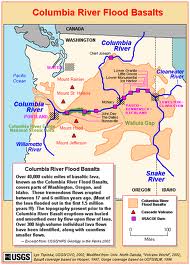
I’m just getting started. Last week I finished an excellent book about the Columbia River that I highly recommend, A River Lost: The Life and Death of the Columbia (second edition). The author, Blaine Harden, is an excellent story teller. It’s required reading if you live in the Pacific Northwest. The primary question raised by Harden is what’s the best way to operate the world’s largest hydroelectric system? Harden’s story centers on a confounding mix of economic interests, biological imperatives, and environmental values.

imgres

Most of the players in the drama defend the numerous dams that have turned the Columbia into a “machine river”—electric utility providers; irrigators and farmers; tow barge operators; boaters, windsurfers, and waterskiers; Google, Amazon, and Microsoft with their newish server farms; and elected officials and lobbyists who look out for the interests of utilities, irrigators, the internet goliaths, and other river users. The “other side” consists of Indians whose economic, nutritional, and spiritual lives were built around salmon, and fish biologists and Western Washington environmentalists who advocate for environmental restitution.

Students will research, debate, and decide among three possible outcomes:

  1. In the interest of maximum economic growth and inexpensive electricity, maintain the status quo of the “machine river”.
  2. In the interest of compromise and moderate economic growth, allow more water to flow over the dams thereby slightly reducing the total electricity available while simultaneously increasing the number of salmon in the river.
  3. In the interest of environmental restitution, the return of historic salmon runs, and revitalized Indian life, remove the dams and allow the river to return to it’s natural state.

Teachers will assess the relative thoroughness and thoughtfulness of each team’s proposed outcome. More specifically, they’ll be deciding which is most persuasive and why. Interestingly, this “Machine River” case study has real urgency because a federal court in Portland has given the National Oceanic & Atmospheric Administration until January 1, 2014 to submit a plan on how best to proceed. Many people whose livelihood’s will be dramatically effected by the outcome are anxiously awaiting the Court’s plan.

columbia_river_gorge_barge_snow_mg_8363_3

Even more challenging than evaluating the costs and benefits of the different possible outcomes, is extrapolating “lessons learned” from the Columbia to other river systems in other parts of the world. For example, Vietnam is upset that Laos is planning to dam the Mekong River. Here’s a question upon which I’ll base an “extension” or “enrichment” activity: Based on Columbia River “lessons learned”, how would you advise Laotians and Vietnamese officials to proceed on the Mekong River? Why?

Even more challenging than applying Columbia lessons to the Mekong is developing a set of principles for 21st Century development more generally. How can local communities, sovereign nations, and international groups maintain healthy economies without compromising natural environments? Or more simply, how do we build vibrant, sustainable communities?

I have more questions than answers. Which is the single best formula for revitalizing schooling.

580px-Grand_Coulee_Dam_Panorama_Smaller