Slowing Down

This spring I’m working my way through a laundry list of medical issues. Meaning I’m unable to run or cycle or swim right now. So I walk at Priest Point Park or Woodard Bay or Capitol Lake or closer to home. One cool thing about slowing down to 3-4 miles per hour is seeing A LOT more. 

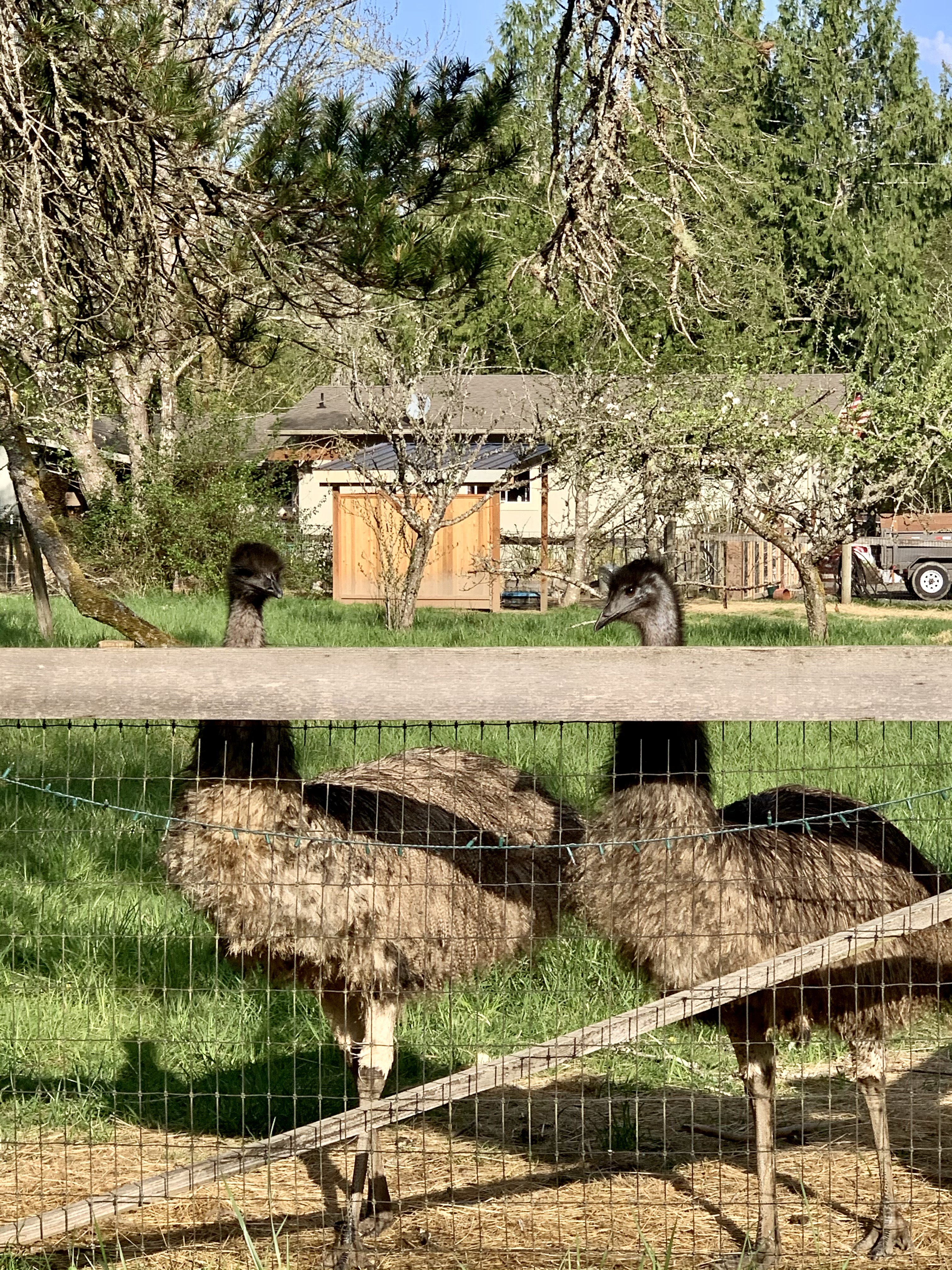
It’s nice to notice things. Sometimes. The trash on the side of Woodard Bay Road—decidedly not nice. Reuniting with Rudi yesterday morn—very nice. As was making two new friends. I’ve run and cycled past my new friends’ house several times, but since they’re natural camouflagers, I’ve never come close to noticing them.

A little research reveals they’re socially inquisitive which explains their walking to the road to introduce themselves. And they can run up to 31 mph at which speed they prob don’t notice much at all.

Rudi not happy that I’m apple-less.
My newest friends.

Swimming Is A Different Animal

To run a faster 10k or half marathon or marathon, a person needs to increase their weekly mileage. Full stop. Interval training can help, along with improved nutrition and sleep, and resistance training; but the most important variable by far is increasing one’s weekly mileage.

Same with cycling. To improve one’s average speed, or to ride a faster 40k or century, improved positioning and aerodynamics help, along with training with faster people (aka intervals), and a lighter bicycle especially if climbing; but the most important variable by far is increasing one’s weekly mileage. “Ass time”.

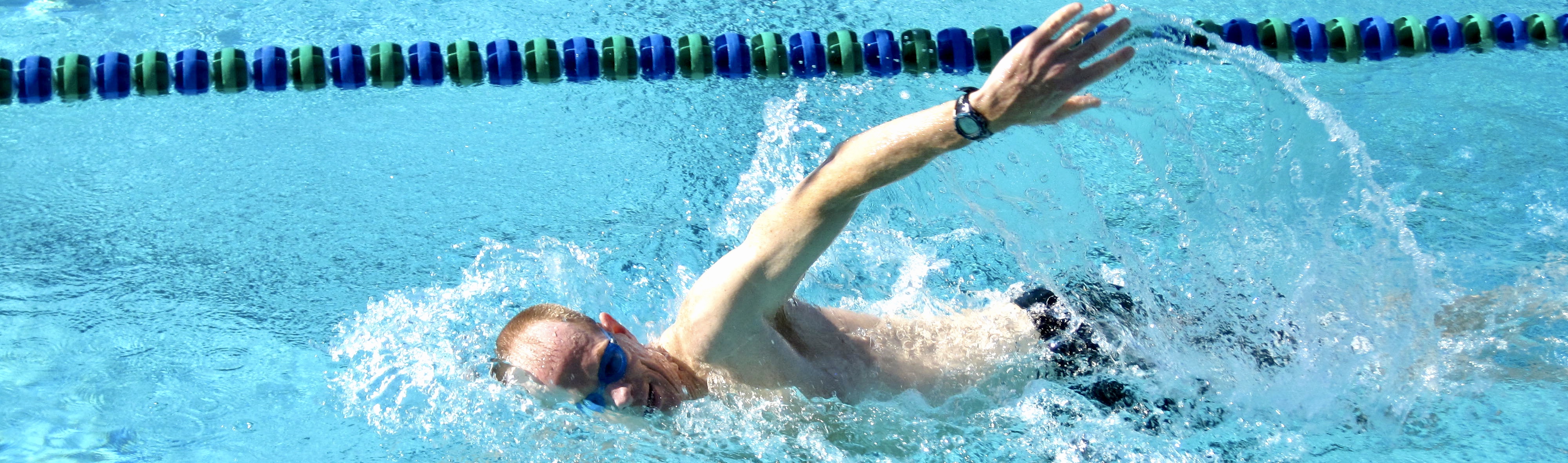
I swim about 6-8 kilometers most weeks. Sometimes, when I can’t run or cycle due to injury or weather, I increase that. For a month or two. And the increase in volume has almost no effect. Instead of swimming 1:32/100 yards, I swim 1:31.

At my age, 59, almost every runner, cyclist, and swimmer is slowing down. The rare exception is the former burner who fell way out of shape and returned to the road or pool in their 40’s or early 50’s. I’m the opposite of that person. I’ve never been a burner, but I compensate for my lack of speed with a very deep cardiovascular base, the result of three decades of consistent training. 

Because of my pedestrian starting point, I’m slowing down more slowly than my active peers. But I digress, back to swimming.

I actually defied the aging process a few years ago and got a touch faster in open water. How? By buying a better wetsuit. Free speed. Well, not exactly free, but you get the point.

Fast forward to my March 2021 Miracle of getting faster in the pool. Some context. I usually do 100 yard intervals in 1:29-1:33 depending on whether I’m doing them alone or with others and when in the workout I’m doing them. It literally takes me about 2,000 yards to “warm up” or the majority of my workout. A month ago, without my fast female friends pushing me in Masters, I was churning out sluggish 1:32 after 1:32 on 1:40 or 1:45.

Right now, I’m limited to 45 minutes at my local YMCA because of some sort of virus. I’ve gotten good at jamming as much as I can into the 45 minutes. Here’s today’s workout:

400y—6:15.  200y x 2—3:05, 3:04.  100y x 4—1:30, 1:30, 1:29, 1:28.

Paddles/bouy. 400y—5:50.  200y x 2—2:50, 2:50.

100y x 4 im, 1:41s on 2m.

Then, in the last 5-6 minutes, I did some easy 50’s and one final 100 concentrating on what I’ve been learning from YouTube stroke analysis tutorials. The easy 50’s were 43 on 1:00 and the easy final 100 was 1:26. Yes please, may I have another. 

Mid or late workout, I can now do 1:28’s (on 1:40) all day long with the same effort I have been swimming 1:32s the last few years. That, in short, is the March Miracle.  

From a running and cycling perspective that sudden improvement makes no sense, but swimming is a different animal. Especially when compared to running and cycling, swimming is super technical, if your stroke is flawed, no amount of volume is going to make much difference. It’s like golf, if your clubface is way open at impact, you’re going to hit a slice no matter how many balls you beat on the range.

Long story short, I’ve been watching a lot of stroke analysis vids on YouTube and finally some of the lessons are taking. Historically, bad muscle memory has blunted coaches’ occasional efforts to improve my stroke.

Somehow, a few stroke improvements have suddenly clicked. Primarily, truly finishing my stroke by gently rubbing my thumbs against my hips, rotating more by lengthening my stroke, and maintaining high elbows through the “catch”. Well, not really the last one. Yet. I’m still a serial elbow dropper. Which is kinda cool because that means there’s still more seconds to be found. And now I have more confidence I can integrate that change too.

In a few years I’ll report back on whether I have higher elbows. Or just tune in to the Olympic Trials in Omaha to see if I’m competing. Your choice.  
fullsizeoutput_7c9


The ‘Rona Reflex

Yesterday, I began my day with one of my favorite runs to PriestPoint Park and back. I went in the back door, meaning I climbed up 26th and then hung a right on the wide, paved connector road that drops down before dead ending into a single track trail on the park’s edge.

At least ten feet away, a young hipster (meaning he sported a beard) and his cute dog were walking up the 12-foot wide connector on the opposite shoulder of me. While exchanging silent “good morning” smiles, I couldn’t help but notice he edged off of the car-less road’s shoulder to create one or two more feet of distance between us.

Because he was youngish, seemingly healthy, not wearing a mask, and smiled at me, I doubt he was a grunt in the Mask Wars. And yet, even though everyone now knows the CDC guidelines—six feet away from one another when indoors while masked—I predict many will continue going a lot further given the ‘rona reflex which is the now deeply engrained idea that if some distance and masks and safety precautions are good, more are better.

I am not advocating for Texas Governor-like “Neanderthal thinking” about masks and mitigation. I’m advocating for proportionality. Specifically, a return to more relaxed interpersonal interactions as we chip away at the virus. Trusting that 12 feet is more than sufficient when outside.

If, in return, the Neanderthals are more patient with our neighbors for whom the reflex is deeply engrained, maybe the YouTube videos of people losing their minds while fighting the Mask War will abate and a post-‘pan peace will descend upon the land.

‘Rona Silver Lining

Americans exercised more in 2020, according to data tracking service, Strava.

“In addition to jumps in running and cycling activity in the U.S., Strava also saw booms in walking, hiking, indoor cross-training activities such as yoga and weight lifting, and water sports like kayaking and stand-up paddleboarding.

‘There was just so much uncertainty surrounding COVID […] it was great to see people deal with that by finding some sort of certainty and an everyday routine,’ Megan Roche, an ultra-runner and epidemiologist, told ESPN.

Women drove the increase in fitness — both in the U.S. and all over the world. Between April and September, women aged 18-29 saw a 45.2% increase in the median number of activities uploaded compared to a 27.3% increase by their male counterparts, the Strava data shows. Women were also biking more, logging a 72% increase in bike trips compared to 2019.”

Case in point, none other than one of my twenty-something daughters. Summer spent lake swimming. Migrated to the pool in the fall. Cycled with friends in the summer. All the while, she turned into a certifiable WALKING machine. 120 miles in November.

Live Wireless Or Die

It’s easy to forget what life was like before global position satellites revolutionized sports technology. I remember rolling my front bike wheel next to a wooden yardstick in my parent’s garage in a desperate attempt to calibrate my sensor that was attached to a couple of spokes. And then using electrical tape to align the wire that ran to the head unit along the fork and head tube. Cumbersome is putting it mildly. And what did I get for all my efforts, a precarious, only mildly accurate set up that constantly needed attention.

Fast forward several decades. Bluetooth, wireless GPS, and (almost always) automatic syncing which results in extremely accurate data recording with a tenth of the effort. Check out what my wrist computer generated during this morning’s run.

IMG_1194

When I first returned to rehab running from my hamstring injury, my average stride length was only 1.16m as opposed to the normal 1.2m. How cool is it that satellites in Outer Space confirm that not only do I feel better, but I am better.

A question for the nerds (used affectionately of course). Why is there a net gain of 35 feet when I started and stopped in my driveway?

The more important question is why do we fret about whether life is improving when we don’t have to wrestle with rulers, electrical tape and wires anymore?

Be The Rower

Early one morning last week I cycled indoors because Blanca is injured.* Afterwards I plopped into my desk chair to swat back the day’s first wave of emails. All while looking at the Salish Sea.

A rowing scull suddenly materialized. The solo rower probably launched from OAR’s (Olympia Area Rowing) downtown marina dock. With steady strong strokes, they disappeared as quickly as they appeared. Then, five minutes later, after reaching their appointed turn around, they shot by again heading south back to the dock no doubt.

I thought about the probable outline of the rower’s morning—waking early, driving to the marina, lifting the boat from its rack, being on the water at dawn, and rowing a long ways on beautiful glassy water with real purpose. And as required for all Pacific Northwesterners, stopping for the daily latte on the way home.

Then I thought about the rest of the rower’s day and despite everything—the ‘rona, the impending forest fire smoke, the faux electronic schooling, the negative national politics—I bet they had at least a decent, if not good, if not great day. How could they not with that kind of start?

Be the rower. Wake up early. And move. Outside**. Walk, bike, swim, run, paddle, row, skate. With someone or alone. Add some caffeine. Then try to have a bad day. I dare you.

* long sordid story starring a real duffus

**once the fire smoke apocalypse is over

Saturday Long Run Press Conference

CNN reporter: Strava shows you ran 9.6 miles in 1:17 for an average of 8:02/mile. What would you say to the American people who are afraid that you’re getting old and slow, now nothing more than a sad “hobby jogger”?

Me: I say that you’re a terrible reporter, that’s what I say. I think that’s a very nasty question and I think it’s a very bad signal that you’re putting out to the American people that I’m older and slower. The American people are looking for answers and they’re looking for hope. And you’re doing sensationalism and the same with NBC and Concast. I don’t call it Comcast, I call it ‘Concast.’ That’s really bad reporting, you ought to get back to reporting instead of sensationalism.

OANN reporter: How do you run so far, so fast?

Me: I love whoever you’re with. Because that’s such a nice question. I think you write fairly and do very fair reports. A lot of people always ask me, how do you run so far, so fast? I tell them I don’t know, I guess I just have a natural ability.

NBC reporter: How would you assess today’s performance?

Me: When you hear the number of miles I’m running and the pace, it’s incredible. And I’ve heard a lot of governors say the same thing. People are saying I’m doing a great job, the best job anyone’s ever done.

FOX reporter: What makes you such an incredible runner?

Me: Really lots of things, but what no one gives me credit for is when I first heard we were running, I immediately jumped on the stationary bike and got the blood flowing against many people’s advice. No one reports that. But I did, I got right on the stationary bike. Many exercise scientists—and I’ve read, many, many exercise scientists—can’t believe the great job that I’m doing.IMG_5669.jpg


Jordan Hasay Wins

My pick to win the Olympic Trials Marathon in Atlanta Saturday was Jordan Hasay who is a family acquaintance. On the surface, I was way off, seeing that she crossed the line behind 25 other women.

But like everything in life, our perspective changes, that is we gain perspective, when we begin to understand the larger context.

Jordan’s mom died suddenly a few years ago. More recently, her coach of many years was banned from the sport. She has been battling a bad hamstring (public knowledge) and back (not known until now).

Her dream of making the Olympic team was over by mile 10. Meaning she faced 16 more hilly, windy miles with her back “feeling like it’s bone”. And she gutted it out in what may have been the most impressive performance of her stellar career.

Watch this interview and try thinking about her as anything but a winner. In sport and in life. And I will not be surprised if the spirit she displays in this interview enables her to return to the top of her sport.

Galen Rupp, the men’s winner, and friend, consoling Jordan post-race.

display.jpg

Book of the Week—Geezerball

I’m on a nice little reading roll, meaning a book a week. This week I cheated though when I subbed in a fun, short read, for a long, dryish, academic one that I was plodding through.

Geezerball: North Carolina Basketball at its Eldest (Sort of a Memoir) by Richie Zweigenhaft tells the story of the Guilford College noon pickup basketball game that I played in between 1993-1998 when I taught at the “small Quaker college”. The game is 44 years old and counting and some of the participants have been playing most or all of those years. One of the game’s mottos is “You don’t stop playing because you grow old; you grow old because you stop playing.”

Richie, also known as “The Commissioner” is an accomplished author of several books on diversity in the American power structure. Now 75 years young, he’s the glue that’s held the game together over the decades.

Geezerball prompted a lot of reminiscing about those years and reflection on what’s most important in life. I remember 11 of the 29 players on the current geezer email list which is pretty remarkable given how bad I am with names. It also speaks to the game’s stability and what demographers have been telling us for awhile—that Americans aren’t moving nearly as much as in the past.

The game combines two of the very few things upon which most medical doctors and social scientists respectively agree—the importance of exercise to our physical health and the importance of close interpersonal relationships to our mental health.

“My wife says she expects to get a call one day saying I’ve died on the basketball court,” one geezer writes in the book. “If that happens, she’ll know I died happy.” In actuality, the game is probably extending the life of the participants. Even more importantly, it’s adding tremendously to the quality of their lives. Their friendships, and the humor that marks their interactions, are testaments to the power of community.

Among other remarkable aspects of the game is the fact that nearly all the participants are men. As a runner, I can’t help but notice more women running together; like the geezers, strengthening their bodies, their hearts, and their minds simultaneously. Same with the Gal Pal and her girlfriends who go on long walks every Saturday morning while catching up on the week’s events. I don’t know if it’s true, but it seems like men are more prone than women to prioritize their work lives, often to their own detriment. Given that, I find it inspiring that a dozen men in Greensboro, NC have been defying that norm every Monday, Wednesday, and Friday for 44 years.

The sort of memoir reminded me of exactly how cool of an addendum the game is to the participants’ lives. But now, upon further thought, I can’t help but wonder if when those men near the end of their lives, they’ll think of the game as one of the most essential parts of their lives, and their work as more of an addendum. Meaning, what if we all have it backwards? What if the GalPal’s Saturday morning walks, my Saturday morning group runs, my Tuesday and Thursday night group rides are the core and everything else is the periphery?

This line of thinking may be just one more example of my economic privilege at work, but I can’t help but wonder what would happen if we organized our lives around Geezerball-like communities, where we prioritized movement and friendship over material wealth and status? Put another way, how much is enough? When it comes to work hours and money, there’s always a point of diminishing returns. At a certain point, more work means more impoverished relationships with family and friends.

In contrast, when it comes to walking, running, cycling, swimming, surfing, or playing basketball or golf with friends, there is no point of diminishing returns. Our physical and mental health just keep improving. Our entire well-being. That’s the lesson of Geezerball.

download.jpg